

Few garden moments beat this one. You step outside on a warm summer morning, reach up, and pull a dark, sun-warmed cherry straight off the branch.
Getting there takes a little patience and a few good decisions early on. Choose the wrong variety for your climate, or plant a tree that needs a partner without one, and you can wait years for fruit that never comes.
This guide walks you through growing a cherry tree from the very first choice to your first harvest, including the mistakes most beginners only learn about the hard way.
The Short Answer
Plant a cherry tree in full sun and fertile, well-drained soil, in a spot sheltered from strong wind and late frost. Choose a variety suited to your winter temperatures, and pick a self-fertile one unless you have room for two trees.
For small gardens or pots, buy a tree grafted onto a dwarfing rootstock. Water young trees well in dry spells, mulch every spring, prune in spring or summer rather than winter, and net the tree before the fruit ripens.
Do that, and a healthy grafted cherry tree will often start fruiting within a few years of planting.
Fruiting or Flowering? Know Which Tree You Want
Before anything else, decide what you want from the tree, because “cherry tree” can mean two very different plants.
Fruiting cherries are grown for their crop. Sweet cherries (Prunus avium) are the ones you eat fresh. Sour or acid cherries (Prunus cerasus), such as Morello, are tart and best for pies, jams, and sauces.
Flowering or ornamental cherries are grown for their spring blossom. They produce little or no edible fruit, but they’re spectacular for a few weeks each spring.
If blossom is all you want, a flowering cherry tree is easier: no pollination worries, no netting, no harvest. The rest of this guide focuses on fruiting cherries, though planting and much of the care apply to both.
Will a Cherry Tree Grow Where You Live?
Cherries are temperate trees. Most need a proper winter rest, measured in chill hours, before they’ll flower and fruit well the following spring.
Chill hours are roughly the hours a tree spends between just above freezing and about 7 °C (45 °F) during dormancy. Many sweet cherries need several hundred to over a thousand of them.
If your winters are mild, look for low-chill varieties sold by local nurseries. An Australian growing guide from Love the Garden suggests cherries are worth trying where winter minimums reach 10 °C or below.
Late frost is the other risk. Cherries flower early, and a hard frost on open blossom can wipe out a year’s crop. Avoid frost pockets at the bottom of slopes, and plant where cold air can drain away.
Your best guide is a local nursery. They stock what grows well in your area, and can tell you which varieties fruit reliably nearby.
Sweet vs Sour Cherries
| Sweet cherries | Sour cherries | |
|---|---|---|
| Botanical name | Prunus avium | Prunus cerasus |
| Best for | Eating fresh | Cooking, jams, pies |
| Tree size | Larger and more vigorous | Smaller, less vigorous |
| Pollination | Some self-fertile (such as Stella and Lapins) many need a partner. | Mostly self-fertile |
| Hardiness | Prefer milder, sheltered sites | Generally tougher and more cold tolerant |
| Popular varieties | Stella, Lapins, Bing, Rainier | Morello, Montmorency |
If you’re a beginner with limited space, a self-fertile sweet variety on a dwarfing rootstock, or a sour cherry in a pot, is the easiest place to start.
Pollination: Do You Need Two Trees?
Not always. The Royal Horticultural Society notes that many modern sweet cherries are self-fertile, while others need a pollination partner nearby that flowers at about the same time.
A self-fertile tree can fruit on its own. A tree that isn’t self-fertile needs a compatible partner, either in your garden or in a neighbor’s within bee-flying distance.
When buying, check the label or ask the nursery. If it says “needs a pollinator,” ask which varieties are compatible.
Rootstocks and Tree Size
Most cherry trees sold by nurseries are grafted. The top (the variety you chose) is joined onto the roots of another cherry, called the rootstock, which controls how big the tree grows.
This matters more than most beginners realize. On a vigorous rootstock, a sweet cherry can grow far taller than you can easily net or harvest.
The RHS recommends the semi-dwarfing rootstock Gisela 5 for pots, and it’s a popular choice for smaller gardens too. Love the Garden notes that full-size trees can be kept to around 5–6 meters with pruning, while dwarf varieties stay closer to 2.5 meters.
For most home gardens, a dwarf or semi-dwarf tree is the practical choice. It fruits sooner, is easier to net and pick, and fits into ordinary spaces.
How to Plant a Cherry Tree
Planting well gives a cherry tree the best possible start. The best time is during dormancy: late autumn to early spring for bare-root trees, or almost any time the ground isn’t frozen or baking for potted trees.
Choose the Spot
Pick a sunny, sheltered position. Gardener’s Path recommends at least eight hours of direct sun a day. Avoid waterlogged soil, since cherries hate wet feet.
If you’re training a fan against a wall or fence, add support wires first. The RHS advises planting 25–35 cm (10–14 in) out from the wall.
Prepare the Hole
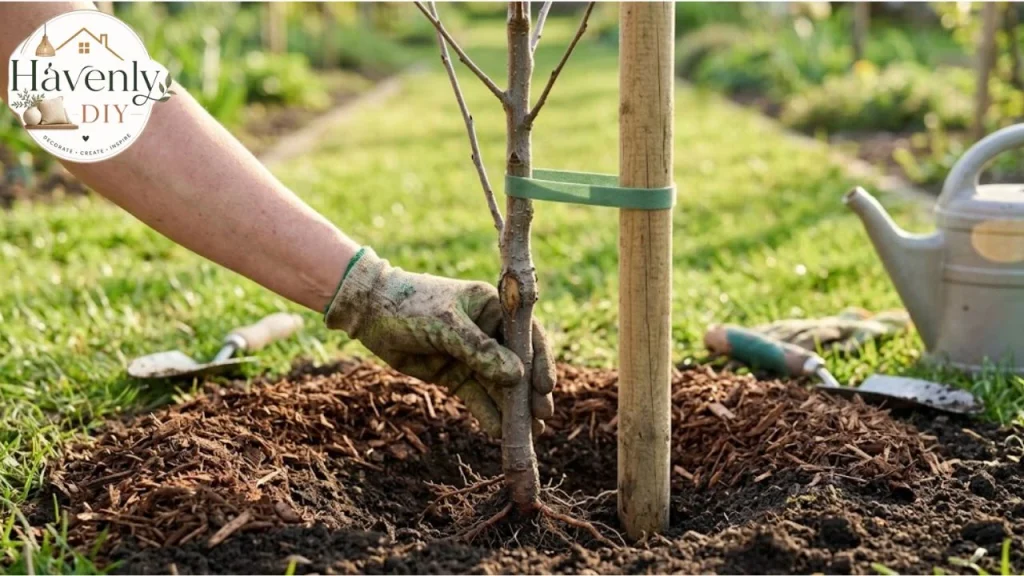
Dig a hole wider than the root ball but no deeper. Loosen the soil at the sides and base so roots can spread.
In heavy clay, improve a wide area with compost, or plant on a slight mound to help drainage.
Set the Depth
Plant at the same depth the tree grew in its pot or nursery bed. Keep the graft union, the knobbly join, low on the trunk, well above soil level.
Stake, Backfill and Water
Drive in a stake on the windward side before backfilling, so you don’t damage roots. Refill with the original soil, firm it gently, and water deeply.
Tie the trunk to the stake with a soft, flexible tie, and loosen it as the trunk thickens.
Mulch
Spread a layer of compost or bark mulch around the base, keeping it a few centimeters away from the trunk. Mulch holds moisture, suppresses weeds, and feeds the soil as it breaks down.
Growing a Cherry Tree in a Pot
No garden? You can still grow cherries. Choose a tree on a dwarfing rootstock and a large container, at least 45–50 cm (18–20 in) across, with good drainage holes.
The RHS points out that sour cherries are naturally less vigorous, which makes them well suited to pots. Self-fertile sweet varieties on dwarfing rootstocks also work.
Use a quality, soil-based potting mix. Potted trees dry out faster and need regular feeding through the growing season, so water often in warm weather and use a balanced fruit-tree feed.
Repot or top-dress with fresh compost every couple of years, and move the pot to a sheltered spot during flowering if late frost threatens.
Cherry Tree Care Through the Year
| Season | What to do |
|---|---|
| Late winter to early spring | Plant bare-root trees; mulch; check ties and stakes |
| Spring (flowering) | Protect blossoms from frost with fleece on cold nights; formative pruning on young trees.s |
| Late spring to early summer | Water young and potted trees in dry spells; watch for aphids and slugworm; net before fruit colors |
| Summer (harvest) | Pick ripe fruit; prune established trees after harvest |
| Autumn | Clear fallen leaves and mummified fruit to reduce disease; order new trees |
The RHS notes that established trees in regularly mulched soil usually don’t need extra feeding, while container trees benefit from regular feeding.
How to Prune Without Harming Your Cherry Tree
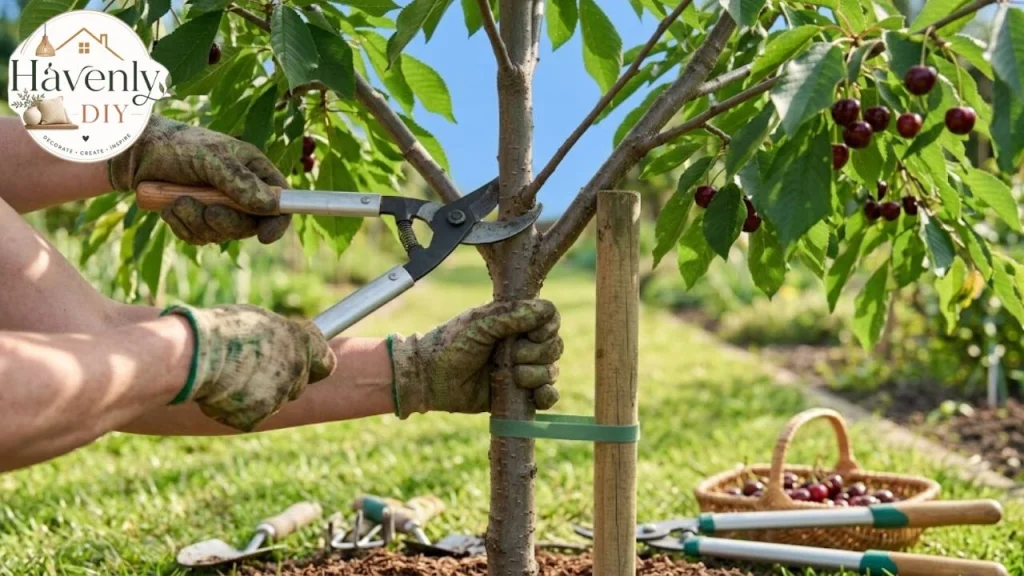
This is where cherries differ from apples and pears. Don’t prune a cherry tree in winter.
Cherries, like other stone fruits, are vulnerable to silver leaf and bacterial canker, and fresh cuts in cold, wet weather give these diseases an easy way in. Prune in spring or summer, on a dry day, when wounds heal quickly.
Young trees: In early spring, shape the tree into a few strong, well-spaced main branches. Gardener’s Path notes that this builds a structure that can carry heavy crops.
Established trees: After harvest, remove dead, diseased, crossing, or inward-growing branches. Keep cuts few and clean; cherries don’t need heavy pruning.
Use sharp, clean tools, and wipe the blades between trees.
Protecting Your Crop From Birds, Pests, and Disease
Birds are the biggest threat. They often find ripe cherries before you do. Love the Garden calls netting essential. Drape fine netting over the whole tree before the fruit starts to color, and secure it at the base so birds can’t get underneath.
Pear and cherry slug. These slimy larvae skeletonize leaves and are the most common cherry pest in some regions. Pick them off small trees or blast them away with a hose.
Aphids. Black cherry aphids curl young leaves in spring. Encourage ladybirds and other predators, and spray off heavy colonies with water.
Brown rot and cherry leaf spot. Remove infected fruit and fallen leaves promptly, and keep the canopy open for airflow.
Fruit splitting. Heavy rain as cherries ripen can make them crack. Steady watering in dry weather and some cover during wet spells help.
Harvesting Cherries
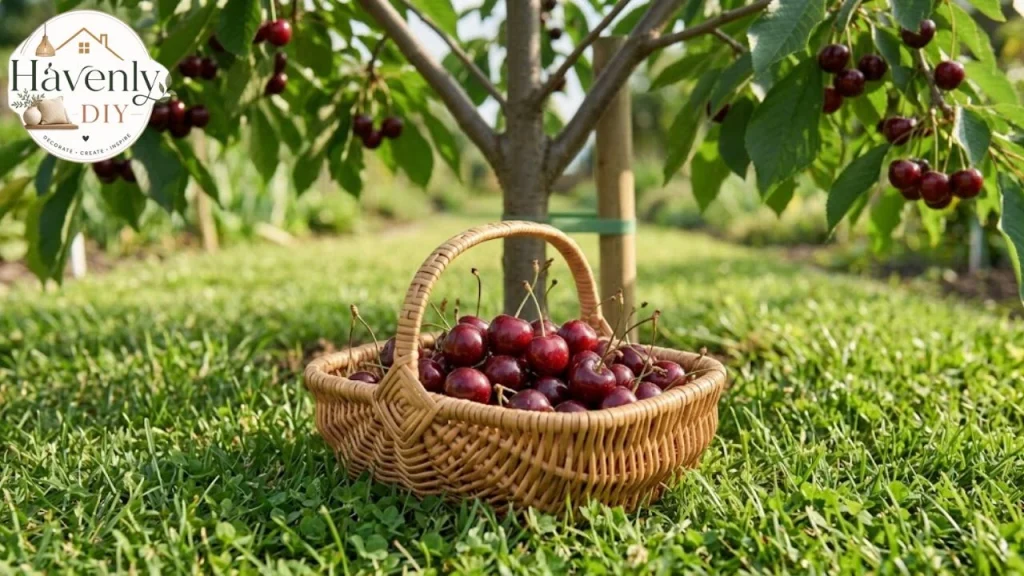
Cherries don’t ripen further once picked, so wait until they’re fully colored and taste sweet (or pleasantly tart, for sour types).
Pick with the stalk attached. That keeps the fruit fresher for longer and avoids tearing the skin. Eat sweet cherries within a few days, or freeze, dry, or bottle them.
Sour cherries are often left a little longer on the tree to develop flavor before cooking.
Why Is My Cherry Tree Not Producing Fruit?
If your cherry tree flowers but doesn’t fruit, or doesn’t flower at all, one of these is usually the cause.
It’s too young. Grafted trees often take a few years to fruit. Seed-grown trees take much longer.
No pollination partner. A tree that isn’t self-fertile needs a compatible partner nearby.
Frost damage. A late frost on open blossoms can kill the flowers before fruit sets.
Too little chill. In mild winters, trees with high chill requirements may flower poorly.
Too much nitrogen. Heavy feeding encourages leaves over flowers.
Heavy pruning. Cutting away too much wood removes fruiting buds.
Not enough sun. Shaded trees flower and fruit poorly.
Can You Grow a Cherry Tree From a Pit?
You can, and it’s a fun project, but set your expectations. Trees grown from pits don’t come true to type, so the fruit may be smaller or less tasty than the cherry you planted.
They also take much longer to fruit than grafted trees and can grow very large without a dwarfing rootstock.
To try it, clean and dry the pits, then chill them in damp material in the fridge for a couple of months to mimic winter. Plant them in pots in spring and keep them moist.
Is a Cherry Tree Safe Around Pets?
Cherry leaves, stems,s and crushed pits contain compounds that can release cyanide, and the ASPCA lists cherry as toxic to dogs, cats, ts and horses. Clear fallen leaves and pits if pets roam the garden, and contact a vet if you think your pet has eaten a lot.
FAQs:
How long does it take a cherry tree to bear fruit?
Grafted trees often start fruiting within a few years of planting, while trees grown from seed can take much longer. Dwarf and sour cherries tend to fruit sooner.
Do cherry trees need a partner to fruit?
Not all of them. Many modern sweet cherries and most sour cherries are self-fertile. Others need a compatible variety nearby that flowers at the same time.
When should you prune cherry trees?
In spring or summer, on a dry day. Avoid winter pruning, which raises the risk of silver leaf and bacterial canker.
Can I grow a cherry tree in a pot?
Yes. Choose a dwarfing rootstock, a large container with drainage, and feed and water regularly. Sour cherries and self-fertile sweet varieties suit pots well.
How do I stop birds eating my cherries?
Cover the whole tree with fine netting before the fruit starts to color, and secure it at the base.