

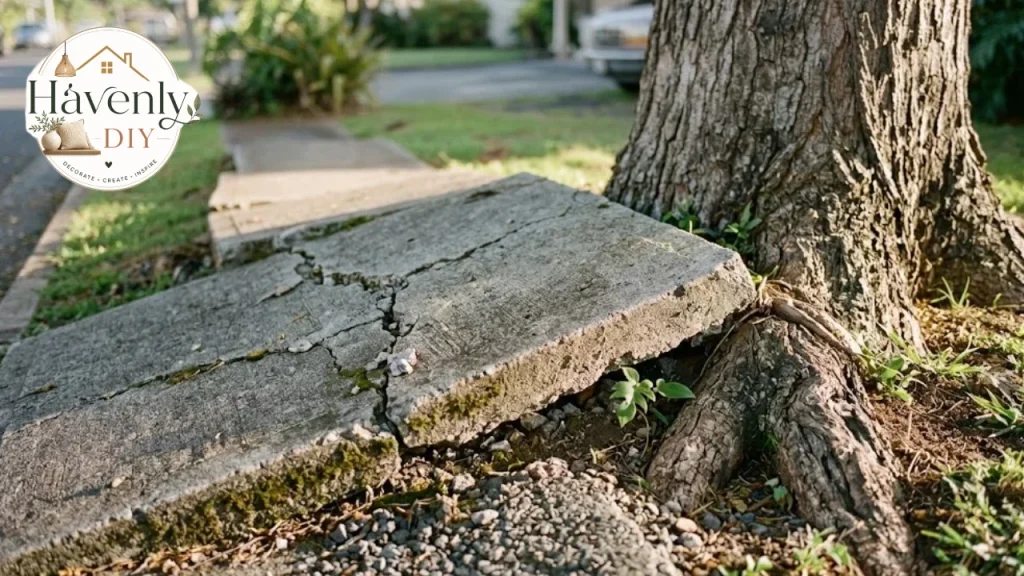
Walk any older Honolulu street, and you’ll see the evidence. A sidewalk slab tilted like a ramp, a lava rock wall pushed out of line, a driveway cracked down the middle where a monkeypod’s roots found room to grow.
Roots don’t act out of spite. They follow water and loose soil, and in a warm, wet climate they do it fast. The question for homeowners is what to do about it without hurting the tree or the house.
This guide covers tree root pruning in Honolulu: when it’s worth doing, how much root is safe to cut, what the city’s rules say, how to hire the right arborist, and what to try instead of cutting.
Why Roots Cause Trouble in Honolulu
Hawaii’s climate gives trees a long, steady growing season. Warm temperatures and regular rain mean roots keep reaching year after year.
Several local conditions make conflicts common.
Small lots. Many Oʻahu homes sit close to neighbors, sidewalks, and walls, so there’s little room for a mature tree’s root system.
Slab-on-grade homes. Many houses here sit on concrete slabs instead of deep basements, so roots have shallow, accessible ground near walkways, patios,s and driveways.
Older infrastructure. Aging sidewalks, drain lines,es and rock walls are easier for roots to lift or push.
Shallow or compacted soil. Roots stay near the surface where soil is thin, rocky,cky or packed down.
Heavy rain and wind. Saturated ground and strong gusts raise the stakes if a tree’s anchoring roots are cut.
Signs You May Need Root Pruning
Not every crack is a root problem, but these signs are worth a closer look.
| What you see | What it might mean |
|---|---|
| Raised or tilted sidewalk, driveway or patio | Roots pushing from below |
| Surface roots tripping people or blocking the mower | Roots growing near the surface |
| Cracks in a wall or slab near a large tree | Soil movement or root pressure, needs inspection |
| Slow drains or backups in the yard | Roots may be entering a damaged pipe |
| Doors or windows sticking near a tree | Possible foundation movement, check the cause |
| Lawn dying in patches near a tree | Roots competing for water |
| Pool or pond liner damage | Roots near the edge |
Many of these problems have other causes, such as poor drainage or soil settling. Look at the whole picture before cutting anything.
Roots Rarely Work Alone
Roots usually don’t break a sound pipe or foundation on their own. They tend to exploit existing cracks and leaks, and they lift lightweight slabs and walkways easily.
If you suspect a pipe or structure problem, get a plumber or structural inspection first. Cutting roots won’t fix a failed pipe.
Trees Common in Honolulu Yards
Species matters because root habits differ. These notes are general, and an arborist can assess your own tree.
| Tree | Root tendency | What to watch |
|---|---|---|
| Monkeypod (rain tree) | Wide, often shallow roots | Lifts walks and driveways near large trees |
| Banyan and other figs | Aggressive roots and aerial roots | Can push walls and enter small cracks |
| Mango | Deep taproot with spreading laterals | Usually fewer conflicts, but large trees can lift paving |
| Kiawe | Very extensive roots seeking water | Spreads widely in dry areas |
| Ironwood (Casuarina) | Shallow, spreading roots | Surface roots and lifted paving |
| Plumeria | Modest roots | Rarely a problem near structures |
| Palms | Fibrous roots, no woody lateral growth | Generally gentle on pavement |
Some large trees in Honolulu may be protected as exceptional trees. We cover that rule below, because it changes whether you can cut at all.
What Is Tree Root Pruning?
Root pruning means cutting selected roots, usually to protect a structure, pavement or utility line, or to prepare a tree for transplanting. Done well, tree root pruning in Honolulu removes the offending roots while leaving enough in place to feed and hold up the tree.
Done badly, it can weaken the tree, starve the crown, or make it fall.
The Core Trade-Off
Roots do two jobs. They absorb water and nutrients, and they anchor the tree against wind.
Cutting reduces both. In a place with trade winds and the occasional tropical storm, anchoring matters a great deal.
How Much Root Can You Safely Cut?
There’s no single magic number. The University of Florida’s guidelines summarize what experts generally advise, and the principles apply anywhere.
Stay away from the trunk. One expert rule says not to cut roots closer than 6 to 8 inches for every inch of trunk diameter. Another says at least 3 times the trunk diameter, and preferably 5 times.
Fewer and smaller cuts are safer. Damage rises with the number of cuts, their size, a n d how close they are to the trunk.
Roots over about 1 inch matter. Roots of 1 to 3 inches may be major structural roots.
Use clean tools. Sharp tools avoid tearing roots behind the cut.
A Worked Example
Suppose a monkeypod has a trunk 24 inches across.
| Rule | Minimum cutting distance from trunk |
|---|---|
| 3 times trunk diameter | About 6 feet |
| 5 times trunk diameter | About 10 feet |
| 6 to 8 inches per inch of diameter | About 12 to 16 feet |
These are my calculations from the published rules, not a recommendation for your tree. The right distance depends on species, health, and the work, and a certified arborist should confirm it.
When to Avoid Pruning
The guidelines advise against root pruning when the tree is:
- Leaning
- In poor health
- Old and mature, since older trees are more likely to decline or die after root loss
On shallow, compacted or poorly drained soil, stay even farther from the trunk. Those sites have fewer deep anchoring roots to begin with. Even trees on good soil can fall after pruning.
DIY or Hire an Arborist?
Small jobs are within reach of some homeowners. Large roots and valuable trees are not.
| Situation | Suggested approach |
|---|---|
| Thin surface roots (under about 1 inch) in a lawn | Homeowner can often trim with sharp tools |
| Roots lifting a small paver patio | Reset the pavers and consider an arborist for any cuts |
| Roots 1 inch and larger | Hire an arborist |
| Large mature tree near a house, wall or pool | Hire an arborist |
| Exceptional or protected tree | Permit required before any pruning |
| Street tree in the planting strip | City permit required |
| Roots near gas, electric or water lines | Locate lines first, then hire a pro |
When in doubt, get an assessment. It’s cheaper than losing a tree or repairing a damaged foundation.
What a Good Assessment Includes
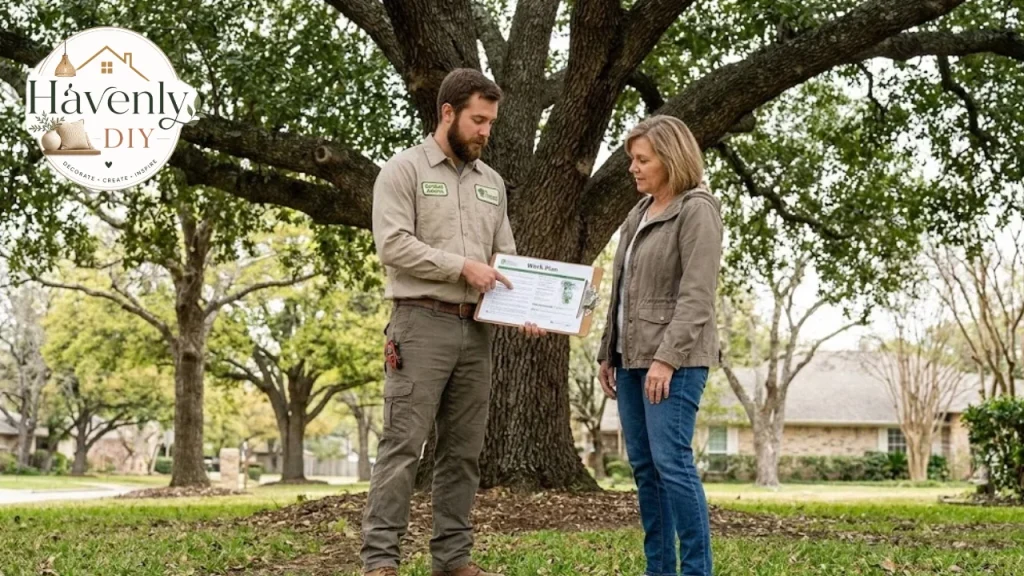
A qualified arborist will usually:
- Identify the species and check overall health.
- Look at the trunk base, lean, soil and drainage.
- Trace where surface roots run and which ones cause the conflict.
- Estimate the tree’s stability and wind exposure.
- Explain the options, including what happens if the tree is left alone.
- Give a written recommendation and cost.
If an arborist recommends cutting a large root close to the trunk without explaining the risk, ask for a second opinion.
Alternatives to Cutting Roots
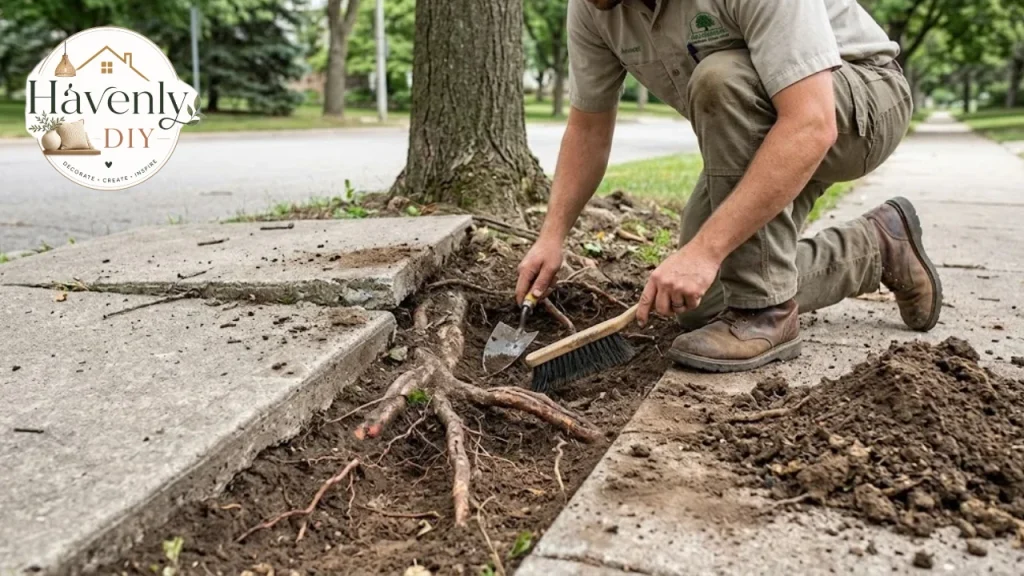
Often the best fix leaves the roots alone. The University of Florida lists several options that avoid pruning.
Add soil and re-sod. For minor surface roots in a lawn, a thin layer of soil can cover them. Don’t pile soil against the trunk.
Curve or raise the walk. Rerouting a path around the roots saves the tree.
Use bridging or pilings. A raised walkway can span the root zone.
Use reinforced concrete. Steel-reinforced slabs resist lifting better than plain concrete.
Grind the high spot. Grinding a small raised edge can remove a trip hazard.
Relocate the structure. Moving a fence, shed, or patio can be easier than moving a tree.
Use trenchless digging. When installing pipes or cables, tunneling avoids cutting roots.
If you’re planning an addition near a mature tree, plan the footprint around the roots from the start. Our home additions guide covers planning, and a mid-century ranch style home on a slab is especially sensitive to root pressure.
Before You Cut: A Quick Checklist
Run through these questions first. Each one can save you a fine, a repair bill or a tree.
Who owns the tree? Yours, a neighbor’s, an association’s or the city’s?
Is it protected? Check whether it’s an exceptional tree, and ask the city if you’re unsure.
Is it on the street side? Planting strip trees needs a city permit.
What is actually damaged? Confirm that roots are the cause, not a leak or settling.
Where are the utilities? Have lines marked before any digging.
Can the hardscape change instead? A curved path can beat a cut root.
Who will do the work? Verify license, certification,n and insurance.
What is the tree’s condition? Weak, leaning,ng or old trees need extra caution.
If you can’t answer most of these, pause and get an arborist’s assessment.
Honolulu Rules You Need to Know
Before you cut anything, check who owns the tree and whether it’s protected. In the City and County of Honolulu, a few rules can apply.
This section is a summary of public information, not legal advice. Confirm current requirements with the city before starting work.
Exceptional Trees
Hawaii’s Exceptional Tree Act (HRS Chapter 58) lets counties protect trees of exceptional stature. Honolulu’s rules are in its Revised Ordinances, Chapter 40, Article 8.
A tree or grove can qualify if the Arborist Advisory Committee finds it meets one or more criteria, such as historic or cultural value, age, rarity, location, size, aesthetic quality, or endemic status. Anyone can nominate a tree.
For these trees, the city’s Division of Urban Forestry states that an approved permit is required before tree work is done. Crown or root pruning requires the Application for Exceptional Tree Crown and/or Root Pruning, along with a Qualified Arborist Application Form.
That means tree root pruning in Honolulu on a designated tree isn’t something to do on a weekend. Apply first, wait for approval,l and use a qualified arborist.
Division of Urban Forestry: (808) 971-7151, duf@honolulu.gov.
Hawaii law (HRS 235-19) also allows an individual tax deduction of up to USD 3,000 per tree, once in a three-year period, for maintenance expenses on exceptional trees. Ask a tax professional how it applies to you.
Street Trees
Trees in the planting strip between the street and sidewalk are managed by the city. According to Honolulu’s street tree rules:
- The Department of Parks and Recreation performs general maintenance.
- Pruning, spraying,ng or removing a tree in the planting strip requires a permit from the Director.
- Digging in the public right-of-way requires an excavation permit from the Department of Public Works.
- Violations can bring a fine of up to USD 500, up to six months in jail, or both.
The rules don’t spell out who pays for sidewalk damage from roots, and they don’t specifically cover root pruning in the right-of-way. If a city tree’s roots are lifting your sidewalk, contact the city before you touch anything.
Private Trees Near the Street
The same rules allow the Director to trim parts of private trees that overhang the street and obstruct it or create hazards. Keeping your own trees in good order helps you avoid that.
Condos, HOAs and Neighbors
Condominium associations and HOAs often control landscaping on shared grounds. Check your governing documents before hiring anyone.
If a tree grows across a property line, talk to your neighbor early. Roots from a neighbor’s tree can cause damage on your side, and a calm conversation beats a legal dispute.
Utilities and Digging
Before any digging, locate underground utilities. In Hawaii, call 811 so lines can be marked, and ask your arborist to confirm they do this on every job.
How to Choose an Arborist in Honolulu
Because tree root pruning in Honolulu is delicate work, the hire matters. The University of Hawaii’s Cooperative Extension fact sheet offers a helpful checklist.
License. The fact sheet says arborists in Hawaii should hold a C-27 B license. Confirm current requirements with the state’s licensing board before you hire.
ISA certification. Ask whether the company has an International Society of Arboriculture certified arborist and whether tree workers are certified.
Insurance. Ask for proof of personal and property damage coverage and workers’ compensation. The extension fact sheet suggests general liability of at least USD 1 million per occurrence.
References. Ask for references from similar jobs, and visit them if possible.
Estimates. Get more than one, and don’t automatically take the lowest. Compare credentials and written specifications.
Written contract. It should list the work, cost, start and completion dates, and who handles cleanup and disposal.
Red Flags
- Door-to-door offers of cheap tree work
- Suggestions to “top” the tree, which the fact sheet calls unacceptable
- Removal of large amounts of live wood without a reason
- No insurance or license
- Pressure to decide the same day
- Vague answers about how much root will be cut and where
How Much Does Root Pruning Cost?
I couldn’t find reliable published pricing for root pruning in Honolulu, so I won’t quote a number. Prices vary too much by tree size, access,ess and permit needs.
What I can offer is a list of what drives the cost, so you can read your quotes.
| Factor | Why it matters |
|---|---|
| Tree size and species | Larger trees need more time and equipment |
| Number and size of roots | More and larger cuts mean more labor |
| Access | Tight yards and slopes slow the crew |
| Permits | Exceptional or street trees need approval first |
| Arborist assessment | A detailed report adds a fee but guides the work |
| Repair work | Pavement, wall or pipe repairs are often separate |
| Cleanup and disposal | Hauling debris adds cost |
| Follow-up care | Mulching, watering and monitoring may be extra |
Get at least two or three written quotes. Make sure each describes the same scope, so you can compare them fairly.
The Cost of Doing Nothing
Ignoring a root conflict can cost more over time. A lifted walkway is a trip hazard, a cracked slab can need repair, and a tree weakened by a bad cut can fail in a storm.
Sometimes the right answer is redesign, not cutting. A good arborist will tell you when that applies.
Aftercare for Root-Pruned Trees
How you treat the tree after root pruning in Honolulu matters as much as the cut.
Water carefully. Keep the root zone moist, not soggy, during dry spells. A tree with fewer roots needs steady water to recover.
Mulch the area. A layer of mulch holds moisture and protects roots. Keep it a few inches from the trunk.
Avoid heavy traffic. Don’t drive or park over the root zone.
Skip fertilizer unless advised. A stressed tree isn’t always helped by extra nitrogen. Ask your arborist.
Watch the crown. Thinning leaves, wilting, or dieback can signal stress. Call the arborist if you see it.
Prepare for wind. Roots take time to regrow. During storm season, ask whether the tree needs an inspection or support.
Check for pests. Cut roots and dead wood can attract insects. Hawaii has a well-known termite problem, so ask your arborist how to manage debris near the house.
Repair the Hardscape the Right Way
Fixing a cracked walkway without changing the cause will bring the problem back. Reset pavers on a base that allows for root growth, or reroute the path.
If you’re updating outdoor spaces, our coastal kitchen ideas can inspire shaded indoor-outdoor living that works with mature trees instead of against them.
When to Schedule Root Work
Timing affects how well a tree copes. The sources I reviewed don’t give a best season for Hawaii, so ask your arborist.
Consider these practical points when you book tree root pruning in Honolulu:
Storm season. The Central Pacific hurricane season runs from June through November. Cutting anchoring roots right before it raises wind risk, so many owners prefer to schedule work well ahead of it, or to have the tree inspected afterward.
Dry spells. A tree recovering from root loss needs reliable water. Plan irrigation if the weather turns dry.
Permit lead time. Exceptional tree applications need review, and the Arborist Advisory Committee meets monthly, so start early.
Construction schedules. If a new slab or wall is planned, prune and repair before pouring, not after.
Preventing Root Problems Before They Start
The best root pruning is the kind you never need.
Choose the right tree. Check the mature size and root habits before planting. Match large trees with large spaces.
Plant at a safe distance. Keep big trees well away from the house, pipes, wall,s and walkways.
Install root barriers carefully. Some barriers redirect roots, but they must be installed correctly. Poor barriers can create new problems.
Water deeply and less often. Deep watering encourages deeper roots, while frequent light watering keeps roots near the surface.
Prune early. Small cuts on young roots are less risky than cutting large roots later.
Plan hardscape around trees. Allow room, bridge roots,ts or use flexible paving.
Common Mistakes to Avoid
Cutting too close to the trunk. It can destabilize the tree.
Removing too many roots at once. Spread work over time if possible, under an arborist’s guidance.
Skipping the permit. Exceptional and street trees require approval before work.
Hiring a low bidder with no credentials. Check the license, insurance and certification.
Ignoring other causes. A cracked pipe or settling soil may be the real problem.
Topping the tree. It harms health and isn’t a substitute for good pruning.
Leaving a wound open for pests. Ask about proper cleanup and care.
Forgetting the neighbors. Talk early when roots cross property lines.
FAQs:
Is root pruning legal in Honolulu?
Yes for most private trees, but exceptional trees and street trees need permits first. Check with the city before cutting.
Do I need a permit to prune roots of an exceptional tree?
Yes. Honolulu’s Division of Urban Forestry says an approved permit is required before tree work, and root pruning needs a specific application plus a qualified arborist form.
How much root can I cut without killing the tree?
There’s no single safe percentage. Experts advise cutting as few and as small roots as possible, staying far from the trunk, and avoiding pruning leaning, unhealthy, or old trees.
How far from the trunk should I cut?
Common guidelines say at least 3 times the trunk diameter, preferably 5 times, or 6 to 8 inches per inch of trunk diameter. A certified arborist should confirm for your tree.
Can I prune roots myself?
Thin surface roots may be manageable, but roots larger than about an inch and roots of valuable trees should be handled by a professional.
Who do I call for a street tree in Honolulu?
Contact the city’s Department of Parks and Recreation or the Division of Urban Forestry, and don’t cut anything in the planting strip without a permit.