

A good coastal kitchen should make you exhale a little. It should feel bright without looking sterile, relaxed without looking messy, and connected to the outdoors without requiring a single anchor-shaped decoration. That last part matters.
The most successful coastal interiors borrow from the coast rather than trying to recreate it. Think sun-faded color, pale timber, soft natural textures, reflective surfaces, comfortable seating and plenty of breathing room.
Current design coverage increasingly moves in this direction, with designers favoring restrained materials, blue-and-white contrast, natural wood and tactile finishes over literal beach motifs.
And you don’t need an ocean view. A landlocked kitchen can have the same easygoing character if the materials, colors and proportions work together.
What Makes a Coastal Kitchen Feel Coastal?
The simplest way to understand the style is to stop thinking about “beach decorations” and start thinking about light, texture and atmosphere. A convincing coastal kitchen usually combines several of these elements:
- A soft, light-reflective color palette
- White, cream, pale blue, sea-glass green or sandy neutrals
- Natural or whitewashed wood
- Simple cabinetry
- Organic textures such as rattan, cane, jute or linen
- Comfortable, informal seating
- Layered lighting
- A backsplash with subtle movement
- Hardware in restrained metals
- A visual connection to windows, gardens or outdoor spaces
White cabinetry remains a classic starting point, but it doesn’t have to be the entire story. Current examples increasingly use blue islands, light oak, warm wood ceilings and woven materials to create contrast and depth.
The trick is restraint. If every surface announces “BEACH,” the room stops feeling like a home and starts feeling like a theme set.
Coastal vs. Nautical: They’re Not Quite the Same
This is one of the easiest mistakes to make. Coastal design is inspired by the environment. Nautical design is inspired by maritime symbols. Nautical interiors are more likely to use:
- Navy-and-white stripes
- Rope
- Anchors
- Porthole shapes
- Boat references
- Strong navy
- Maritime artwork
Coastal interiors tend to be quieter. They borrow the colors of sand and water, the texture of weathered timber, the softness of linen and the casual quality of a beach cottage. That doesn’t mean nautical details are forbidden. One thoughtfully chosen vintage marine light or piece of maritime artwork can be wonderful.
The problem comes when several literal symbols compete for attention. Homes & Gardens and other design sources make this same distinction: sophisticated coastal design is less about obvious beach objects and more about light colors, natural textures and restrained seaside references.
A useful rule: If you removed every shell, anchor and rope detail from the room and it would still feel coastal, you’ve probably got the balance right.
The 7-Layer Formula for a Beautiful Coastal Kitchen
Rather than copying a photograph piece by piece, build the room in layers.
Start with the light
Before choosing paint, look at the natural light. A north-facing or shaded kitchen may need warmer whites and pale reflective surfaces. A room flooded with afternoon sun can handle slightly deeper colors and more contrast.
Don’t choose a white paint because it looked perfect in an online photograph. Put a sample on the wall and look at it in the morning, afternoon and evening. The color changes because the light changes.
Choose one main neutral
This might be:
- warm white
- creamy white
- pale greige
- sandy beige
- light gray
This is your visual background.
Add one coastal color
Blue is the obvious choice, but it isn’t the only one. Try:
- sea-glass blue
- dusty blue
- blue-gray
- aqua
- sage
- muted green
- soft teal
A blue island is often more effective than painting every cabinet blue because it gives the room a focal point without overwhelming it.
Introduce wood
This is what stops a white-and-blue kitchen from feeling cold. Light oak shelves, a wood island, exposed ceiling beams, timber stools or even a cutting board collection can add warmth.
Add tactile texture
Rattan, cane, linen, woven pendants, jute rugs and handmade-looking tile all give the eye something to explore.
Layer the lighting
Don’t rely on one ceiling fixture. Use a combination of:
- ambient lighting
- task lighting
- pendant lighting
- under-cabinet lighting
- decorative lighting where appropriate
Edit the accessories
This is the final step, not the first. A few ceramic pieces, a plant, artwork or a bowl of fruit usually look more sophisticated than a shelf packed with seashells.
Coastal Cabinet Colors That Actually Work
Cabinetry carries enormous visual weight, so this is where many homeowners either get the look exactly right or accidentally create a theme.
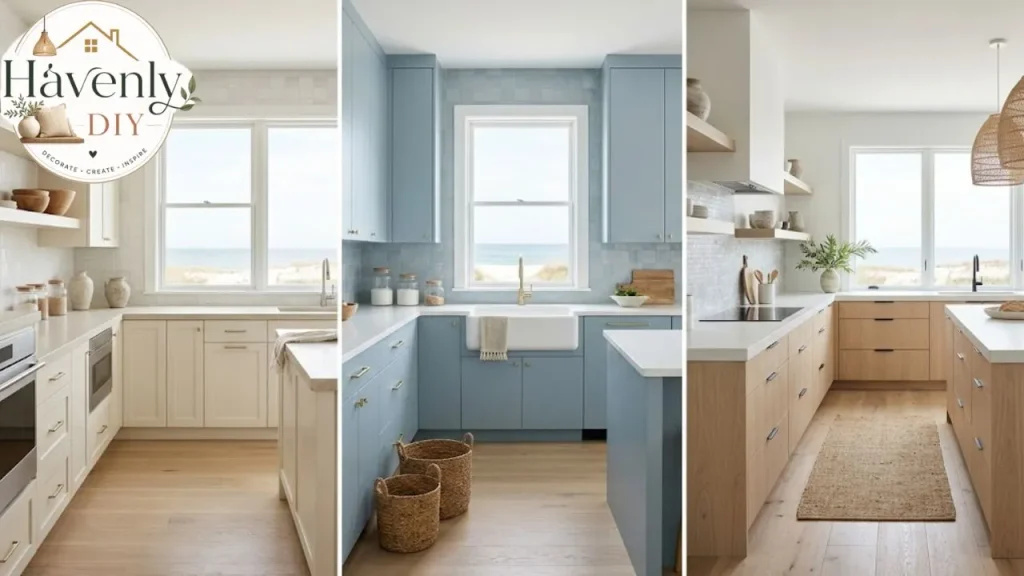
White cabinets
Still the safest classic. White Shaker cabinetry works especially well with:
- light oak
- marble-look quartz
- pale blue islands
- brushed brass
- natural woven stools
- handmade tile
Warm white is often easier to live with than an icy blue-white if you’re trying to create a relaxed room.
Soft blue cabinets
Blue gives you the coastal connection immediately. Pale blue feels airy. Dusty blue feels sophisticated. Blue-gray can feel slightly more architectural. Navy creates drama.
If the kitchen is small, consider putting the stronger blue on the island rather than surrounding the entire room with it. Current 2026 examples increasingly use blue bases to define islands or storage zones while retaining white elsewhere.
Light wood cabinets
If you want something warmer and more modern, pale oak is an excellent direction. The important distinction is light and natural, not orange and heavily distressed. Pair light wood with:
- creamy white walls
- pale stone
- muted blue
- aged brass
- simple ceramic tile
Soft green
Sage and sea-glass greens can create a beautiful coastal look without falling into the expected blue-and-white formula. They’re especially useful when the kitchen already has greenery, a garden view or warm wood.
What Countertops Work Best?
The countertop should support the coastal palette rather than compete with it.
Quartz
Quartz is a practical choice when you want the look of stone with relatively straightforward maintenance. A soft white or warm veined pattern works especially well with blue cabinets and natural wood.
Marble
Marble can be beautiful because its veining introduces movement without adding another strong color. The trade-off is maintenance. Marble can etch and stain, so it deserves more consideration than simply asking whether it “looks coastal.”
Quartzite
Quartzite can give you natural-stone character with a different performance profile from marble, depending on the specific stone. Don’t choose based solely on the label. Ask the fabricator about the exact slab, sealing requirements and expected maintenance.
Butcher block
For a cottage-style kitchen, butcher block can introduce the warmth that a pale room needs. Country Living’s real-home examples show how reclaimed wood, butcher block and other materials can give coastal kitchens a more relaxed, lived-in character.
Coastal Backsplash Ideas That Don’t Look Predictable
The backsplash is a chance to add texture. A few strong directions include:
Handmade-look tile
Slight variation in color and surface keeps the wall from looking too perfect.
White subway tile
Simple, inexpensive-looking in the best sense, and easy to combine with blue, green or wood.
Sea-glass tones
Soft aqua or blue-green can bring color into an otherwise neutral kitchen.
Stone backsplash
A lightly veined stone can create a more sophisticated coastal look.
Beadboard
Beadboard or tongue-and-groove paneling is especially effective when you want cottage character. Homes & Gardens specifically highlights paneling as a long-standing coastal design element.
One warning: don’t use a highly decorative backsplash just because it looks “beachy.” If the cabinets, countertop and lighting are already visually strong, a quieter backsplash may produce the better room.
Don’t Forget the Island
The island is often the easiest place to introduce personality. Try:
- muted blue cabinetry
- natural oak
- beadboard detailing
- a painted base with a stone top
- a slightly darker coastal color
- waterfall stone for a modern interpretation
A blue island with white perimeter cabinets is particularly effective because the room gets contrast without losing its brightness. The best island isn’t necessarily the most dramatic one. It is the one that gives the kitchen a visual center while still allowing people to move comfortably around it.
Lighting Can Make or Break the Look
A room with perfect cabinetry can still feel wrong under harsh lighting. For a softer coastal atmosphere, combine warm, comfortable ambient light with focused task lighting. Good fixture directions include:
- woven pendants
- linen shades
- aged brass
- simple ceramic fixtures
- clear glass
- understated metal pendants
Woven lighting works because it introduces shadow and texture. Country Living’s examples show how rope and woven details can connect the lighting to the broader coastal material story without overwhelming the room.
Don’t sacrifice task lighting for aesthetics, though. The sink, prep areas and cooking surface still need useful illumination. Pretty light is not a substitute for good light.
Natural Wood Is the Secret Ingredient
If your kitchen feels too white, don’t automatically reach for another paint color. Try wood first. A little natural timber can change the temperature of an entire room. Use it on:
- floating shelves
- stools
- island panels
- ceiling beams
- flooring
- cutting boards
- furniture
- window details
The strongest rooms often repeat one wood tone in several places instead of introducing five unrelated wood finishes. For example: light oak island + oak stools + oak floating shelves creates a much calmer visual rhythm than mixing pale oak, orange pine, dark walnut and distressed gray wood.
How to Make a Small Kitchen Feel Coastal
Small kitchens actually suit this aesthetic surprisingly well. The goal isn’t to squeeze more decorations into the room. It’s to create visual breathing space.
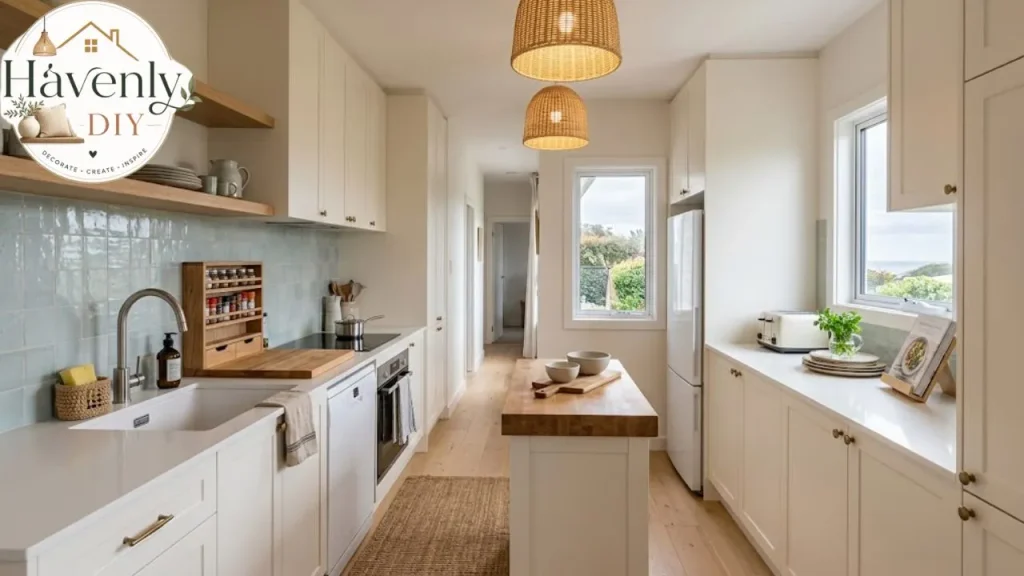
Use fewer, larger decisions
A small kitchen may benefit more from:
- warm white cabinets
- one pale blue accent
- a simple backsplash
- one beautiful pendant
- light wood stools
than from twenty tiny beach accessories.
Use vertical storage
Cabinets that extend upward can make better use of limited floor area, while floating shelves can provide display space when used selectively. Small-kitchen guidance from current design sources also emphasizes vertical storage and multifunctional surfaces.
Be careful with open shelving
Open shelves look wonderful in photographs. They can also become dust collectors and clutter magnets. Use them for things you genuinely reach for or enjoy looking at. Keep less attractive equipment behind doors.
What If Your Kitchen Has Dark Floors?
Don’t panic. A coastal kitchen does not require pale flooring. Dark wood can actually provide useful contrast. If the floor is dark:
- keep upper cabinetry light
- use warm white rather than stark white
- introduce pale wood at eye level
- avoid too many dark accents
- let the backsplash reflect light
- use a lighter island if the room needs visual lift
This creates a grounded coastal room rather than a washed-out one.
What If You Have Almost No Natural Light?
This is where blindly copying coastal inspiration photos can lead you astray. A room photographed beside the ocean with huge windows has an enormous advantage. If your kitchen is dark, focus on:
- reflective but not overly glossy surfaces
- warm light-colored cabinetry
- layered artificial lighting
- pale countertops
- limited visual clutter
- carefully chosen wall color
- mirrors or reflective accents where appropriate
Don’t try to manufacture “sunlight” with an aggressively cool white paint. It can make a dark room feel clinical.
How to Get the Look Without Remodeling
You don’t need a new kitchen to create the atmosphere. Start with the highest-impact changes.
Low-cost refresh
Paint the walls. Change cabinet hardware. Add woven counter stools. Replace a dated pendant. Bring in one light wood element. Add a simple runner. Use ceramics in white, blue or sea-glass tones.
Mid-range refresh
Paint the cabinets. Replace the backsplash. Add floating shelves. Upgrade the island lighting. Change window treatments.
Major renovation
Now consider:
- cabinet layout
- island proportions
- windows
- flooring
- countertops
- backsplash
- ventilation
- storage
- appliance placement
- indoor-outdoor connection
The order matters. Don’t spend your renovation budget on beautiful pendants before solving a bad layout. A gorgeous kitchen that makes you walk around the island six times to unload the dishwasher is still a bad kitchen.
Coastal Kitchen Materials: What to Choose
| Element | Strong coastal choices | What to watch |
|---|---|---|
| Cabinets | White, pale blue, sage, light oak | Too much distressed finish |
| Countertops | Quartz, marble, quartzite, butcher block | Maintenance requirements |
| Backsplash | Handmade-look tile, white tile, pale stone | Overly themed patterns |
| Hardware | Brass, nickel, simple black | Too many competing metals |
| Lighting | Woven, linen, glass, aged metal | Decorative-only fixtures |
| Flooring | Oak, natural stone, pale tile | Excessively orange wood |
| Textiles | Linen, cotton, jute | Too many stripes |
| Decor | Ceramic, plants, restrained marine art | Anchor overload |
The Biggest Coastal Design Mistakes
Turning the kitchen into a beach souvenir shop
One shell is charming. Twenty shells are a strategy. You don’t need to prove the theme.
Making everything white
White-on-white-on-white can lose depth. Add wood, blue, green, texture or metal.
Using too many blue shades
A room can quickly become visually noisy when every blue has a different undertone. Choose a dominant blue and let supporting colors stay quiet.
Ignoring the existing architecture
A modern apartment, 1920s cottage and beachfront farmhouse won’t all benefit from the same version of coastal design. Work with the house.
Copying a photograph literally
The photograph may look good because of its windows, ceiling height, flooring, architecture and natural light. Copying only the accessories won’t reproduce the result.
Choosing style before function
Storage, work zones, ventilation, lighting and circulation should come first. The style sits on top of a functional kitchen.
Three Coastal Combinations That Rarely Fail
The Classic
Warm white cabinets + pale stone + light oak + muted blue + brass This is probably the safest choice for someone who wants coastal style without going overly beachy.
The Modern
White perimeter cabinets + deep blue island + pale oak + simple stone backsplash + woven pendants This gives you more contrast and works especially well in open-plan spaces.
The Cottage
Cream cabinetry + beadboard + butcher block + aged hardware + handmade-look tile This feels softer, more collected and less polished. The important thing is not to mix all three. Pick a direction. Then repeat it consistently.
Can a Coastal Kitchen Work Away From the Ocean?
Absolutely. In fact, that’s one of the best things about the style. You don’t need salt air, a waterfront view or a vacation property. The feeling comes from the combination of lightness, natural materials, relaxed proportions and restrained color.
Current coastal design guidance increasingly treats the style as an atmosphere rather than a geographic requirement. If your home is inland, you can even make the look more personal by borrowing from your actual surroundings.
A garden view might inspire sage green. A wooded property might call for warmer oak. A bright apartment might handle pale aqua. A historic house might suit cream, aged brass and natural timber better than glossy white and chrome. That’s what makes the result feel like your kitchen rather than a copy of a beach-house photograph.
A Simple Shopping Order for a Coastal Kitchen
If you’re starting from scratch, don’t buy everything at once. Choose in this order:
Cabinets
They establish the largest visual area.
Countertop
It influences the cabinet undertone and backsplash.
Flooring
It sets the foundation.
Backsplash
Choose it after the larger materials are known.
Lighting
Now you can select fixtures that reinforce the room rather than compete with it.
Hardware
Use it to connect the finishes.
Stools and textiles
Add softness and personality.
Decor
Only now. This sequence prevents the classic mistake of buying a beautiful blue tile and discovering that nothing else in the kitchen actually works with it.
The Best Coastal Kitchen Is Usually the Least Literal
The most convincing rooms don’t shout “beach.” They whisper it. You notice the pale timber before the seashell. You notice the way the morning light lands on the countertop. You notice the comfortable stools, the slightly imperfect tile, the soft blue island and the fact that the room feels easy to use.
That’s the real goal. A successful coastal kitchen doesn’t imitate a shoreline. It captures the qualities people love about being there: light, calm, texture, openness and a sense that the room isn’t trying too hard.
If you’re planning your own, start with one question: What do you want the kitchen to feel like when you walk into it at 7 a.m.? Then choose the colors, materials and details that create that feeling. The result will be far more personal—and usually far more timeless—than simply decorating around a beach theme.
Frequently Asked Questions
What colors are best for a coastal kitchen?
Warm whites, soft blues, sea-glass greens, sandy neutrals and pale wood tones are strong choices. The best combination depends on the room’s natural light and existing finishes.
What is the difference between coastal and nautical style?
Coastal design focuses on the atmosphere and natural colors and textures of the shore. Nautical design uses more literal maritime references such as anchors, rope, stripes and boat-inspired details
Can a small kitchen look coastal?
Yes. Small kitchens benefit from light colors, vertical storage, selective open shelving, multifunctional furniture and reduced visual clutter.
Are blue cabinets good for coastal kitchens?
Yes. Soft blue works for a subtle look, while navy can create stronger contrast. A blue island paired with white perimeter cabinetry is an especially flexible combination.
Should coastal kitchens have white cabinets?
No. White is classic, but pale oak, sage, muted blue and two-tone cabinetry can all work beautifully.
What backsplash looks coastal?
White handmade-look tile, pale blue-green tile, simple subway tile, stone and restrained beadboard are strong options.
Can I have a modern coastal kitchen?
Absolutely. Modern coastal kitchens usually use cleaner cabinetry, restrained decoration, natural materials, softer colors and fewer literal beach motifs
How do I make a kitchen coastal without remodeling?
Start with paint, cabinet hardware, lighting, stools, textiles, natural wood accessories and a small amount of coastal artwork.