

A front porch is more than a covered area outside your front door. It is the space that introduces your home before anyone steps inside. It is where neighbors are greeted, where morning coffee is enjoyed, where children wait for the school bus, and where a simple chair and a warm light can make a house feel lived-in.
A well-designed front porch creates a transition between the outside world and your personal space. But designing the right porch is not just about copying a beautiful photo from a magazine. The best front porch matches your home’s architecture, your climate, your lifestyle, and your budget.
A small cottage may need a simple covered entry with thoughtful lighting. A farmhouse may benefit from a deeper porch with natural wood details and comfortable seating. A modern home might look better with clean lines, minimalist materials, and integrated lighting.
The challenge is choosing features that look good today while still working years later.
This complete front porch guide explains design styles, materials, costs, layout decisions, decorating strategies, common mistakes, and practical tips homeowners can use before starting a porch project.
Why a Front Porch Changes the Entire Feeling of a Home
The front entrance is one of the first things people notice about a property. A porch adds depth, character, and a sense of welcome that a flat exterior wall often lacks. A good front porch improves:
Curb Appeal
A thoughtfully designed porch can make an ordinary exterior feel intentional. Simple improvements often create a noticeable difference:
- updated lighting
- fresh paint
- attractive planters
- improved railings
- comfortable seating
- a welcoming front door
Outdoor Living Space
Modern homeowners increasingly use porches as additional living areas. A functional porch can become:
- a morning coffee spot
- an evening relaxation area
- a place for conversations
- a seasonal decorating space
- a safe outdoor area for children and pets
The Emotional Connection
There is a reason classic homes often feature porches. They create a feeling of:
- hospitality
- comfort
- tradition
- connection
A porch tells visitors: “This home has a place for people.”
Choosing the Right Front Porch Style for Your Home
The best porch design is not always the biggest or most expensive. It should feel like it belongs with your house.
Traditional Front Porch
Traditional porches usually include:
- columns
- symmetrical layouts
- classic railings
- wood details
- warm lighting
They work well with:
- colonial homes
- older properties
- traditional suburban houses
The goal is timeless appeal rather than following short-term trends.
Modern Front Porch Design
Modern porches focus on:
- simple lines
- minimal decoration
- neutral colors
- large-format materials
- hidden lighting
Common elements include:
- concrete flooring
- metal railings
- black fixtures
- clean landscaping
A modern porch should feel intentional and uncluttered.
Farmhouse Front Porch
Farmhouse porches remain popular because they combine practicality with comfort. Typical features:
- deep covered area
- wooden columns
- rocking chairs
- hanging lights
- natural materials
The key is avoiding a “theme park” farmhouse look. A few authentic details usually work better than excessive decoration.
Craftsman Front Porch
Craftsman homes naturally suit porches with:
- exposed beams
- thick columns
- handcrafted details
- natural colors
The design focuses on craftsmanship rather than decoration.
Small Front Porch Ideas That Make a Big Difference
A small porch does not mean a boring porch. Many homeowners make the mistake of filling limited space with oversized furniture. Better strategies include:
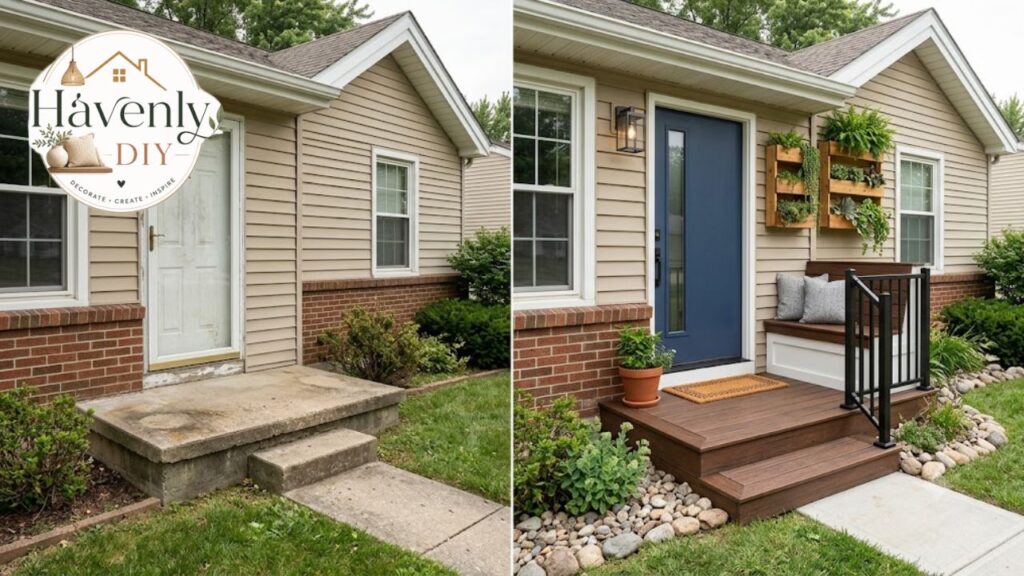
Use Vertical Space
Instead of adding more floor objects:
- use hanging plants
- wall lighting
- vertical planters
- tall narrow decorations
This creates visual height without making the porch crowded.
Choose Smaller Furniture
For compact porches: Better options:
- slim benches
- compact chairs
- small side tables
- folding furniture
The goal is comfortable movement.
Create One Strong Focal Point
Small spaces benefit from simplicity. Examples:
- beautiful front door color
- statement light fixture
- attractive planter pair
- quality outdoor rug
One memorable feature is often better than ten small decorations.
How Big Should a Front Porch Be?
Size affects comfort more than many homeowners realize. A porch can look beautiful but feel unusable if it is too shallow.
Small Entry Porch
Approximately 4–6 feet deep. Works for:
- greeting guests
- decorative elements
- small seating
Comfortable Everyday Porch
Approximately 6–8 feet deep. Allows:
- chairs
- small table
- comfortable movement
Entertaining Porch
Approximately 10+ feet deep. Suitable for:
- multiple seating areas
- porch swings
- outdoor gatherings
The correct size depends on how you plan to use the space.
Front Porch Materials Compared
Material choice affects:
- appearance
- maintenance
- lifespan
- cost
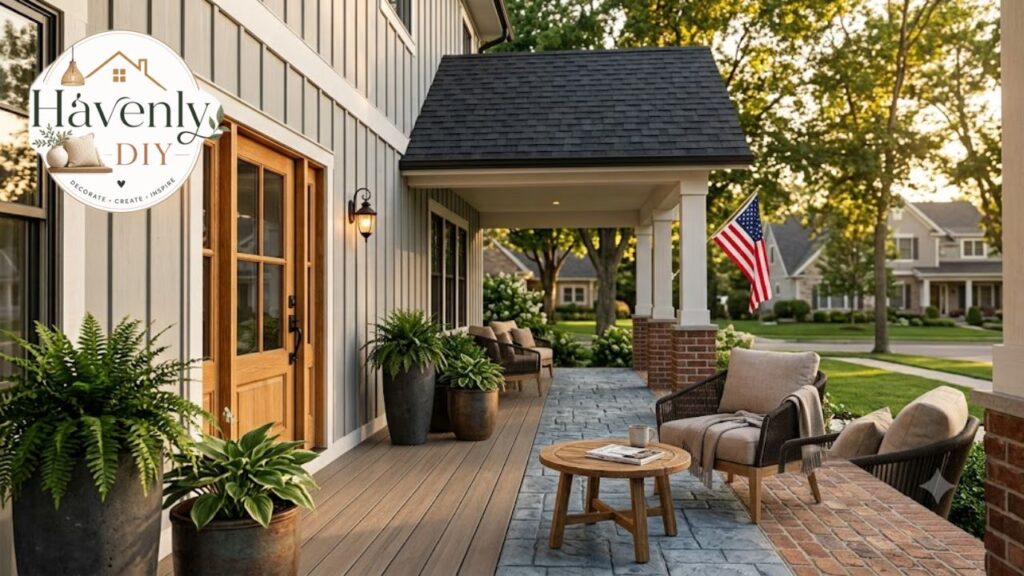
Wood Front Porch
Wood remains one of the most popular choices. Advantages:
✓ Natural appearance
✓ Warm feeling
✓ Easy to customize
✓ Works with many home styles
Challenges:
- requires maintenance
- Vulnerable to moisture
- Needs regular sealing or painting
Popular options include:
- cedar
- redwood
- pressure-treated lumber
Composite Porch Flooring
Composite materials have become popular because homeowners want lower maintenance. Advantages:
✓ Resistant to rot
✓ Less maintenance
✓ Consistent appearance
Disadvantages:
- higher upfront cost
- some products look less natural
Composite decking is often chosen by homeowners who want durability without regular staining.
Concrete Porch
Concrete offers:
- durability
- low maintenance
- design flexibility
Options include:
- stamped concrete
- colored concrete
- textured finishes
The downside is that concrete can feel colder and less traditional.
Brick and Stone Porches
These create a premium, classic appearance. Benefits:
- long lifespan
- strong visual character
- excellent curb appeal
However:
- installation is more complex
- repairs can be expensive
Front Porch Cost Guide
The cost of a porch varies dramatically depending on:
- size
- materials
- foundation
- roof structure
- electrical work
- location
Current cost guides commonly place porch construction in a wide range, with many projects influenced heavily by square footage, materials, and complexity. Some estimates place typical projects around several thousand dollars to much higher amounts for large covered or custom designs. A realistic planning approach:
Budget Refresh: Under $500–$1,000
Possible upgrades:
- new lighting
- paint
- plants
- outdoor rug
- furniture updates
- new hardware
Medium Upgrade: $1,000–$5,000
Possible improvements:
- new flooring finish
- upgraded railing
- better lighting system
- quality furniture
- landscaping improvements
Major Renovation: $5,000+
May include:
- structural repairs
- roof extension
- new decking
- columns
- electrical work
- complete redesign
Front Porch Lighting: The Detail Many Homeowners Miss
Lighting affects both beauty and safety. A strong porch lighting plan usually combines:
Entry Lighting
A fixture near the door creates a welcoming first impression.
Step Lighting
Important for:
- safety
- nighttime visibility
Ambient Lighting
Examples:
- string lights
- ceiling fixtures
- wall sconces
The goal is warm illumination, not harsh brightness.
How to Decorate a Front Porch Without Making It Look Cluttered
Good porch design follows balance.
Use:
Seating
Examples:
- rocking chairs
- benches
- porch swings
Plants
Plants add:
- color
- softness
- seasonal interest
Good choices depend on:
- sunlight
- climate
- maintenance preference
Textures
Layering creates comfort:
- outdoor rugs
- cushions
- baskets
- throws
Common Front Porch Mistakes Homeowners Make
Building It Too Shallow
A porch that cannot comfortably hold furniture becomes mostly decorative.
Ignoring Weather Conditions
Materials should match:
- rainfall
- sunlight
- humidity
- temperature changes
Choosing Style Before Function
A beautiful porch that nobody uses is wasted space. First decide, “How will we spend time here?” Then design around that answer.
Overdecorating
Too many:
- signs
- plants
- furniture pieces
- decorations
can make a porch feel smaller.
How to Make a Front Porch Look More Expensive
Luxury appearance often comes from details rather than expensive materials. Focus on:
Better Lighting
A quality fixture can completely change the entrance.
Consistent Colors
Choose a limited palette:
- one main color
- one accent
- natural material tones
Larger Planters
Oversized planters often create a more designer appearance than many small pots.
Clean Lines
Professional-looking porches usually avoid visual clutter.
Front Porch Planning Checklist
Before starting:
✓ Measure available space
✓ Decide how you will use the porch
✓ Check local requirements
✓ Choose materials based on climate
✓ Plan lighting early
✓ Consider maintenance needs
✓ Match the home style
✓ Create a realistic budget
Final Thoughts
A successful front porch is not defined by size or price. The best porches work because they solve real homeowner needs:
- they welcome guests
- improve curb appeal
- create usable outdoor space
- reflect the personality of the home
Whether you are refreshing a small entry area or planning a complete porch addition, the strongest designs begin with one question: How do you want your home to feel when someone arrives? The answer should guide every decision that follows.
Frequently Asked Questions
What is the purpose of a front porch?
A front porch creates a transition between your home’s interior and the outdoors. It improves curb appeal, provides weather protection near the entrance, and creates a comfortable outdoor area for relaxing or welcoming guests.
How much does it cost to build a front porch?
The cost depends on size, materials, roof design, foundation, labor, and location. Many standard front porch projects fall within a wide range, with common estimates influenced heavily by square footage and complexity.
Current cost guides often place porch construction around $40–$150 per square foot, with many projects ranging from several thousand dollars to much larger custom builds
What is the ideal size for a front porch?
A practical front porch is usually deep enough to allow comfortable movement and furniture placement.
General guidelines: 4–6 feet deep: entrance-focused porch, 6–8 feet deep: comfortable seating area, 10+ feet deep: entertaining and larger furniture. The correct size depends on how you plan to use the space.
Does a front porch increase home value?
A well-designed front porch can improve curb appeal and make a home more attractive to buyers. However, the value impact depends on location, neighborhood expectations, quality of construction, and whether the design fits the property.
What is the cheapest way to improve a front porch?
Affordable improvements include repainting the front door, replacing lighting, adding planters, updating house numbers, installing an outdoor rug, and adding comfortable seating. Small improvements can significantly change the appearance without major construction.
What is the best flooring material for a front porch?
There is no single best option. Choose based on priorities: Wood: Best appearance, requires maintenance. Composite: Lower maintenance, Higher initial cost. Concrete: Durable, Flexible design options. Brick/stone: Classic appearance, Higher installation complexity.
How do I make a small front porch look bigger?
Use lighter colors, slim furniture, vertical plants, wall-mounted lighting, fewer but larger decorative elements. The goal is creating visual openness.
Should a front porch be covered?
A covered porch provides rain protection and shade, improved furniture lifespan, and more usable outdoor time. However, the best choice depends on climate, budget, and architectural style.