

A washing machine is one of the most frequently used appliances in any household, responsible for keeping clothes fresh, clean, and hygienic. However, over time, the machine itself accumulates dirt, detergent residue, lint, hard water mineral deposits, and mold.
This build-up often creates unpleasant odors, reduces washing efficiency, and can even transfer bacteria or grime back onto clean laundry. Using a specialized washing machine cleaner on a regular basis is essential for maintaining the appliance’s performance, extending its lifespan, and ensuring optimum sanitation during every wash cycle.
Washing machine cleaners are specifically formulated to target and dissolve stubborn residues that standard detergents cannot break down. These cleaners usually come in the form of tablets, powders, or liquids designed to penetrate hard-to-reach areas such as the outer drum, internal pipes, heating elements, and rubber door seals.
As hard water flows through the machine during normal washing, minerals like calcium and magnesium settle on internal components, creating limescale.
A dedicated cleaner effectively descales these internal parts, preventing blockages and ensuring smooth water flow. Furthermore, residual detergent and fabric softeners often leave behind a sticky film that traps moisture and dirt, creating an ideal environment for mold and mildew growth.
Regular deep cleaning eliminates these deposits, eliminating sour or musty smells from the drum.
In conclusion, a washing machine cleaner is an indispensable tool for proper home appliance maintenance. It guarantees that the machine runs at peak efficiency, prevents structural wear and tear, and safeguards the hygiene of your laundry.
By making deep cleaning a regular monthly habit, homeowners can protect their investment and enjoy fresh, thoroughly sanitized clothes with every wash.
You pull towels out of the washer, and something’s off. They’re clean, technically, but there’s a faint musty smell that wasn’t there last year. The problem usually isn’t your detergent. It’s the machine. Washers quietly collect soap residue, softener, lint, and limescale, and in the dark, damp corners, that buildup starts to smell.
A good washing machine cleaner can fix most of it, but only if you use it right. This guide covers which type to choose, how to clean the whole machine (not just the drum), and what to do when the smell won’t go away.
The Short Answer
Run a washing machine cleaner through an empty hot cycle about once a month, or as the product label recommends. Use your machine’s tub-clean cycle if it has one.
Then clean the parts the cycle misses: wipe the door seal, scrub the detergent drawer, and on front-loaders, empty the drain pump filter. Leave the door and drawer open afterwards to dry.
That routine prevents most smells. The sections below explain how to do each step and how to pick the right washing machine cleaner for your washer and water.
Why Washing Machines Get Dirty
It seems backward that a machine full of soap could get dirty, but a few habits make it almost inevitable.
Too much detergent. Excess soap doesn’t rinse away fully. It coats the drum and hoses and gives bacteria something to feed on.
Fabric softener. Softener is waxy by design. Over time, it builds up in the drawer and on the hidden outer drum.
Cool, short washes. Lower temperatures save energy, but they don’t dissolve grease and residue the way hot washes do. Many homes rarely run a hot cycle at all.
Hard water. Minerals leave limescale on the heating element and drum, which traps grime.
Moisture. A closed door after a wash keeps the inside warm and damp. That’s the perfect setting for mold and mildew, especially in the rubber door seal of front-loaders.
Together, these create a slimy layer called biofilm. You usually can’t see it, but you can smell it.
Do Washing Machine Cleaners Actually Work?
For regular maintenance, yes. ConsumerGroup notes that machine makers recommend a regular maintenance or service wash to keep a washer performing well, and a dedicated cleaner is one way to do it.
A washing machine cleaner is formulated to break down detergent residue, softener buildup, and limescale in places you can’t reach, like the outer drum and hoses. Many also include deodorizers.
What a cleaner can’t do is remove a sock stuck in the drain filter, scrub heavy mold from a door seal, or fix a blocked drain hose. That’s why the best results come from combining a cleaner with a few minutes of hands-on cleaning.
Using a washing machine cleaner offers significant practical and financial benefits. When internal components remain free of heavy build-up and limescale, the machine operates much more efficiently. The heating element reaches target temperatures faster, and the motor runs smoothly without extra strain.
This efficiency not only conserves electricity and water but also prevents sudden breakdowns and costly mechanical repairs. Additionally, maintaining a clean drum ensures that clothes come out smelling genuinely fresh rather than damp or stale, eliminating the need to re-wash loads.
For optimal results, it is generally recommended to use a washing machine cleaner once a month, or after approximately 30 wash cycles. Most cleaners are easy to use: simply place a tablet or powder directly into the empty drum or detergent dispenser, set the machine to a hot water cycle (ideally 60°C or higher), and run a complete wash cycle without any clothes. Modern washing machines often feature a dedicated “Tub Clean” or “Drum Clean” mode tailored for this purpose.
Types of Washing Machine Cleaner
Each type of washing machine cleaner suits a slightly different job. Bob Vila’s guide groups them into liquids or gels, tablets, and sprays, and powders are also widely sold.
| Type | How it works | Best for | Watch out for |
|---|---|---|---|
| Tablets | Dissolve slowly in the drum during a hot cycle | Easy monthly maintenance | Need a full hot cycle to dissolve |
| Powder (often oxygen bleach) | Releases oxygen to lift grime and stains | Heavy residue, odors | Check it’s safe for your machine type |
| Liquid or gel | Poured into drum or drawer; reaches drawer and seal too | Drawers, seals, all-round cleaning | Measure carefully |
| Sprays and wipes | Applied directly to seals and drawers | Spot cleaning between deep cleans | Don’t clean the hidden drum |
| Descaling cleaners (often citric acid) | Dissolve mineral deposits | Hard-water areas | Less effective on greasy residue |
Read ingredient labels. Oxygen-based cleaners are gentler on rubber seals than chlorine bleach, and many people find them a good everyday choice.
How to Choose the Right One
Is it right for your machine? If you have a high-efficiency (HE) washer, choose a cleaner labeled HE-safe. Check your manual too, since some manufacturers recommend specific products or cycles.
Do you have hard water? If you see white crust on taps and shower heads, a cleaner with a descaling ingredient will help more than a scented one.
Do you have a septic system? Choose a cleaner labeled septic-safe.
Do you react to fragrance? If anyone in your home has sensitive skin, look for a fragrance-free formula and run an extra rinse after cleaning.
How to Use a Washing Machine Cleaner: Step by Step
This is the full clean, about 15 minutes of hands-on time plus one cycle. Using a washing machine cleaner this way covers every place odors hide.
Empty the Machine and Check the Drum
Take everything out of the drum. Look for loose coins, hair ties, or tissues and remove them.
Clean the Door Seal (Front-Loaders)
Pull back the folds of the rubber gasket. You’ll often find hair, lint, water, and black spots.
Wipe it with a cloth dipped in warm water and a little of your cleaner or mild detergent. Use an old toothbrush for the folds. Dry it fully afterwards.
Remove and Scrub the Detergent Drawer
Most drawers pull out completely with a small release tab. Soak the drawer in warm water, scrub away residue with a brush, and wipe out the drawer cavity, where mold often grows unseen.
Empty the Drain Pump Filter (Front-Loaders)
Most front-loaders have a small panel at the bottom front. Unplug the machine first, then place a towel and a shallow tray underneath, because water will come out.
If your machine has a small drain hose beside the filter, drain the water through it first. Then unscrew the filter slowly, clean out lint and debris, rinse it, and screw it back firmly. Check your manual if you’re unsure where it is.
Add the Cleaner and Run a Hot Cycle
Follow the label. Usually that means placing the tablet or powder in the empty drum, or pouring liquid into the drum or drawer.
Run your machine’s tub-clean or drum-clean cycle if it has one, or the hottest, longest cycle available. Which? notes you don’t need detergent or a pre-wash during a cleaner cycle.
Wipe and Dry
When the cycle ends, wipe the drum and seal with a dry cloth. Leave the door and drawer open for a few hours so everything dries.
Front-Loader vs Top-Loader Cleaning
Front-loaders are more prone to smells because the rubber door seal traps water and the door is often closed between washes. Focus on the seal, drawer, and drain filter.
Top-loaders usually don’t have a seal to clean, but residue builds up under the rim and around the agitator or impeller. Wipe under the rim and, if your model allows, remove and clean the fabric softener dispenser.
Some older top-loaders have a lint filter inside the agitator. Most newer models don’t have a user-cleanable filter, so check the manual.
DIY Options: Vinegar, Baking Soda and Safety
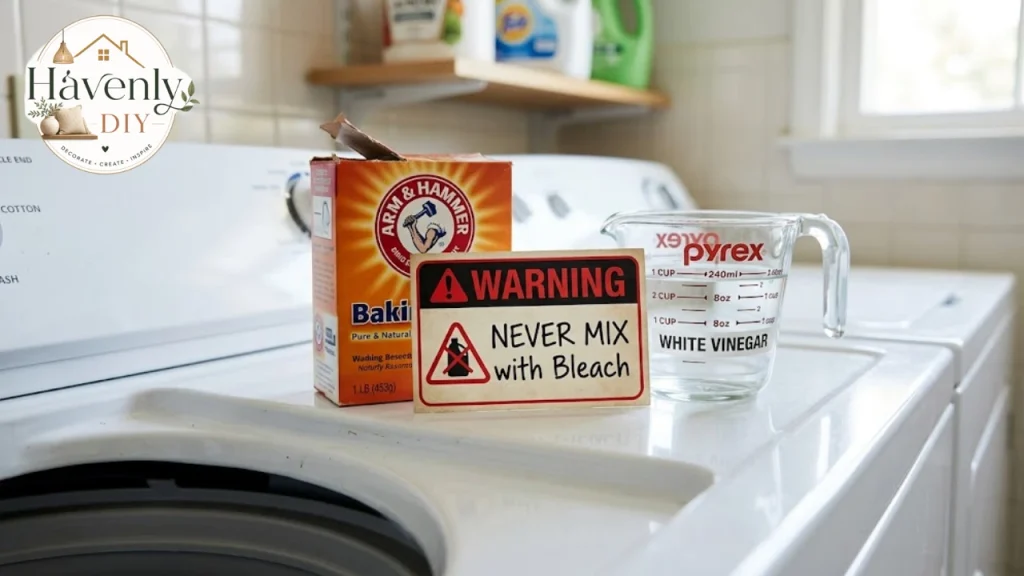
Many people clean their washers with white vinegar or baking soda, and both can help with light odors. A common approach is baking soda in the drum and vinegar in the dispenser on a hot cycle.
There are trade-offs. Some appliance makers caution against frequent vinegar use because of possible effects on rubber seals and hoses, so check your manual. DIY options also don’t replace cleaning the filter, seal, and drawer.
Never mix chlorine bleach with vinegar or ammonia. These combinations release toxic gases. If you use bleach, run it in its own cycle and rinse thoroughly before using anything else.
If DIY works for you and your manual allows it, a monthly product and an occasional vinegar rinse aren’t mutually exclusive. Just keep them in separate cycles.
How Often to Use a Washing Machine Cleaner
Monthly is a sensible default for most homes. Product guidance varies: Glisten, for example, recommends monthly use, while Dettol advises using its cleaner every two months, according to Which?.
Use your washing machine cleaner more often if you wash many loads a week, use mostly cold or short cycles, live in a hard-water area, or wash pet bedding and sports gear.
Wipe the seal and drawer every week or two. Clean the drain filter every few months, or sooner if water drains slowly.
Still Smells After Cleaning? Troubleshooting
If the smell returns quickly, one of these is usually the cause.
The drain filter is still clogged. Trapped debris and standing water smell strongly. Clean it again thoroughly.
The drain hose or standpipe smells. The odor may come from your home’s drain, not the washer. Pour hot water down the standpipe and check whether the smell changes.
Too much detergent. Cut your dose to the amount recommended for your water hardness and load size, especially with HE machines.
Hidden mold in the drawer cavity. Pull out the drawer and use a flashlight to check the space behind it.
Heavy mold in the seal. Deep black mold that won’t wipe away may mean the seal needs replacing. A technician can usually do this.
If the machine leaks, makes grinding noises, or won’t drain at all, stop and call an appliance repair technician.
Habits That Keep Your Washer Fresh
Small habits make the deep clean easier and less frequent.
- Remove wet laundry promptly instead of leaving it sitting.
- Leave the door and drawer slightly open between washes.
- Use the right amount of detergent, not more.
- Run a hot wash now and then, such as for towels and bedding.
- Keep the area around the washer dry and well ventilated.
If your laundry space doubles as storage, keep cleaning supplies on a shelf above the machine rather than on top of it. Our guide to laundry room cabinets has layouts that make room for both. For more routines around the house, browse our home cleaning guides.
[IMAGE 5: Front-loader with door open to dry, under this section]
FAQs:
Do washing machine cleaners really work?
Yes, for regular maintenance. They break down residue, softener buildup, and limescale in hidden areas. For best results, also clean the seal, drawer, and drain filter by hand.
How often should I use washing machine cleaner
Can I use vinegar instead of washing machine cleaner?
Vinegar can help with light odors, but some manufacturers caution against frequent use because of possible effects on rubber parts. Check your manual, and never mix vinegar with bleach.
Are washing machine cleaners safe for HE washers?
Most are, but choose one labeled HE-safe and follow your machine’s manual.
Why does my washing machine still smell after cleaning?
The most common causes are a clogged drain filter, mold in the drawer cavity or seal, too much detergent, or a smelly household drain.
Do I need detergent when running a cleaner cycle?
No. Run the cleaning cycle empty, without detergent or laundry, unless the product label says otherwise.