

How to clean hardwood floors safely depends on more than just choosing a mop and cleaner. The right method protects the wood, preserves the finish, and removes dirt without leaving streaks, residue, or moisture damage behind.
The safest way to clean most sealed hardwood floors is to remove dry grit first, then clean with a barely damp microfiber mop and a cleaner approved for the floor’s finish. Use as little liquid as possible, work in small sections, and never leave standing moisture behind.
The most important step comes before the mop touches the floor: find out what surface you are cleaning.
Before You Mop, Find Out What Finish You Have
People often focus on whether the floor is oak, maple, or walnut. For cleaning, the protective finish is usually more important than the wood species.
Most modern hardwood is protected by a surface finish such as polyurethane or a factory-applied coating. Other floors may be oil-finished, waxed, unfinished, or old enough that the original coating has worn through in places. That changes what is safe.
| Floor/finish | Safest starting approach |
|---|---|
| Polyurethane or modern sealed hardwood | Manufacturer-approved or neutral-pH hardwood cleaner and microfiber mop |
| Factory-finished engineered hardwood | Follow the flooring manufacturer’s cleaner and moisture instructions |
| Oil/hardwax-oil floor | Cleaner made for the specific oil/finish system |
| Waxed wood | Wax-compatible maintenance; avoid routine wet cleaning unless approved |
| Unfinished wood | Dry cleaning; avoid wet mopping |
| Antique or partly worn floor | Use very little moisture and consider professional advice |
Bruce, for example, advises owners of its hardwood products not to introduce unnecessary water or steam and recommends its finish-compatible cleaner. Shaw likewise recommends neutral-pH cleaning products and warns against wet mops, steam, and oil-based products.
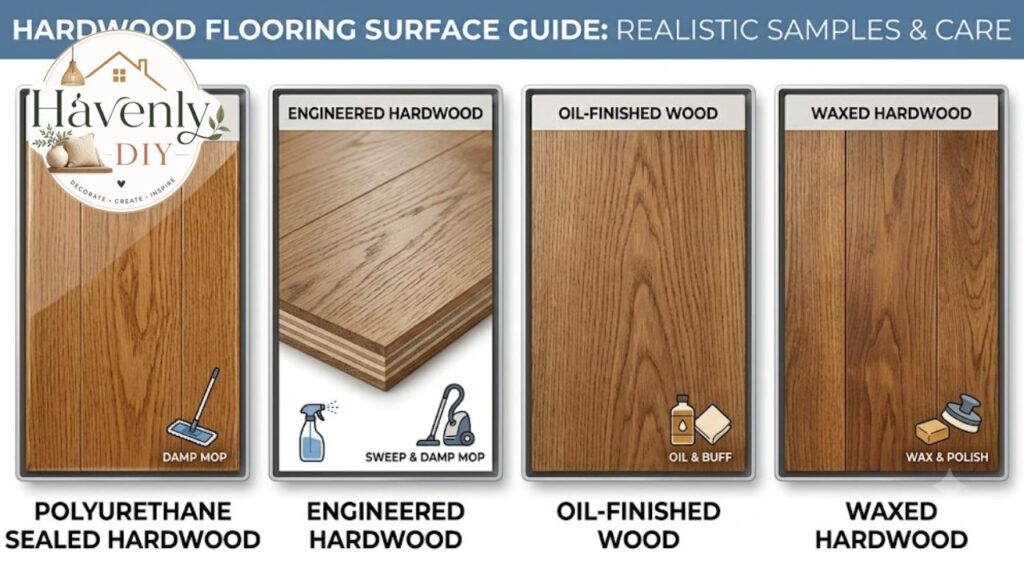
If you know the floor brand, start with its care guide. If you do not, test any cleaner in an inconspicuous area before using it throughout the room. A spot test does not magically identify the finish, but it can reveal obvious dulling, discoloration, or residue before you affect hundreds of square feet.
What You Actually Need
Hardwood does not require a cupboard full of chemicals. For most routine cleaning, keep the setup simple:
- microfiber dust mop or soft broom
- vacuum with a hard-floor mode or soft floor head
- clean microfiber mop pads
- finish-compatible hardwood cleaner
- absorbent microfiber cloth
- extra clean pad for drying or buffing
A flat microfiber mop is useful because it gives better control over moisture than a saturated string mop. The second useful habit is having more than one clean mop pad. Once a pad becomes dirty, continuing to drag it across the room can simply redistribute soil.
How to Clean Hardwood Floors Step by Step
Remove loose dirt before adding moisture
Dry soil is more dangerous than it looks. Fine grit brought in on shoes can behave like abrasive material when it is dragged underneath a mop or vacuum attachment. This is why almost every major hardwood-cleaning guide starts with sweeping, dust mopping or vacuuming.
Work along the edges of the room and beneath furniture where possible. If you use an upright vacuum, turn off the rotating brush roll if the manufacturer provides that option. A hard-floor or suction-only setting is safer than a carpet setting with an aggressive beater bar.
Deal with fresh spills separately
Do not wait until weekly cleaning day to handle a wet spill. Blot it rather than spreading it across the floor. Follow with a cloth that is only slightly damp if necessary, then dry the area. This matters most around sinks, pet bowls, exterior doors, and dining areas where liquid can find seams between boards.
Choose the cleaner according to the finish
For a modern sealed floor, a neutral-pH or manufacturer-approved hardwood cleaner is the safest general recommendation. Do not assume that “natural,” “all-purpose” or “safe for floors” automatically means safe for your hardwood.
There is plenty of conflicting internet advice about vinegar, dish soap and oil soap. When that happens, the exact flooring manufacturer’s instructions should outrank a generic cleaning recipe.
Apply less liquid than you think you need
Hardwood cleaning is not tile cleaning. A heavily soaked floor is not receiving a deeper clean. It is simply receiving more moisture. Spray or apply enough cleaner to work a manageable section, not enough to create puddles. Your microfiber pad should be damp rather than dripping.
The National Wood Flooring Association guidance quoted by HGTV emphasizes a damp or near-dry approach rather than overwetting the floor.
Work in small sections
Clean a few feet at a time rather than soaking an entire room before mopping. Move with the boards where practical. This makes it easier to see residue and helps you inspect seams. If the mop pad becomes visibly dirty, replace it.
For a genuinely dirty floor, using three clean pads during one session can produce a better result than forcing a single contaminated pad through the entire house.
Do not leave water sitting
Look behind yourself as you work. If liquid is remaining on the surface instead of disappearing quickly, the mop is probably too wet or too much product has been applied. Dry visible moisture with a clean microfiber cloth or dry pad.
Inspect the floor from a low angle
When the floor is dry, look across it toward a window or lamp rather than directly down. Raking light makes streaks, residue, and missed sections much easier to see. Do not automatically add more cleaner if streaks appear. Too much cleaner may have caused them in the first place.
How to Deep Clean Hardwood Floors Without Soaking Them
“Deep clean” is one of the most misunderstood phrases in hardwood care. A deeper clean should mean better soil removal, not additional water. Start by vacuuming more carefully than usual. Clean along baseboards, beneath movable furniture, and between accessible seams.
Then divide the room into small working zones. Apply the compatible cleaner sparingly, give it the contact time permitted by its label, and lift the loosened dirt with a clean microfiber pad. Replace pads as they become contaminated.
Bona’s deep-cleaning guidance similarly separates dry soil removal, wet cleaning, and targeted problem areas rather than recommending indiscriminate flooding. For grime caught at board edges, start with suction and a soft detailing brush.
Avoid metal scraping tools unless you are certain the finish and manufacturer allow them. If one pass removes significant dirt, repeat with a fresh pad rather than making the first pass wetter. That is what a controlled deep clean should look like.
Why Does My Hardwood Floor Still Look Dirty After Mopping?
This is the question many cleaning articles answer badly. If a white cloth becomes dirty when you wipe a supposedly clean floor, several things may be happening.
The mop is redistributing dirt
A saturated dirty pad cannot keep collecting contamination forever. Replace it more often.
There is cleaning-product residue
Too much cleaner can create a sticky or cloudy film that catches footprints and attracts new dirt. Bona specifically identifies cleaner residue and contaminated pads as common sources of streaking.
If you suspect residue, check the cleaner’s instructions. Some products are no-rinse; others have specific dilution or removal directions. Do not begin mixing random chemicals in an attempt to strip the film.
The product is incompatible with the finish
A cleaner may be harmless on tile and still perform poorly on hardwood. Multi-surface cleaners, oils, waxes and products promising instant shine can leave films on some modern finishes.
Your floor is scratched rather than dirty
Thousands of tiny scratches can scatter light and make a clear finish appear gray or dull. Cleaning cannot remove scratches from the finish.
The finish itself is wearing away
This is particularly common in traffic lanes between the kitchen, hallway, and exterior door. If the protective coating has worn through, cleaning will not recreate it. At that point you need to think about recoating or refinishing, not a stronger mop solution.
How to Remove Common Messes From Hardwood
Sticky food
Remove any solid material first. Use a small amount of compatible hardwood cleaner on a microfiber cloth rather than soaking the surrounding boards. Give the product enough time to soften the residue, then wipe and dry.
Shoe scuffs
Start with the gentlest option: a clean microfiber cloth. A clean tennis ball is also commonly used on resilient sealed finishes for superficial marks, but test first. Avoid jumping immediately to baking soda or abrasive pads.
Although some household guides recommend baking soda for scuffs, abrasives can alter the sheen of some finishes. Good Housekeeping, for example, suggests baking soda for heavier marks, while flooring manufacturers generally emphasize nonabrasive care.
Pet urine
Speed matters. Blot up as much liquid as possible immediately. If you use an enzymatic product, make sure the product specifically states that it is compatible with sealed hardwood and your floor’s finish.
Pet urine that has penetrated gaps or produced a dark stain inside the wood is no longer a simple surface-cleaning problem. More cleaner may not remove it.
Chewing gum or wax-like material
Hardening the material with ice inside a sealed bag can make it easier to lift gently with a plastic edge. Shaw includes a similar approach for gum in its hardwood-care guidance. Avoid knives or metal scrapers.
Dark water or pet stains
If discoloration is inside the wood rather than sitting on the finish, stop treating it like dirt. Those stains may require professional spot repair, board replacement, or refinishing.
Is Vinegar Safe for Hardwood Floors?
There is no useful universal answer of “yes, always” or “no, under every circumstance.” Diluted vinegar is recommended by some household publishers, while multiple flooring manufacturers advise against acidic cleaners because repeated exposure can affect particular finishes.
Bruce currently advises against vinegar on its hardwood products. For that reason, the safest general rule is: Do not use vinegar unless your flooring or finish manufacturer says it is acceptable. There is little benefit in gambling with an expensive finish when compatible cleaners are available.
Can You Steam Mop Hardwood Floors?
For ordinary real hardwood, assume no unless the exact flooring manufacturer explicitly states otherwise. Steam combines heat with moisture and can move vapor through seams and tiny openings.NWFA experts quoted by HGTV advise against steam on real wood.
While Bruce states that damage caused by steam may fall outside warranty coverage. A product marketed as a “hard-floor steam mop” is not automatically approved for every hardwood floor. Check the floor, not only the appliance label.
Can You Use Dish Soap?
A few drops of dish soap in water appear in several household cleaning guides, including Home Depot and Martha Stewart. That does not make dish soap universally appropriate.
Soap concentration, residue, finish type, and the amount of water all matter. If your manufacturer recommends a dedicated cleaner, use it. Dish soap should be a fallback only when your flooring guidance allows it.
What About Oil Soap or “Shine” Products?
Be especially cautious. A floor that looks shinier for a week is not necessarily better protected. Products that deposit oils, waxes, or temporary polish can complicate future maintenance coatings and create residue on finishes that were never designed for them.
NWFA guidance quoted by Architectural Digest specifically warns against many products marketed as “shine,” “revitalize,” or “rejuvenate” solutions, while Bruce also cautions against oil-based products on relevant finishes.
How Often Should You Clean Hardwood Floors?
There is no useful schedule that fits every home. A quiet guest bedroom and an entryway used by two dogs should not receive identical maintenance. A practical framework is:
| Frequency | Task |
|---|---|
| Immediately | Blot spills and pet accidents |
| Daily/as needed | Dust high-traffic areas |
| Every few days to weekly | Vacuum depending on traffic, pets, and grit |
| Every few weeks/as needed | Damp-clean visible soil with compatible cleaner |
| Periodically | Move rugs/furniture and clean hidden areas |
| When dullness persists | Inspect finish rather than increasing cleaner strength |
Good Housekeeping recommends frequent dry maintenance and less frequent wet cleaning, while Better Homes & Gardens similarly emphasizes dry cleaning as the majority of routine hardwood care. The underlying principle is more useful than memorizing a calendar:
Remove abrasive dirt frequently and introduce moisture only when necessary.
10 Hardwood Cleaning Mistakes That Cause More Harm Than Dirt
- Wetting the floor before removing grit.
- Using a carpet vacuum setting with an aggressive brush roll.
- Treating all wood finishes the same.
- Assuming a “natural” cleaner is automatically safe.
- Using far too much cleaner.
- Cleaning an entire house with one filthy mop pad.
- Leaving puddles between boards.
- Using steam without checking the flooring warranty.
- Applying shine or wax products to incompatible finishes.
- Trying to clean away a finish that is actually worn or scratched.
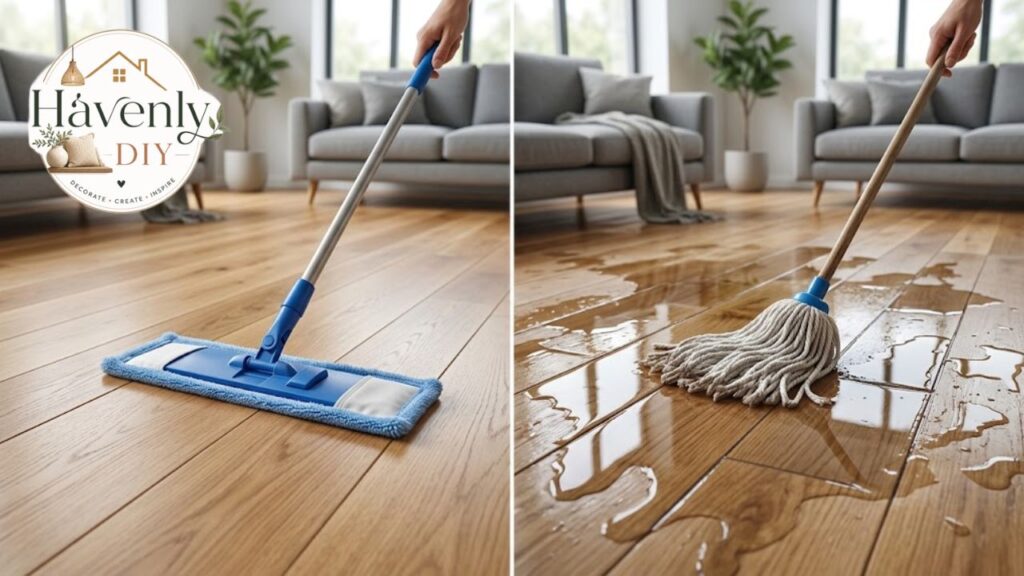
The pattern behind almost all of them is the same: more force, more chemistry, and more moisture are not automatically more effective.
When Cleaning Is No Longer the Answer
A hardwood floor eventually reaches a point where cleaning cannot restore its appearance. Look closely for:
- bare wood
- finish flaking or peeling
- deep scratches through the coating
- widespread gray traffic paths
- dark stains inside the wood
- cupping or crowning
- boards that remain swollen after moisture exposure
- large areas with severely uneven sheen
Recoating adds another protective layer when the existing finish is still viable. Refinishing involves more extensive removal and replacement of the old finish.
Architectural Digest’s flooring experts make the useful distinction that recoating can extend floor life without the complete sanding process required for refinishing. Knowing when to stop cleaning is part of knowing how to care for hardwood.
How to Keep Hardwood Floors Cleaner for Longer
The cheapest cleaning strategy is preventing dirt from reaching the floor. Use a good entry mat, particularly at exterior doors. Remove shoes where practical. Keep felt pads beneath furniture. Lift furniture rather than dragging it. Trim pet nails and clean beneath rugs occasionally because grit can accumulate underneath them.
Humidity matters too. Wood naturally expands and contracts with environmental moisture. Shaw and Bruce recommend maintaining a relatively stable indoor environment, with guidance around the 35–55% relative-humidity range for many of their hardwood systems.
Always follow the specifications for your particular product. Finally, keep the name of your flooring product and its care instructions somewhere you can find them. That small detail can prevent years of guesswork.
The rule worth remembering
When you are unsure how to clean a hardwood floor, resist the temptation to reach for the strongest cleaner. Remove the grit, identify the finish, use the least moisture necessary, and let the floor manufacturer’s instructions settle any argument between internet cleaning hacks.
That approach may not be dramatic, but it is how expensive wood floors stay clean without becoming a repair project.
Frequently Asked Questions
What is the best thing to use to clean hardwood floors?
For most sealed hardwood, use a microfiber mop with a hardwood cleaner approved by the flooring manufacturer or a compatible neutral-pH cleaner. Vacuum or dust first and minimize moisture
Can I mop hardwood floors with water?
A lightly damp mop may be acceptable for many sealed hardwood finishes, but soaking the floor is not. Some flooring manufacturers advise avoiding water-based mopping altogether, so check your care guide first
What is the best way to deep clean hardwood floors?
Vacuum thoroughly, identify the finish, apply an appropriate cleaner in small sections, agitate gently with clean microfiber pads, and remove loosened dirt without flooding the floor.
Why are my hardwood floors sticky after mopping?
The usual causes are excess cleaner, incorrect dilution, an incompatible product, a dirty mop pad, or old residue already on the finish.
Why do my hardwood floors look cloudy?
Cloudiness can come from cleaning-product film, wax/oil buildup, micro-scratches, or worn finish. Diagnose the cause before applying more cleaner
Can vinegar damage hardwood floors?
It can affect certain finishes, particularly with repeated use. Since several major flooring manufacturers advise against vinegar, skip it unless your exact floor or finish manufacturer approves it.
Can I use a steam mop on sealed hardwood?
Do not assume that sealing makes steam safe. Many flooring manufacturers and the NWFA advise against steam because heat and vapor can reach seams and damage wood or finish.
Can I use a Swiffer on hardwood floors?
Dry Swiffer-style pads are generally useful for dust collection. Wet products should only be used when their solution is compatible with your specific hardwood finish.