

Walk past any cheese counter, and you’ll spot it: a pale golden wedge with a zigzag pattern pressed into its dark rind. It shows up on tapas boards, holiday platter,s and supermarket shelves around the world.
That wedge is Spain’s best-known cheese. It’s nutty, a little sweet, slightly tangy, and it gets sharper and more crumbly the longer it ages.
Manchego cheese is easy to love and surprisingly easy to misunderstand. This guide covers where it comes from, how it’s made, the difference between young and aged wedges, how to spot the genuine article, what to pair it with, and how to store and serve it.
The Short Answer
Manchego is a pressed sheep’s milk cheese from the La Mancha region of central Spain. Under EU rules, real Queso Manchego must be made only from the milk of Manchega sheep raised in a defined area of La Mancha.
It has a firm, compact texture and a buttery, nutty flavor with a gentle tang. Younger wedges are mild and supple. Older wedges are drier, more crystalli,ne and more intense.
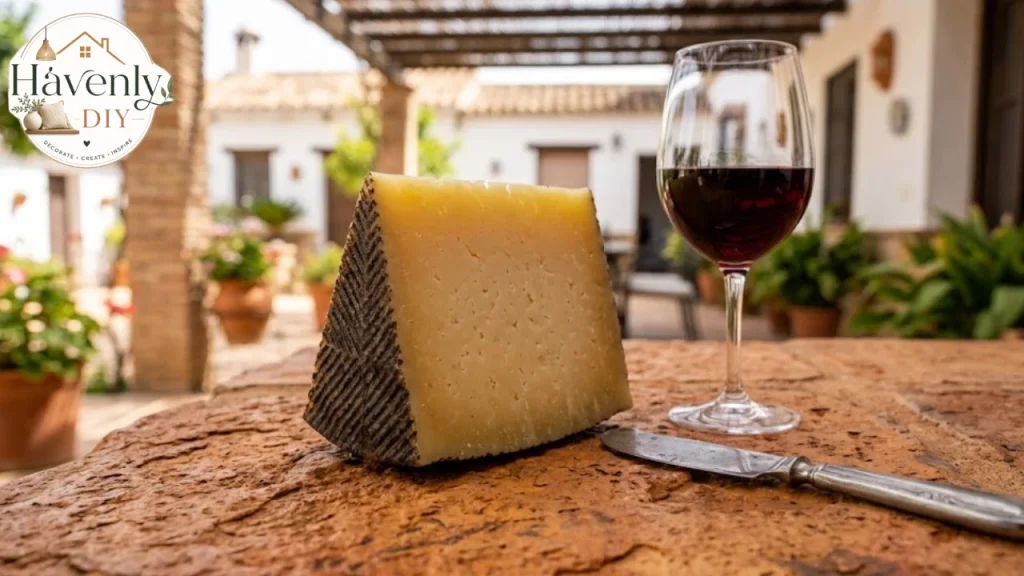
To buy the real thing, look for the words “Queso Manchego” with the protected origin label and the numbered label from the Regulatory Board. Pair it with quince paste, almonds, olives, cured ham, Spanish red wine or sherry.
Where Manchego Comes From
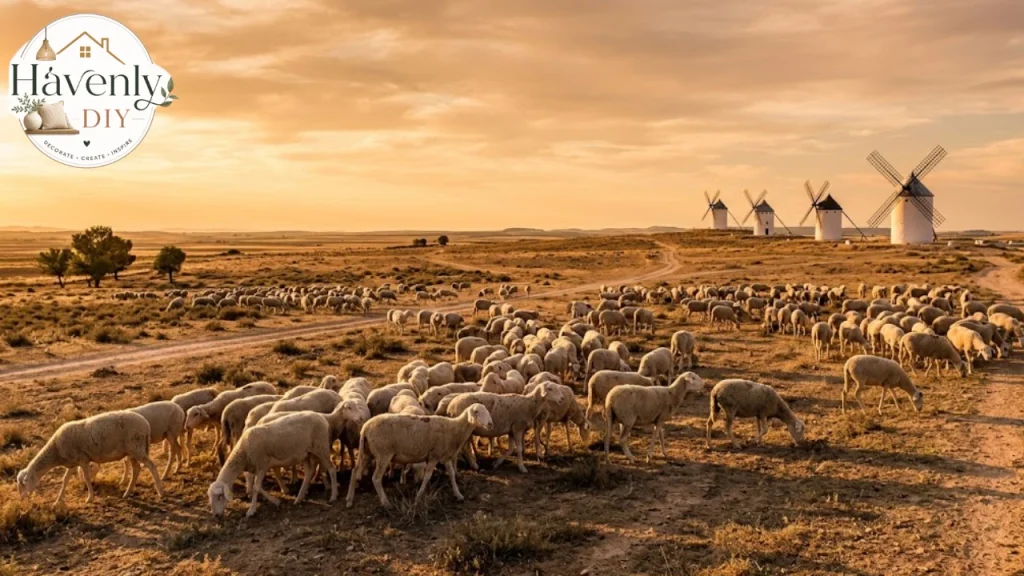
La Mancha is a high, dry plateau in central Spain, best known outside the country as the home of Don Quixote. Long hot summers, cold wint,ers and sparse grazing land shape everything that grows and lives there.
The Manchega sheep is the local breed, adapted to that tough landscape. Shepherds have made cheese from its milk for centuries, and the cheese took its name from the region.
Today, Queso Manchego is a protected designation of origin (PDO). The official production area covers hundreds of municipalities across four provinces of Castilla-La Mancha: Albacete, Ciudad Real, Cuenca and Toledo.
A Regulatory Board oversees production, checks qua,lity and issues the labels that prove a cheese is genuine.
A Short History
Sheep have grazed La Mancha for thousands of years, and cheesemaking there is very old. Shepherds needed a way to keep milk from spoiling in the heat, and a dense, salted, slowly aged cheese was the answer.
For centuries, Manchego cheese was made on farms in small batches. Each family had its own methods, and wheels were sold at local markets. Wheels traveled with shepherds and traders across Spain, and the cheese became a staple of village kitchens and inns along the roads of the plateau.
Factory dairies grew in the 20th century, and Spain gave Manchego official protection in the 1980s. EU-wide PDO status followed, so producers in other countries can no longer sell their cheese under the same name in Europe.
That protection is why the label matters so much. It ties every wedge back to one breed of sheep, one region and one set of rules.
What Makes It “Real” Manchego
The PDO rules are strict. To carry the name Queso Manchego, a cheese must meet requirements set out in its official EU specification. The main ones are:
| Rule | Requirement |
|---|---|
| Milk | Only whole milk from Manchega sheep in the PDO area |
| Milk treatment | Raw or pasteurized |
| Ripening | At least 30 days for cheeses up to 1.5 kg; 60 days to 2 years for larger cheeses |
| Shape | Cylinder with flat faces and smooth sides |
| Size | Up to 12 cm tall and 22 cm across |
| Weight | 0.4 kg to 4 kg |
| Fat | At least 50 percent of dry matter |
| Identification | Casein plate on each cheese and a numbered label from the Regulatory Board |
Cheeses made with raw milk can be labeled “artesano.” Those made with pasteurized milk are more common, especially in exports.
Why “Manchego-Style” Isn’t the Same
Outside the EU, you may see cheeses labeled “Manchego-style” or “Spanish-style sheep cheese.” Some are good, but they aren’t PDO Manchego.
They may use cow’s or goat’s milk, a different sheep breed, or be made far from La Mancha. If the label doesn’t say “Queso Manchego” with the PDO seal, it isn’t the protected product.
How Manchego Is Made
The basic steps are similar to many pressed cheeses, but the details give Manchego its character.
Milking. Milk from Manchega ewes is collected and, in most dairies, pasteurized. Artesano cheeses use raw milk.
Curdling. The milk is warmed and set with rennet until it forms a firm curd.
Cutting. The curd is cut into rice-sized grains to release whey. Smaller grains mean a firmer cheese.
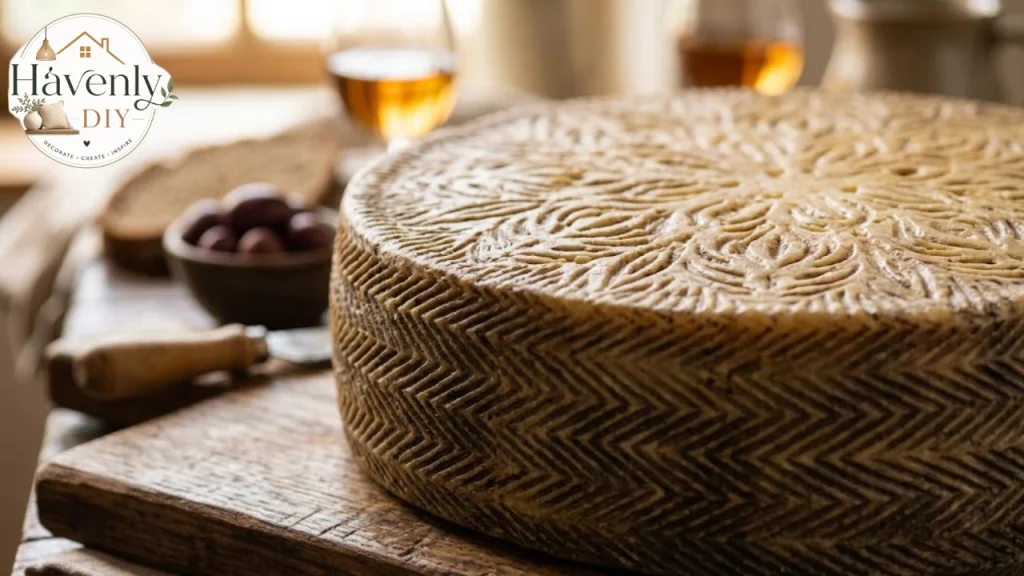
Molding. The curds are packed into cylindrical molds. Traditionally, braided esparto grass bands were wrapped around the sides, leaving the zigzag “pleita” pattern. Wooden boards on the top and bottom pressed a flower-like design, the “flor.”
Pressing. The molds are pressed to remove more whey and form a compact wheel. The casein identification plate is applied at this stage.
Salting. Wheels are soaked in brine or dry-salted.
Ripening. The cheeses age in cool, humid rooms or caves, where they’re turned and checked regularly.
Today most producers use plastic molds that copy the traditional patterns. The look is the same, and the patterns have become a symbol of the cheese.
Manchego by Age: Semicurado, Curado and Viejo
Age changes everything about Manchego: flavor, texture, ,color and how you use it. Producers and shops commonly use these labels, though exact timings vary.
| Type | Typical age | Texture | Flavor | Best uses |
|---|---|---|---|---|
| Semicurado | About 2 to 3 months | Supple, smooth, slightly springy | Mild, milky, gently nutty | Sandwiches, snacking, melting |
| Curado | About 3 to 6 months | Firm, slightly crumbly | Nutty, buttery, more tang | Cheese boards, tapas |
| Viejo | 6 months up to 2 years | Hard, dry, crystalline | Intense, sharp, caramel notes | Grating, slow tasting, wine pairing |
Fresco: A Note on Fresh Manchego
You may see “queso fresco Manchego” in Spain, but very young cheeses don’t meet the PDO minimum ripening time. Fresh sheep’s cheese from La Mancha can be delicious, yet true PDO Manchego is always aged.
Which One Should You Buy?
If you’re new to Manchego, start with a curado. It’s the classic middle ground and the most common style abroad.
Choose semicurado for kids, sand,wiches and anyone who prefers mild cheese. Pick viejo when you want a cheese to savor slowly, like a fine Parmesan.
What Does Manchego Taste Like?
Good Manchego cheese has a clean, balanced flavor. Most tasters describe:
Nutty notes, often compared to toasted almonds or hazelnuts
Buttery richness from the sheep’s milk fat
A light tang that grows with age
Sweetness, sometimes like caramel or brown butter in older cheeses
A savory, slightly grassy finish
Sheep’s milk has more fat and protein than cow’s milk, which gives the cheese its rich mouthfeel. Aged wedges often contain tiny crunchy crystals, which are clusters of amino acids that form during long ripening. They’re a good sign, not a flaw.
The paste is ivory to pale straw in color, with small, unevenly spread holes. It darkens slightly with age.
Is the Rind Edible?
No. The rind of Manchego isn’t meant to be eaten.
It’s natural but very hard, and many producers coat it with wax, p,araffin or another protective layer. Some use olive oil. Cut the rind away before serving, leaving a thin border if you like the look on a board.
How to Buy Good Manchego
Read the Label
Look for:
The words “Queso Manchego”
The Denominación de Origen Protegida wording or the EU PDO seal
The numbered label issued by the Regulatory Board
The age category, such as semicurado,, curado or viejo
Whether it’s made with raw or pasteurized milk
Check the Cheese
Color. The paste should be ivory to pale yellow, not white and rubbery.
Texture. It should look firm and even. Avoid wedges with cracks, a sweat,y surface or dried-out edges.
Smell. It should smell cl,ean, milky and nutty. A sour or ammonia smell suggests it’s past its best.
Freshly cut is best. If you can, buy from a counter that cuts wedges to order. Pre-cut, vacuum-packed wedges are fine but lose some aroma.
Where to Buy It
Specialty cheese shops, Spanish delis, good s,upermarkets and warehouse clubs often stock Manchego. Prices vary by age, with viejo usually the most expensive. A small wedge of authentic PDO cheese is usually better value than a large block of a vague “Spanish-style” cheese.
How to Serve Manchego
Serving Temperature
Take Manchego out of the fridge about 30 to 60 minutes before serving. Cold cheese tastes muted. At room temperature, the nutty, buttery flavors come through.
How to Cut It
The classic Spanish way is to cut a wedge into thin triangles:
- Remove the rind from the wedge.
- Lay the wedge on its side.
- Cut thin slices, about a quarter inch thick, across the wedge.
- Cut each slice into two or three small triangles.
Thin triangles show off the texture and make sharing easy on a tapas board. For aged viejo, you can also break it into chunks with a cheese knife or shave it with a vegetable peeler.
Building a Spanish Cheese Board
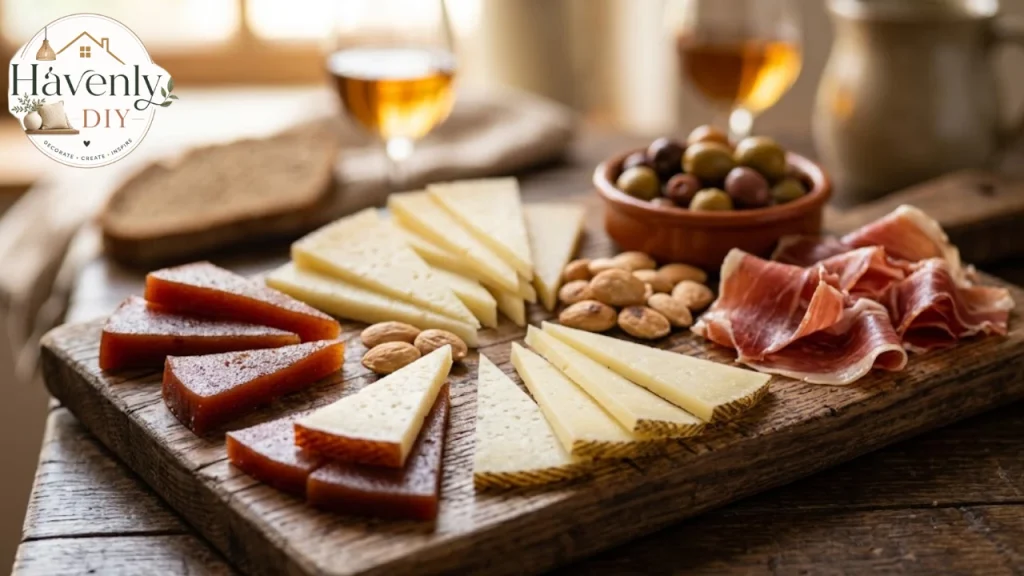
A simple Spanish-style board might include:
- Manchego in two ages, such as curado and viejo
- Membrillo (quince paste)
- Marcona almonds
- Green olives, such as Manzanilla or Gordal
- Jamón serrano or jamón ibérico
- Chorizo
- Crusty bread or crackers
- Fresh figs, grapes or apple slices
For a Spanish evening at home, a warm setting adds to the mood. Our guide to Spanish-style homes shares design ideas, from terracotta tones to wrought iron, that suit a relaxed tapas night.
How Much to Buy for a Party
Plan quantities by how the cheese will be served:
| Occasion | Amount per person |
|---|---|
| Appetizer board with other snacks | About 1 to 2 ounces (30 to 60 g) |
| Cheese course after dinner | About 1 ounce (30 g) per cheese |
| Cheese board as the main meal | About 3 to 4 ounces (85 to 115 g) total cheese |
For a gathering of ten with a mixed board, a 1-pound (450 g) wedge of Manchego cheese alongside one or two other cheeses is usually plenty. Leftovers keep well and can be grated into cooking.
Set the board out where guests can reach it easily, with a small knife for each cheese so flavors don’t mix.
Best Pairings for Manchego
Classic Food Pairings
Membrillo. Sweet, thick quince paste is the most famous partner. The fruitiness balances the salt and tang of the cheese.
Marcona almonds. Their soft crunch echoes the nutty flavor.
Honey. A drizzle over aged Manchego brings out caramel notes.
Fresh and dried fruit. Figs, dates, pears, apples, and grapes all work well.
Cured meats. Jamón, chorizo and salchichón add salty, savory depth.
Olives and pickles. A briny contrast that keeps the palate fresh.
Wine Pairings
Young Manchego. Light Spanish reds, rosé, or crisp whites such as Albariño or Verdejo.
Curado. Tempranillo-based reds like Rioja Crianza or Ribera del Duero.
Viejo. Fuller reds, such as Rioja Reserva, or nutty sherries like Amontillado or Oloroso.
Sherry. Dry Fino or Manzanilla sherry is a traditional Spanish match for younger cheeses.
Non-Alcoholic Pairings
Try sparkling apple juice, pear cider without alcohol, unsweetened iced tea, or a fruity grape juice. Their acidity and sweetness play the same role as wine.
Cooking With Manchego
Manchego cheese isn’t only for boards. It’s a versatile cooking cheese.
Melting. Semicurado and young curado melt smoothly, though not as stretchily as mozzarella. They’re great in grilled cheese, quesadilla,s and burgers.
Grating. Aged viejo grates finely and adds nutty depth to pasta, risotto, salads and roasted vegetables.
Baking. Add grated Manchego to cheese scones, gougères, savory muffins or cornbread.
Eggs. Fold it into tortilla española, omelets or scrambled eggs.
Salads. Shave thin pieces over arugula with pears and toasted almonds.
Croquetas. Combine with béchamel and ham for classic Spanish croquettes.
Easy Ideas to Try
Manchego and membrillo toasties. Thin slices of cheese and quince paste in crusty bread, pan-fried until golden.
Baked Manchego with honey. Warm a thick slice in the oven until soft, then drizzle with honey and sprinkle with thyme.
Manchego crisps. Bake small piles of grated aged cheese until lacy and golden.
Stuffed dates. Fill pitted dates with a small piece of cheese and wrap in jamón or bacon, then bake.
Nutrition: What’s in Manchego?
Like most hard cheeses, Manchego is rich in fat, prote,in and calcium. According to figures from the Queso Manchego Regulatory Board, 100 grams of cured Manchego contains about:
| Nutrient (per 100 g, cured) | Amount |
|---|---|
| Energy | About 467 kcal |
| Fat | About 36 g |
| Calcium | About 848 mg |
A typical serving is about 1 ounce, or 28 grams. That works out to roughly 130 calories, 10 grams of ,fat and nearly 240 milligrams of calcium.
Protein and calcium. Manchego is a good source of both, which support muscles and bones.
Fat and salt. It’s high in saturated fat and sodium, so enjoy it in sensible portions.
Lactose. Long-aged hard cheeses usually contain very little lactose because most of it is removed with the whey or broken down during ripening. Many people with lactose intolerance tolerate aged cheeses well, but check with a doctor if you’re unsure.
Is Manchego Safe During Pregnancy?
Manchego made from pasteurized milk is generally considered safe during pregnancy. Hard cheeses are less likely to carry harmful bacteria.
Raw-milk “artesano” Manchego is a different matter. Health authorities often advise pregnant women to check with their doctor or midwife before eating raw-milk cheese. Read the label, and when in doubt, choose pasteurized.
Is Manchego Vegetarian or Gluten-Free?
Vegetarian. Not always. Many Manchego producers use traditional animal rennet, which comes from the stomachs of young animals. Some use microbial or vegetable rennet instead. If this matters to you, check the ingredient list or ask the cheesemonger, since labels don’t always make it obvious.
Gluten-free. Plain Manchego is naturally gluten-ree, because cheese is made from milk, cultures, ren,net and salt. Watch out for flavored versions, coatings, or wedges cut on shared counters in delis if you have celiac disease.
Keto and low-carb. Hard cheeses like Manchego are very low in carbohydrates, which is why they’re popular in low-carb eating plans. Portion size still matters because of the calories.
Dairy-free. No. Manchego is a dairy product made from sheep’s milk, so it isn’t suitable for anyone avoiding dairy or with a milk allergy.
When serving guests, label the board or mention the rennet and milk type. It saves awkward questions and helps people with dietary needs enjoy it safely.
How to Store Manchego
Wrap it right. Wrap cut wedges in wax paper or cheese paper, then loosely in plastic wrap or a container. This lets the cheese breathe without drying out.
Keep it cool. Store it in the warmest part of the fridge, such as the vegetable drawer.
Change the wrap. Rewrap with fresh paper after each use.
Watch for mold. A little surface mold on hard cheese can usually be trimmed off, cutting at least an inch around the spot. If mold is widespread or the cheese smells off, throw it away.
Shelf life. A well-wrapped wedge often keeps for several weeks in the fridge. Aged cheeses last longer than young ones because they contain less moisture.
Can you freeze it? You can, but freezing changes the texture and makes it more crumbly. Frozen Manchego is best used for cooking or grating.
A well-organized fridge and pantry make it easier to keep specialty foods at their best. If you’re updating your kitchen, our coastal kitchen guide has ideas for open shelving and storage that look good when entertaining.
Manchego vs Other Cheeses
| Cheese | Country | Milk | How it compares |
|---|---|---|---|
| Manchego | Spain | Sheep | Nutty, buttery, balanced |
| Pecorino Romano | Italy | Sheep | Much saltier and sharper, mainly for grating |
| Idiazábal | Spain | Sheep | Often lightly smoked, more intense |
| Zamorano | Spain | Sheep | Similar style, often more robust |
| Ibérico | Spain | Blend of cow, sheep and goat | Milder, often cheaper |
| Parmigiano Reggiano | Italy | Cow | Grainier, saltier, more umami |
| Aged Gouda | Netherlands | Cow | Sweeter, butterscotch-like |
Good Substitutes
If you can’t find Manchego, try:
- Zamorano for the closest flavor
- Ibérico for a milder, cheaper option
- Pecorino Toscano for a young, mild sheep’s cheese
- Pecorino Romano for grating, using less because it’s saltier
- Aged Gouda for a sweet, nutty profile in cooking
Common Mistakes With Manchego
Serving it straight from the fridge. Cold dulls the flavor. Let it warm up first.
Eating the rind. It’s hard, often waxed, and not meant to be eaten.
Buying “Manchego-style” by mistake. Check for the PDO label if you want the real thing.
Storing it in plastic only. It sweats and develops off flavors. Use cheese paper first.
Using viejo for melting. Very aged cheese can turn oily when heated. Use younger cheese for melting.
Cut thick chunks. Thin triangles taste better and look more inviting on a board.
FAQs:
What kind of milk is Manchego made from?
Authentic PDO Manchego is made only from the milk of Manchega sheep raised in the La Mancha region of Spain.
What does Manchego cheese taste like?
It’s nutty, buttery, and slightly tangy. Young wedges are mild and smooth, while aged ones are sharper, drie,r and more intense.
Is Manchego a hard or soft cheese?
It’s a firm, pressed cheese. Younger Manchego is semi-firm, while aged viejo becomes hard and crumbly.
Can you eat the rind on Manchego?
No. The rind is very hard and often coated in wax or paraffin. Cut it off before eating.
What goes well with Manchego?
Quince paste, Marcona almonds, olives, honey, figs, cured ham, crusty bread, Spanish red wi,ne and sherry.
Is Manchego lactose-free?
It isn’t guaranteed lactose-free, but aged Manchego usually contains very little lactose. People with lactose intolerance often tolerate it, though sensitivity varies.
How long does Manchego last in the fridge?
A properly wrapped wedge often keeps for several weeks. Aged cheeses usually last longer than younger ones.