

Most homeowners want a number before they want a plan. Block Renovation’s 2026 guide, dated May 11, 2026, puts the national average for a bathroom remodel at about 16,500 dollars, with a typical range of 10,000 to 30,000 dollars.
That range is too wide to budget from. A cost-to-remodel bathroom calculator narrows it to a figure for your room, your finishes, and your layout.
The catch is that every calculator runs on a few inputs, and the ones you pick can move the answer by tens of thousands of dollars.
This guide shows the arithmetic so you can run it by hand and check any online tool against it. It covers size, scope, line items, hidden costs, worked examples, and ways to lower the total. All prices are published ranges with sources and dates, and they vary by region.
How a Bathroom Remodel Calculator Works
Online calculators ask for a handful of details. Inch Calculator’s tool, for example, takes an optional zip code, a finish level (basic, upgraded, or designer), installation labor, project supplies,s and an optional “remove existing” line. It returns a low-to-high total set against national figures.
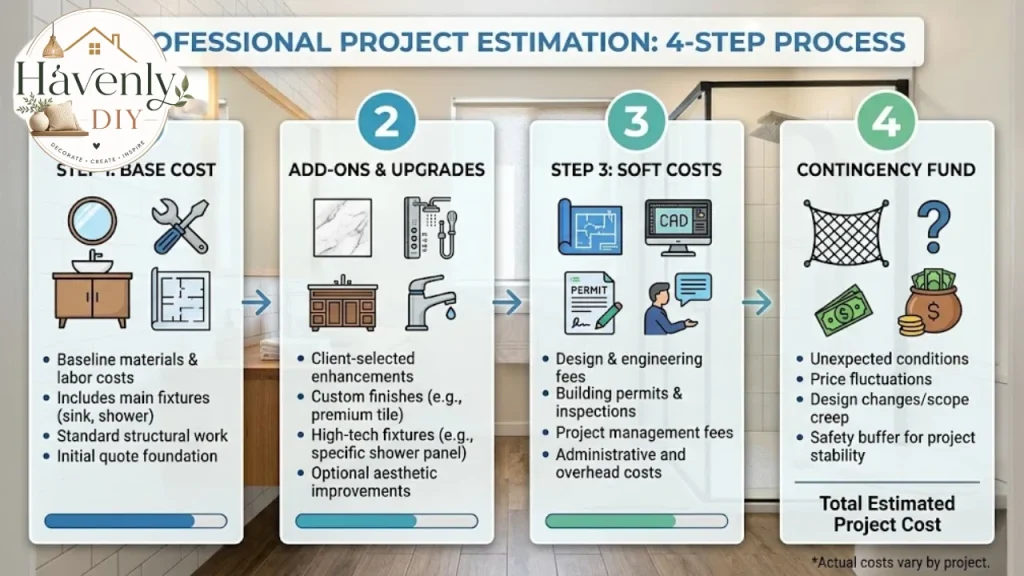
Behind the screen sits simple math. A cost-to-remodel bathroom calculator multiplies area by a rate for your scope, adds extras, then adds a buffer for surprises.
\text{Budget} = (\text{Base} + \text{Add-ons} + \text{Soft costs}) \times (1 + \text{Contingency})The Four Steps
Base cost. Bathroom area times the per-square-foot rate for your scope tier.
Add-ons. Layout changes, upgraded fixtures, and special features such as heated floors.
Soft costs. Permits, design fees,s and anything your quote leaves out.
Contingency. A reserve of 10 to 20 percent of the total.
Run each step twice, once with the low rate and once with the high rate. The result is a range, and both ends matter.
Before You Run the Numbers
Gather five facts first, and any cost-to-remodel-bathroom calculator will give you a tighter result.
Floor area. Multiply length by width. A 5-by-7-foot bath is 35 square feet.
Scope. Decide between a refresh, a mid-range remodel, and a high-end project.
Layout. Note whether the toilet, tub,b or vanity will move.
Home age. Pre-1970 plumbing and pre-1980 materials raise the hidden-cost risk.
Location. Coastal metros cost more than the Midwest, as the regional section below shows.
Write these on one page. You’ll reuse them when contractors ask for details, and they keep every quote on the same scope.
Cost by Scope: The Biggest Input
Scope moves the total more than size does. Block Renovation groups bathroom projects into four tiers:
| Scope tier | Total range (USD) | Per square foot (USD) |
|---|---|---|
| Cosmetic refresh | 5,000 to 10,000 | 80 to 120 |
| Mid-range remodel | 15,000 to 30,000 | 150 to 250 |
| High-end remodel | 35,000 to 60,000 | 250 to 400 |
| Luxury or primary suite | 60,000 to 120,000 or more | 400 to 600 or more |
Block says most mid-range homeowners spend 20,000 to 25,000 dollars. This Old House, updated July 2, 2026, describes a basic refresh as paint, hardware,re and lighting, a good fit when money is tight.
Small rooms cost more per square foot because fixed costs don’t shrink with the floor plan. Block notes that a 25-square-foot powder room can top 200 dollars per square foot, while a 100-square-foot primary bath often runs closer to 150.
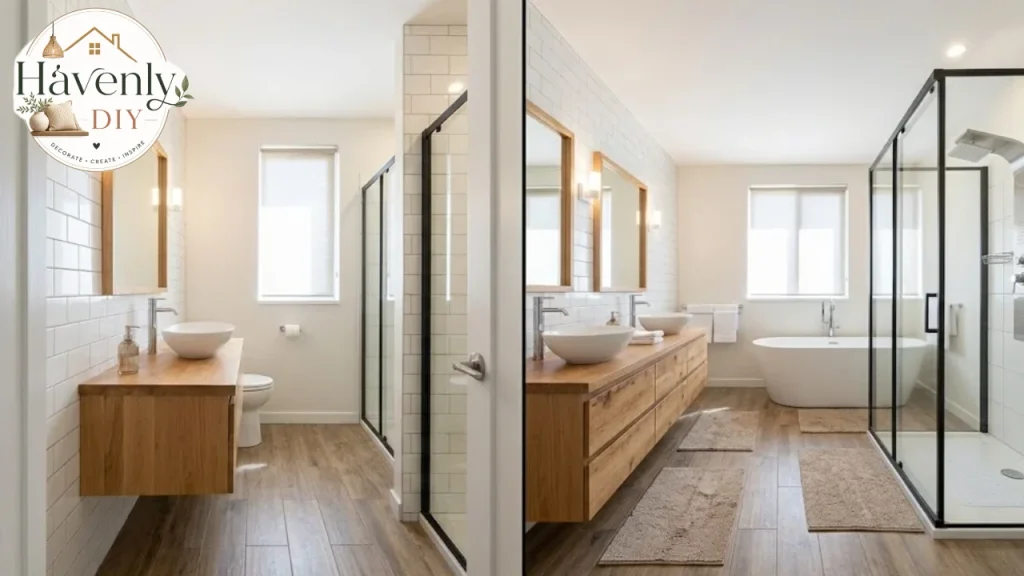
Cost by Bathroom Size and Type
Sometimes you know the room before you know the scope. Block Renovation lists totals by bathroom type:
| Bathroom type | Typical size (sq ft) | Cost range (USD) |
|---|---|---|
| Powder room | 15 to 25 | 3,000 to 12,000 |
| Guest or hall bath | 35 to 50 | 10,000 to 25,000 |
| Primary bath, mid-range | 75 to 100 | 25,000 to 50,000 |
| Primary suite, high-end | 100 or more | 50,000 to 120,000 or more |
| Accessibility remodel | Varies | 10,000 to 30,000 or more |
| Aging-in-place retrofit | Varies | 15,000 to 25,000 |
Block also gives 6,000 to 15,000 dollars for a mid-range remodel of a bathroom under 50 square feet. This Old House groups by size instead:
| Size category | Area (sq ft) | Average cost range (USD) |
|---|---|---|
| Small | 40 to 60 | 12,695 to 14,845 |
| Medium | 70 to 90 | 15,920 to 18,070 |
| Large | 100 to 120 | 19,166 to 21,295 |
| Master | 130 or more | 22,370 to 24,715 |
The two sources don’t line up. Block puts a mid-range primary bath at 25,000 to 50,000 dollars, while This Old House lists 19,166 to 21,295 dollars for a 100 to 120 square foot room. Neither page explains the gap, so treat them as two bookends.
Why the Averages Disagree
Three sources give three national averages:
| Source | Average (USD) | Note |
|---|---|---|
| This Old House (July 2, 2026) | 15,586 | Typical range 6,456 to 24,715 |
| Block Renovation (May 11, 2026) | 16,500 | Typical range 10,000 to 30,000 |
| Inch Calculator (2026 pricing) | 24,000 | Typical range 10,000 to 30,000 |
Inch Calculator’s page says its pricing uses average industry costs and that actual quotes will vary. It also cites a mid-range 5 by 7 foot remodel at just over 24,000 dollars from Remodeling magazine, while Block’s 5 by 7 guide lists 7,500 to 15,000 dollars for a mid-range version. Averages depend on what each survey counts as a remodel.
Line-Item Costs: The Detailed Method
Once you have a layout and a fixture list, line items give a tighter number than a per-square-foot rate. Block Renovation lists these general costs:
| Line item | Cost (USD) |
|---|---|
| Demolition and disposal | 1,000 to 2,300 or more |
| Permits | 100 to 1,000 |
| General contractor markup | 10 to 20 percent of project cost |
| Plumbing rough-in | 3,000 to 8,000 |
| Relocating one fixture | 1,000 to 5,000 |
| Replacing old supply lines | 1,500 to 4,000 |
| Electrical, mid-range | 800 to 2,500 |
| Tile labor | 2,500 to 6,000 |
| Exhaust fan with new ducting | 400 to 950 |
Block adds that when fixtures stay where they are, plumbing rough-in can run closer to 3,000 to 5,000 dollars. A full layout change adds 5,000 dollars or more.
Labor Versus Materials
Labor is the largest slice. Block says labor takes 50 to 65 percent of a mid-range project, materials 30 to 45 percent, and permits, demolition and disposal 5 to 10 percent. Inch Calculator puts labor at 45 to 65 percent.
On a 20,000 dollar project, that means roughly 10,000 to 13,000 dollars for labor, 6,000 to 9,000 for materials, and 1,000 to 2,000 for permits and demolition. Block lists plumbers at 85 to 175 dollars an hour and electricians at 60 to 145.
Fixtures and Finishes
Fixture choices swing the total faster than anything but layout. Block Renovation’s tiers:
| Item | Budget | Mid-range | High-end |
|---|---|---|---|
| Vanity (USD) | 400 to 700 | 1,200 to 2,500 | 3,500 to 8,000 |
| Toilet (USD) | 200 to 400 | 530 to 710 | 1,400 to 6,000 |
| Shower trim (USD) | 80 to 150 | 400 to 500 | 700 to 1,500 |
| Tile material (USD per sq ft) | About 2.79 | 6 to 11 | 15 to 40 |
Add up the first three rows, and the finish gap shows. Budget picks total 680 to 1,250 dollars, mid-range picks 2,130 to 3,710 dollars, and high-end picks 5,600 to 15,500 dollars. The top of the high-end range sits more than 14,000 dollars above the top of the budget range, and these are item prices only, before installation labor.
Tile installers charge 12 to 22 dollars per square foot, according to Block. If you’re weighing vanity sizes for a tight room, our small bathroom vanity guide covers layouts that save floor space.
Inch Calculator’s guide suggests giving vanity, cabinets,s and countertops 20 to 25 percent of the budget. On a 15,000-dollar project, that is 3,000 to 3,750 dollars.
Showers and Tubs
The shower is often the single biggest line. Block’s ranges:
| Shower or tub option | Cost (USD) |
|---|---|
| Prefab acrylic surround, installed | 1,500 to 3,000 |
| Custom tiled shower with glass enclosure | 5,000 to 12,000 |
| Tub reglazing | 300 to 600 |
| Tub replacement | 2,000 to 9,400 |
| Steam shower | 5,000 or more |
| Heated floors | 1,500 to 4,500 |
Inch Calculator lists glass shower doors at 550 to 8,000 dollars and shower fixtures at 200 to 4,000 dollars, a reminder that the same item can differ by a factor of ten.
Average Cost by Component
This Old House publishes average costs by component, handy as a checklist for what your estimate must cover:
| Component | Average cost (USD) |
|---|---|
| Shower installation | 8,044 |
| Plumbing | 5,545 |
| Cabinetry | 2,929 |
| Insulation and drywall | 2,338 |
| Water heating upgrade | 1,478 |
| Tiling | 1,326 |
| Painting | 1,145 |
| Bathtub | 1,123 |
| Flooring | 1,114 |
| Toilet | 467 |
| Electrical | 456 |
| Bathtub faucets | 423 |
| Countertops | 332 |
The page also says nearly 74 percent of surveyed homeowners named materials as the largest cost factor. Style choices matter here, so browse rustic bathroom ideas and a few color combinations before you price tile and paint.
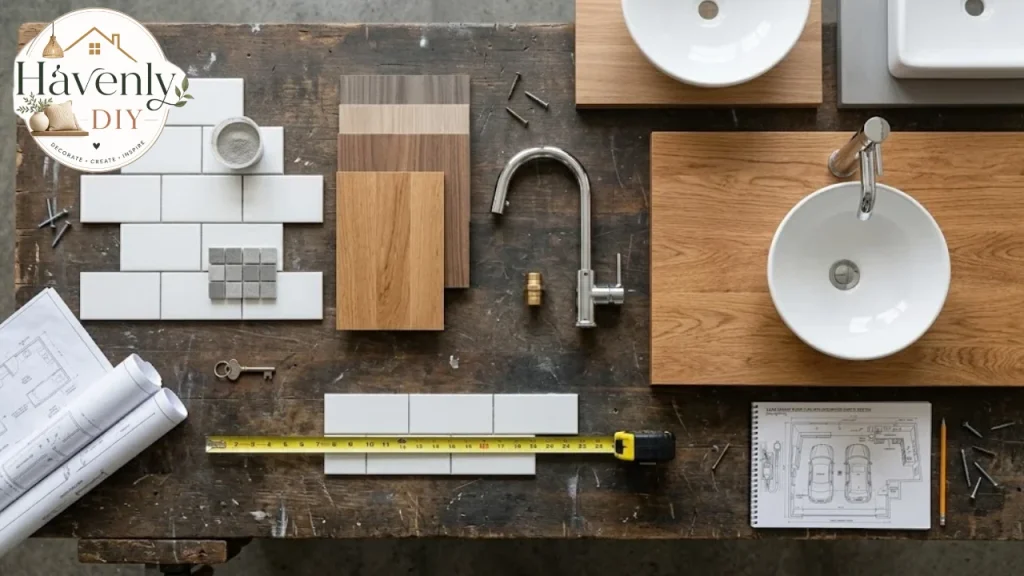
Hidden Costs a Calculator Won’t Show
Most calculators price the room you want, not the room you have. Block Renovation lists the surprises that appear once walls open:
| Hidden cost | Range (USD) |
|---|---|
| Water damage or rotted subfloor | 3.75 to 7 per sq ft |
| Outdated plumbing in pre-1970 homes | 1,500 to 4,000 |
| Mold remediation | 500 to 6,000 (surface mold 500 to 1,500) |
| Asbestos or lead abatement in pre-1980 homes | 500 to 3,000 or more |
| Code-required electrical upgrades | 500 to 2,500 |
| Joist sistering or replacement | 300 to 1,500 per joist |
A cost to remodel bathroom calculator can’t see behind your tile, so the contingency line is how you pay for these. Block recommends 10 to 20 percent of the total budget, which is 2,500 to 5,000 dollars on a 25,000 dollar bathroom. This Old House suggests setting aside 20 percent.
Older homes deserve the high end of that range. Wet rooms hide rot, and the repair has to happen before any new tile goes up.
Worked Examples
Here is the four-step method on real rooms. The rates come from Block Renovation’s scope tiers, and every example is an illustration, not a quote.
A 50 Square Foot Hall Bath, Mid-Range
A cost-to-remodel bathroom calculator would start with area times rate:
Base cost: 50 square feet times 150 to 250 dollars equals 7,500 to 12,500 dollars.
Add-ons: none, because the layout stays the same.
Contingency at 10 to 20 percent: 8,250 to 15,000 dollars.
Now check the result against what other sources say for a room this size:
| Source | Range (USD) |
|---|---|
| Hand calculation with contingency | 8,250 to 15,000 |
| Block, mid-range under 50 sq ft | 6,000 to 15,000 |
| Block, guest or hall bath | 10,000 to 25,000 |
| This Old House, midrange 50 sq ft | 14,609 to 19,040 |
Three of the four ranges overlap between 10,000 and 15,000 dollars, and the fourth starts at 14,609. That makes 10,000 to 15,000 dollars a sensible first planning range, with the This Old House figure showing how high a 50-square-foot room can go. This overlap is my own reading of the sources, not a published figure.
The Same Bath With a Moved Toilet
Layout changes are the most common budget buster. Using Block’s 1,000 to 5,000 dollars for relocating one fixture:
Base cost: 7,500 to 12,500 dollars.
Add-on, one relocated fixture: 1,000 to 5,000 dollars, for 8,500 to 17,500 dollars.
Contingency at 10 to 20 percent: 9,350 to 21,000 dollars.
One moved fixture lifts the top of the range by 6,000 dollars. Block says keeping the existing layout saves 3,000 to 8,000 dollars.
A 100 Square Foot Primary Bath, High-End
Base cost: 100 square feet times 250 to 400 dollars equals 25,000 to 40,000 dollars.
Add-ons: none assumed.
Contingency at 10 to 20 percent: 27,500 to 48,000 dollars.
Compare that with Block’s type table, which lists 25,000 to 50,000 dollars for a mid-range primary bath and 50,000 to 120,000 dollars or more for a high-end suite.
Block’s own pages disagree here: it says a 10100-square-footrimary bath often runs near 150 dollars per square foot, or about 15,000 dollars. For large rooms, itemized bids matter more than any rate.
Turning a Total Into a Budget Split
Once you have a total, split it. Block’s labor and materials shares make a handy template. Take a 115,000-dollar project:
| Budget slice | Share | Amount (USD) |
|---|---|---|
| Labor | 50 to 65 percent | 7,500 to 9,750 |
| Materials | 30 to 45 percent | 4,500 to 6,750 |
| Permits, demolition and disposal | 5 to 10 percent | 750 to 1,500 |
If your fixture list costs more than the materials slice, either the cost to remodel bathroom calculator result is too low, or the fixtures are too ambitious. Adjust one of them before you sign a contract.
Adjust for Where You Live
Location can move the total by a third. Block Renovation reports that coastal urban markets run about 30 to 40 percent above the Midwest, and that remote material delivery adds 5 to 10 percent.
Apply it as a multiplier. A 1212,000-dollaridwest estimate becomes 15,600 to 16,800 dollars in a coastal metro. Block adds that New York City projects can carry 1,500 to 5,000 dollars in extra soft costs for permits, expediters a,nd board approval, and that Kansas City runs 30 to 40 percent below comparable New York work.
How Long Will It Take?
Time costs money too, especially if you’re paying for a second place to shower. Block Renovation gives these timelines:
| Project type | Typical duration |
|---|---|
| Cosmetic refresh | 2 to 3 weeks |
| Standard mid-range remodel | 4 to 6 weeks |
| Larger or structural project | 8 to 12 weeks |
Block’s 5 by 7 guide, last modified in May 2026, lists 2 to 6 weeks in total for a small bath, including planning and design.
Ways to Lower Your Number
Savings come from decisions, not from haggling. These figures come from Block Renovation, Inch Calculator,r and This Old House:
Keep the layout. Block says this saves 3,000 to 8,000 dollars.
Keep the shower surround. Replacing only the vanity, toilet, fixtures, and flooring saves 8,000 to 15,000 dollars against a full mid-range remodel, per Block.
Use a prefab shower pan with custom tile walls. Block puts the labor savings at 800 to 2,000 dollars.
Buy fixtures from one collection. Block says bundling is 10 to 20 percent cheaper than mixing brands.
Refinish instead of replacing. This Old House suggests refinishing tubs and cabinets, or updating cabinet doors only.
Choose look-alike flooring. Vinyl or laminate can mimic stone or wood, according to This Old House.
Start with a refresh. Paint, hardware, and lighting go a long way, and bathroom wallpaper can change the room for little money.
[IMAGE 5: Homeowner checking a printed budget beside a bathroom with a new vanity]
DIY or Hire a Pro?
Inch Calculator says a DIY tear-out can save 500 to 2,000 dollars. This Old House lists painting, swapping faucets or shower heads, changing hardware, and installing a toilet as tasks many owners can handle.
Plumbing and electrical work are different. Permits for both stack up, as Block notes, and mistakes behind a wall are costly to find. Ask your local building department what a homeowner may do without a license.
What to Ask Each Contractor
Compare bids on the same scope. Ask every contractor for:
- An itemized quote with labor and materials separated
- Which fixtures are allowances and which are fixed prices
- Who pulls permits and who pays the fees
- How change orders are priced and approved
- A written start date, milestone, and finish date
Bids that differ by more than 20 percent often differ in scope, not skill. Line them up item by item before you decide.
Will a Remodel Pay Back?
Mostly, but not in full. Block Renovation cites the 2025 Cost vs. Value Report: about 74 percent of a mid-range remodel is recouped at resale, and about 45 percent of an upscale one. Block’s 5 by 7 guide gives 60 to 70 percent as the expected return.
Those are national figures. Return depends on your market and on whether the finish level matches nearby homes.
Common Mistakes When Estimating
Using one number. Always run low and high rates, so you plan for a range.
Skipping contingency. Surprises are normal in wet rooms, so reserve 10 to 20 percent.
Ignoring the layout. Moving a fixture adds 1,000 to 5,000 dollars before finishes.
Pricing fixtures only. Install labor is the largest slice of the bill.
Trusting one source. The averages above range from about 15,600 to 24,000 dollars.
Forgetting ventilation. An exhaust fan with new ducting runs 400 to 950 dollars.
Forgetting the house’s age. Pre-1970 plumbing and pre-1980 materials can add thousands.

FAQs:
How much does it cost to remodel a bathroom?
Block Renovation’s May 2026 guide puts the national average at about 16,500 dollars, with a typical range of 10,000 to 30,000 dollars. This Old House, updated July 2026, lists an average of 15,586 dollars.
How much does a bathroom remodel cost per square foot?
Block Renovation lists 80 to 120 dollars for a cosmetic refresh, 150 to 250 for mid-range, 250 to 400 for high-end,nd 400 to 600 or more for luxury. Small rooms run higher per square foot.
How much does a small bathroom remodel cost?
Block puts a mid-range remodel of a bathroom under 50 square feet at 6,000 to 15,000 dollars, and a powder room at 3,000 to 12,000 dollars. Its 5 by 7 guide lists 7,500 to 15,000 dollars for a mid-range version.
How much contingency should I add?
Block recommends 10 to 20 percent of the total budget, and This Old House suggests 20 percent. Older homes belong at the high end.
How long does a bathroom remodel take?
Block gives 2 to 3 weeks for a cosmetic refresh, 4 to 6 weeks for a mid-range remodel, and 8 to 12 weeks for larger or structural projects.
Is it cheaper to keep the same layout?
Yes. Block says keeping the layout saves 3,000 to 8,000 dollars, and keeping the existing shower surround can save 8,000 to 15,000 dollars against a full mid-range remodel.
Does a bathroom remodel add value?
Usually, though not dollar for dollar. Block cites the 2025 Cost vs. Value Report at about 74 percent recouped for mid-range work and about 45 percent for upscale work.
How accurate is a cost to remodel bathroom calculator?
Treat it as a starting range. Inch Calculator says its pricing is based on average industry costs and that actual quotes will vary, so compare the result with at least three written bids from local contractors