

You step onto the patio with a coffee, and there’s your neighbor at the kitchen window. You sit on the balcony with a book, and the building across the street feels a little too close. Or your open-plan living room has no quiet corner at all.
Most homes have at least one spot that feels exposed. You don’t always need a tall fence or a renovation to fix it.
A well-placed privacy screen blocks sightlines, softens noise, cuts wind, and adds a design feature at the same time. This guide covers the main types, which ones suit yards, patios, balconies and indoor rooms, how to build a simple one, what to check before you start, and how to keep it looking good.
The Short Answer
A privacy screen is any partial barrier that blocks views into or out of a space. It can be a fence panel, a slatted wood wall, a row of shrubs, a trellis with climbing plants, a fabric curtain, a reed rol,l or an indoor room divider.
The best choice depends on four things:
- Where it goes: a yard, a patio, a balco,ny or inside the home
- How permanent it should be: fixed, mova,ble or renter-friendly
- How much light and air you want: solid, sla,tted or see-through
- Your budget and time: quick fixes versus long-term structures
For fast results, use freestanding panels, reed or bamboo rolls, or planters with trellises. For long-term privacy, combine a built screen with plants that will fill in over time.
Why Add a Privacy Screen?
Privacy is the main reason, but screens solve more than one problem.
Blocking views. Hide your patio from neighbors, the s,treet or nearby windows.
Hiding eyesores. Screen off trash bins, air conditioning units, pool equipment, compos,t bins or a utility area.
Creating rooms outdoors. Separate a dining area from a lounge, or a hot tub from the lawn.
Cutting wind. A slatted screen slows wind without creating the strong eddies a solid wall can cause.
Adding shade. Taller screens and fabric panels can shield a seating area from low afternoon sun.
Softening noise. Dense hedges and solid screens can reduce some street noise, though they won’t block it completely.
Defining space indoors. Room dividers and screens create a home office, a dressi,ng area or a reading nook in an open room.
Types of Privacy Screens
| Type | Best for | Light and air | Permanence | Cost |
|---|---|---|---|---|
| Slatted wood panels | Patios, decks, yards | Partial | Fixed | Mid |
| Lattice with climbers | Gardens, fences | Good | Fixed | Low to mid |
| Living hedges | Yard boundaries | Good | Permanent | Low to high |
| Planters with trellis | Patios, balconies | Good | Movable | Mid |
| Bamboo or reed rolls | Balconies, railings | Partial | Removable | Low |
| Outdoor curtains and fabric | Pergolas, porches | Adjustable | Removable | Low |
| Metal or laser-cut panels | Modern patios | Partial | Fixed | High |
| Composite or vinyl panels | Low-maintenance yards | Low | Fixed | Mid to high |
| Indoor folding screens | Bedrooms, open-plan rooms | Varies | Movable | Low to mid |
| Window film and sheers | Windows and glass doors | Good light | Removable | Low |
Let’s look at each in more detail.
Wood Privacy Screens
Wood is the classic choice. It’s warm,, natural and easy to customize.
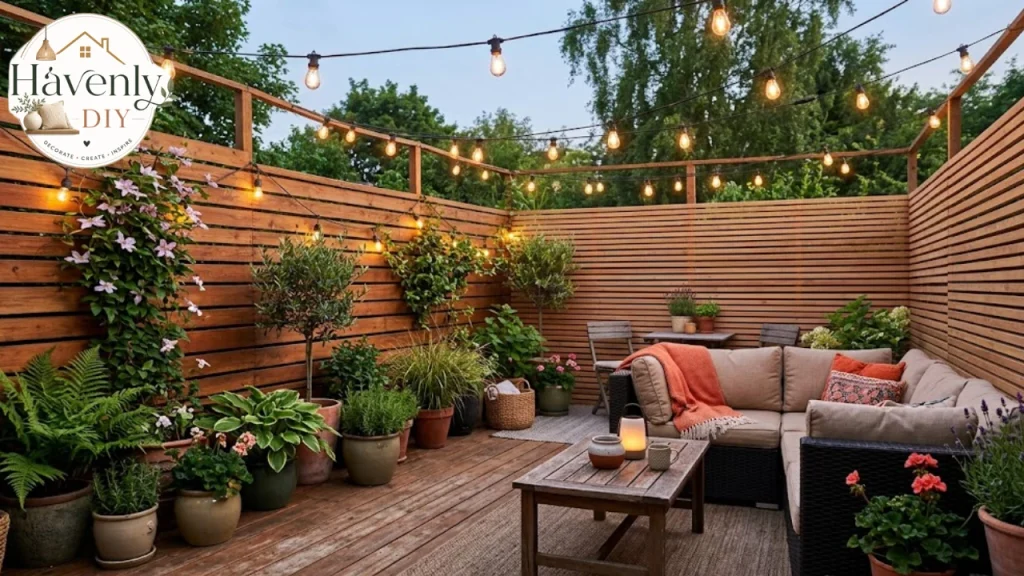
Horizontal slatted screens are popular for modern and mid-century homes. Gaps between boards let light and air through while breaking up views. Narrower gaps mean more privacy.
Vertical board screens feel more traditional and work well with cottage and farmhouse styles.
Louvered screens use angled slats that block views from one direction while still letting air through.
Best woods: Cedar and redwood resist rot naturally and age to a silver gray if left untreated. Pressure-treated pine is cheaper and strong but needs staining or sealing for a good look. Tropical hardwoods are very durable but cost more.
Pros: Natural look, easy to paint or stain, good for DIY.
Cons: Needs sealing or staining every few years, can warp or split in harsh weather.
Wood screens suit many home styles. A low, horizontal screen pairs well with the long lines of a ranch-style home, while stucco walls and wrought iron screens suit Spanish-style homes.
Living Privacy Screens: Hedges, Trees and Climbers
Plants make the most natural privacy screen. They soften hard edges, support wildlife, and get better with time.
Hedges and Shrubs
Evergreen hedges give year-round cover. Popular choices include:
Arborvitae (Thuja). Narrow and upright, great for tight spaces. Some varieties grow quickly.
Privet. Fast-growing and easy to shape, though some types are invasive in parts of North America.
Boxwood. Slow-growing and formal, best for lower screens.
Holly. Dense and spiky, good for deterring visitors.
Laurel. Large glossy leaves and quick to fill in, popular in milder climates.
Yew. Very dense and long-lived, though all parts are toxic to people and pets.
Check your climate zone and choose plants suited to your sun, soil, and rainfall. Your local nursery or extension service can tell you which plants thrive and which are invasive in your area.
Bamboo: A Word of Caution
Bamboo grows fast and looks beautiful, but running bamboo spreads aggressively underground and can invade neighbors’ yards. Choose clumping bamboo, or plant any bamboo in large containers or behind a deep root barrier.
Climbers on Trellises
A trellis or lattice panel covered in climbing plants is one of the quickest ways to add green privacy in a small space.
Clematis for colorful flowers
Star jasmine for fragrance in warm climates
Climbing roses for a cottage look
Climbing hydrangea for shady walls
Annual vines such as morning glory or runner beans for quick seasonal cover
Avoid aggressive climbers such as English ivy in many regions, since it can damage structures and spread into wild areas.
Pros and Cons of Living Screens
Pros: Natural, long-lasting, good for wildlife, often cheaper per foot over time.
Cons: Take time to grow, need watering and trimming, and some lose leaves in winter.
A smart approach is to put up a quick screen now and plant a hedge behind it. Once the plants fill in, you can remove or move the temporary screen.
Planters With Built-In Trellises
Planter boxes with an attached trellis combine a living screen and a structure. They’re one of the best options for patios, deck,s and rooftops.
Why they work:
- They’re movable, so you can adjust the layout
- They don’t need digging into the ground
- They’re good for renters and hard surfaces
- They give instant height while plants grow
Choose deep planters with drainage holes, and use a light potting mix if they’ll sit on a balcony or deck. Heavy planters on upper floors may need a weight check.
Bamboo, Reed and Willow Rolls
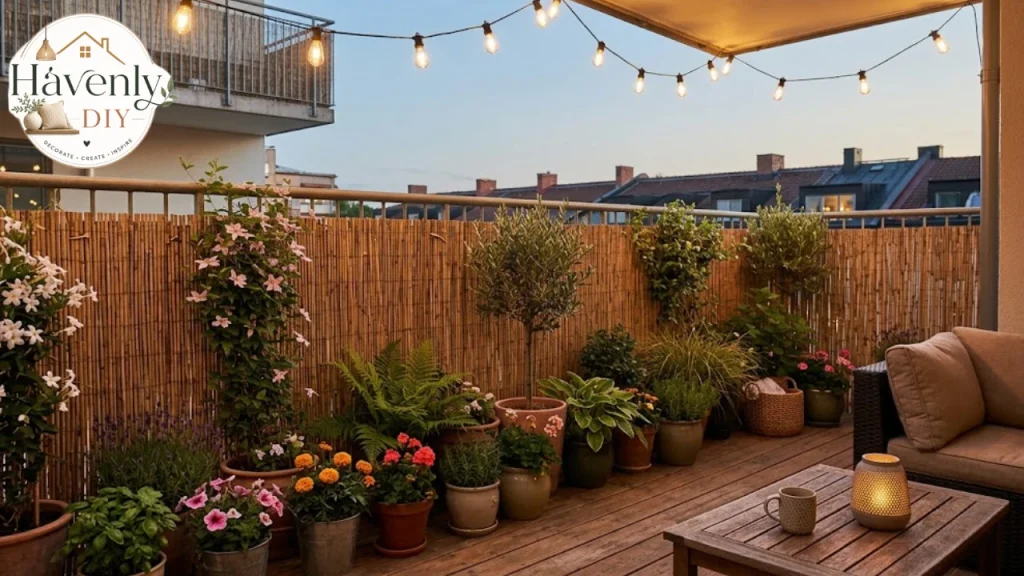
These natural-fiber rolls are cheap, quick to insta,ll and easy to remove. They come in rolls you can attach to existing railings, fences or chain-link with cable ties or wire.
They’re ideal for:
- Bal,cony railings
- Covering chain-link fences
- Temporary privacy while plants grow
- Rentals where you can’t make permanent changes
Lifespan: Expect a few years outdoors before they fade, break or need replacing, depending on sun and weather.
Tip: Secure, them tightly at the top, bottom and middle. Loose rolls flap in the wind and wear out quickly.
Outdoor Curtains and Fabric Screens
Fabric is a soft, flexible way to add privacy, especially on porches, pergolas and gazebos.
Outdoor curtains hang from a rod or cable and can b,e pulled closed when you want privacy or shade. Choose fade-resistant, mildew-resistant outdoor fabric.
Shade sails angled vertically can block views and sun at the same time.
Privacy fabric for fences, sometimes called windscreen or privacy mesh, attaches to chain-link or railings. It’s practical rather than pretty, but it works well around pools, sports areas and construction sites.
Pros: Cheap, adjustable, soft and color,ful.
Cons: Needs taking down in storms and over winter, and fabric fades over time.
Metal and Laser-Cut Panels
Decorative metal screens are a striking option for modern homes. Laser-cut steel or aluminum panels come in geometric, botanical and abstract patterns.
Corten steel develops a stable, rusty-o,range patina that many people love. Powder-coated aluminum resists rust and comes in many colors.
Pros: Long-lasting, low maintenance, beautiful shadows when the sun shines through.
Cons: Expensive, heavy, and patterned panels offer only partial privacy.
Metal screens also work as feature walls behind outdoor dining tables, around hot tubs, or as a backdrop for planting.
Composite and Vinyl Screens
If you want privacy without regular staining, composite and vinyl panels are worth a look.
Composite combines wood fibers and plastic. It looks like wood but doesn’t rot, splinter or need sealing.
Vinyl is the lowest-maintenance option. It’s, easy to clean with soap and water and comes in many styles, from solid panels to lattice tops.
Pros: Very low maintenance, consistent look, long lifespan.
Cons: Higher upfront cost, can look less natural, and some panels can fade or warp in strong sun.
Indoor Privacy Screens and Room Dividers
A privacy screen isn’t only for outdoors. Inside the home, screens and dividers can create separate zones without building walls.
Folding Screens
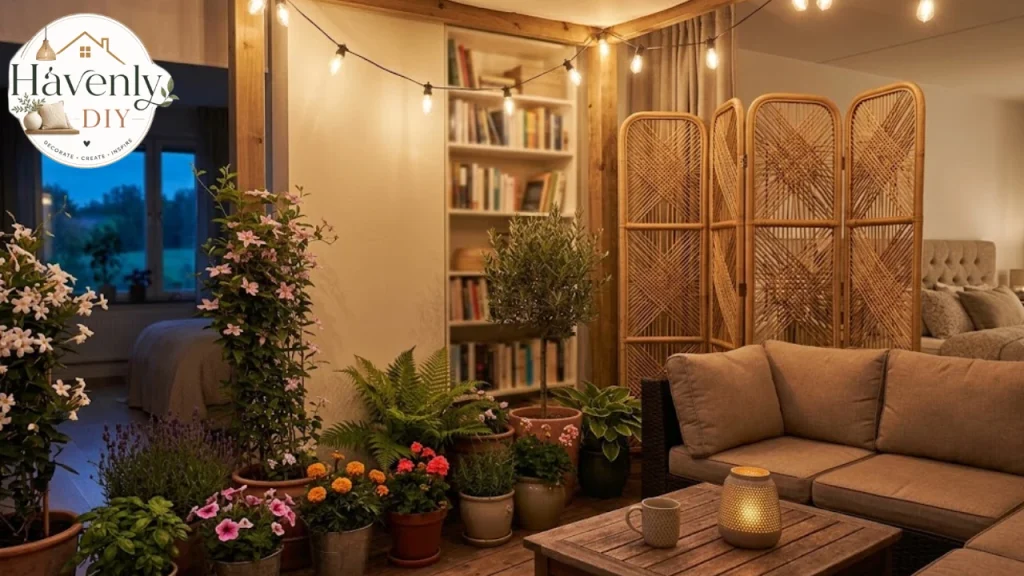
Freestanding folding screens are the simplest option. They come in wood, rattan, fabric, metal and paper. Use them to:
- Hide a home office or desk in a bedr,oom
- Create a dressing area
- Screen off clutter, laundry or storage
- Divide a studio apartment into zones
Shoji-style screens, with translucent paper in a wooden grid, let soft light through and suit calm, minimal rooms. Our Japanese bedroom guide shows how screens and natural materials create a peaceful space.
Open Shelving Dividers
A bookcase open on both sides acts as a divider and storage at once. Fill it with books, baskets and plants to block views without blocking light.
Curtains ,on Ceiling Tracks
Ceiling-mounted tracks with full-height curtains can separate a bed area from a living area in a studio. They’re cheap, soft and easy to open when you want the space to feel larger.
S,latted Wood Partitions
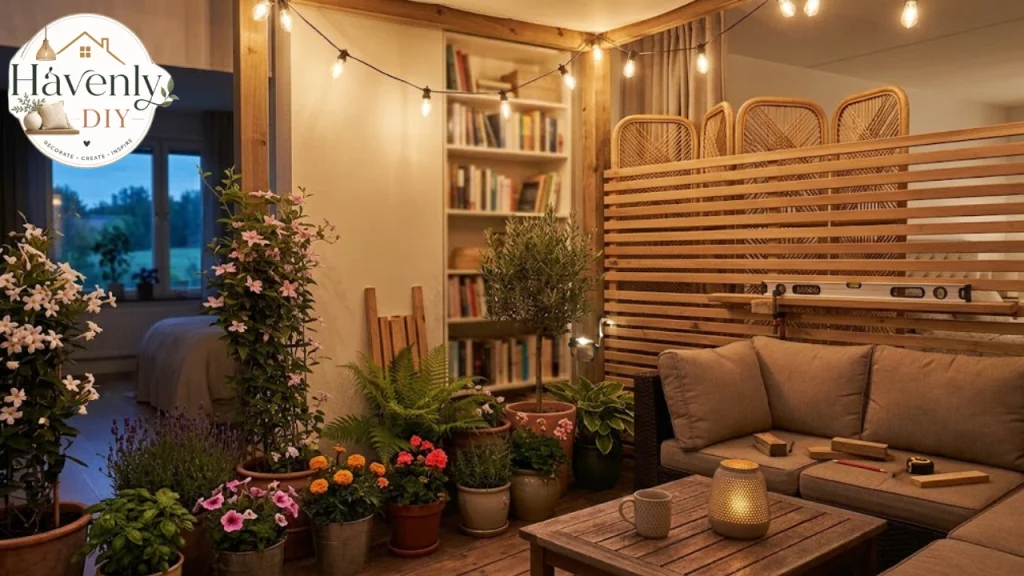
Fixed vertical slats from floor to ceiling add a design feature and separate spaces while keeping light. They’re popular in entryways and between living and dining areas.
Shared rooms and dorms benefit from dividers too. Our dorm room ideas for guys guide includes simple ways to carve out a personal corner in a shared space.
Window Privacy Ideas
Sometimes the problem is the window, not the yard.
Frosted or decorative window film lets in light while blocking clear views. Many films are removable, which makes them renter-friendly.
Sheer curtains soften views during the day, though they become see-through at night when lights are on inside.
Top-down, bottom-up shades cover the lower part of the window while letting light in from above.
Café curtains cover the bottom half of a window, a classic choice for kitchens and bathrooms.
Plants on the windowsill or a hanging plant shelf add a soft, living screen.
Choosing the Right Privacy Screen for Your Space
| Space | Best options |
|---|---|
| Small backyard | Slatted screens, trellis with climbers, narrow hedges |
| Large yard boundary | Hedges, fences, mixed planting |
| Patio or deck | Slatted panels, planters with trellis, outdoor curtains |
| Balcony | Reed or bamboo rolls, planters, freestanding panels |
| Front yard | Low hedges, decorative screens, ornamental grasses |
| Hot tub or pool | Slatted wood, composite, metal panels |
| Bedroom or studio | Folding screens, curtain tracks, open shelving |
| Windows and glass doors | Window film, sheers, top-down shades |
Questions to Ask Yourself
- What exactly do you want to block, and from where?
- Do you need privacy all year or only in summer?
- Do you own the home, or will you need to remove the screen later?
- How much sunlight does the area get?
- How much time will you spend on maintenance?
- Does the screen need to handle strong wind?
Answering these first narrows your privacy screen options quickly.
Before You Build: Rules, Permits and Neighbors
Check local rules. Many towns limit fence and screen height, often with lower limits in front yards than in back. Some require permits for structures above a certain height.
Check HOA rules. Homeowners associations often control materials, colors and placement.
Know your property line. Build fully on yo,ur side, and check your survey if you’re unsure where the boundary is.
Call before you dig. In the US, call 811 before digging post holes so buried utility lines can be marked. Other countries have similar services.
Talk to your neighbors. A quick conversation avoids disputes and sometimes leads to sharing the cost. The finished side of a screen usually faces outward toward the neighbor.
Renters, ask first. Get written permission from your landlord before attaching anything to walls, railings or fences.
How to Build a Simple Slatted Wood Privacy Sc,reen
This freestanding horizontal slat screen is a popular weekend project for a patio or yard. Always follow local codes and the instructions for your materials.
What You’ll Need
- 4×4 posts in rot-resistant or pressure-treated wood
- Horizontal boards, such as 1×4 or 1×6 cedar
- Concrete mix or gravel for setting posts
- Exterior screws
- A spacer block for even gaps
- Level, tape measure, saw and drill
- Post hole digger or auger
Steps
Plan the layo,ut. Mark the screen’s position with stakes and string. Space posts evenly, typically no han about 6 to 8 feet apart.
Dig the post holes. A common rule is to bury about one-third of the post’s total length. In cold climates, dig below the frost line.
Set the posts. Add gravel to the bottom of each hole for drainage. Set the post, check it’s plumb with a level, and fill with concrete or tamped gravel.that Brace it while the concrete cures.
Mark the board positions. Once posts are firm, mark a level line for the bottom board, a few inches above the ground to prevent rot.
Attach the boards. Screw the first board level, then use a spacer block to keep gaps even as you work up. Pre-drill near board ends to prevent splitting.
Trim and cap. Cut posts to height and add a top cap board to protect the end grain and give a finished look.
Finish the wood. Apply an exterior stain or sealer, or leave cedar to weather naturally.
Tip: Gaps of about half an inch give good privacy while letting light through. Wider gaps feel more open but show more.
Styling Your Privacy Screen
A screen doesn’t have to be purely functional. With a few touches, it becomes a feature.
Add lighting. String lights, wall lanterns, or uplights make a screen glow in the evening.
Hang planters. Small pots or a vertical garden turn a plain wall into a living display.
Add art or mirrors. Weatherproof art or an outdoor mirror can make a small patio feel bigger.
Use color. Paint or stain the screen to match your home’s trim or contrast with your planting. Our home color combinations guide can help you pick shades that tie indoor and outdoor spaces together.
Layer plants in front. Tall grasses, shrub,s or potted plants soften the base of the screen.
Mix materials. Combine wood with metal, or lattice with solid panels, for texture.
For a warm, natural look that carries from bedroom to garden, the palettes in our earthy bedroom ideas work beautifully outdoors too.
Maintenance Tips
Wood: Clean yearly with mild soap and water. Re-stain or reseal every few years, depending on sun and weather. Replace damaged boards promptly.
Living screens: Water new plants regularly during their first year. Trim hedges at least once or twice a year to keep them dense. Feed according to the plant’s needs.
Fabric: Wash according to the label, dry fully before storing, and take down during storms.
Bamboo and reed: Check ties regularly and replace when brittle.
Metal and composite: Rinse off dirt and pollen. Check fixings once a year.
All screens: After strong winds, check posts and fixings for movement.
Common Mistakes to Avoid
Ignoring wind. Solid screens act like sails. Use slatted designs or stronger posts in windy spots.
Setting posts too shallow. Shallow posts lean and fail. Bury them deep enough for the height.
Choosing invasive plants. Running bamboo and some hedges can spread beyond your yard.
Blocking too much light. A tall, solid screen can make a small patio dark and cold.
Forgetting maintenance. A cheap screen that needs constant repairs costs more in the long run.
Skipping the rules. Removing a screen because it breaks height limits is expensive and frustrating.
FAQs:
What is the cheapest privacy screen?
Reed, bamboo and willow rolls, outdoor curtains and privacy fabric are usually the cheapest. Annual climbing vines on a simple trellis are also very affordable.
What is the fastest-growing plant for privacy?
Some arborvitae varieties, laurel, and clumping bamboo grow quickly. Annual vines like morning glory give fast seasonal cover. Growth rates depend heavily on climate and care.
How tall should a privacy screen be?
About 6 feet blocks most standing views in a backyard. Seated areas can work with screens around 5 feet. Always check local height limits first.
Do privacy screens need a permit?
It depends on your local rules, the heig,ht and whether it’s a permanent structure. Many low or freestanding screens don’t need one, but tall fences and walls often do.
How do I make a privacy screen wind-resistant?
Use slatted or louvered designs that let wind pass through, set posts deep in concrete, and space posts closer together in exposed spots.
What’s the best indoor privacy screen?
Folding screens are the most flexible. For a more permanent solution, use open shelving, a curtain track or a slatted wood partition.