

Maybe your mattress has a dip where you sleep. Maybe it’s simply too firm, and you wake up with a stiff shoulder. Or you’re in a rental, a dorm, or a guest room, and a new mattress just isn’t an option.
A good topper can fix a surprising number of those problems for a fraction of the price of a new bed. A poor one can leave you sleeping hot, sinking too deep, or waking up sorer than before.
This guide explains how a memory foam mattress topper works, which thickness and density suit your body and sleep position, how to avoid the common mistakes, and how to make one last.
The Short Answer
For most people, a 2- to 3-inch memory foam topper is the sweet spot. Side sleepers and lighter people usually prefer 3 inches for more pressure relief, while back and stomach sleepers often do better with 2 inches so their hips don’t sink.
Look for foam that has been independently tested for emissions, such as foam certified under CertiPUR-US or an equivalent standard. If you tend to sleep hot, choose an open-cell, gel-infused,d or ventilated design.
A topper can soften a firm mattress and add comfort, but it can’t fix a mattress that sags deeply or has broken support. In that case, it’s time for a new mattress.
What Is a Memory Foam Topper?
A topper is a removable layer of cushioning that sits on top of your mattress, usually under a fitted sheet. Memory foam toppers are made from viscoelastic polyurethane foam.
That foam responds to heat and pressure. As you lie down, it softens and slowly molds around your shoulders, hips, and back, then gradually returns to shape when you get up.
The result is the familiar “hug” of memory foam: pressure spread more evenly across your body, and less motion felt when a partner moves.
Toppers are different from mattress pads, which are thin and mainly protect the mattress or add a little softness, and from mattress protectors, which are waterproof covers.
Who Should Get a Memory Foam Topper?
A memory foam mattress topper is a strong choice if:
- Your mattress feels too firm and presses into your hips or shoulders
- You sleep on your side and wake with a numb arm or sore hip
- You want to extend the life of a mattress that’s still supportive but has lost some comfort
- You’re sleeping on a guest bed, dorm bed, sofa bed, or rental mattress you can’t replace
- You share a bed and want less motion transfer from a restless partner
It’s not the right fix if:
- Your mattress sags deeply in the middle, so you roll toward a dip
- Springs poke through, or the edges collapse
- You already sleep on a very soft mattress and want more support
A topper adds comfort on top of support. It can’t create support that the mattress underneath no longer has.
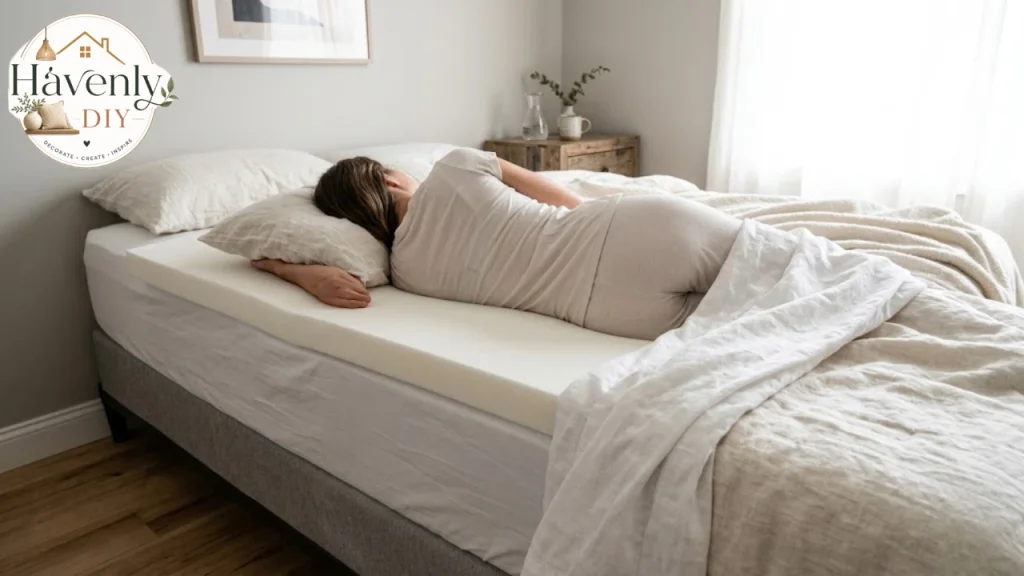
Thickness: How Many Inches Do You Need?
Thickness is the biggest factor in how a topper feels.
| Thickness | Feel | Best for |
|---|---|---|
| 1–1.5 inches | Slight softening | Adding a little comfort to a nearly rightmattresst |
| 2 inches | Noticeable cushioning, still supportive | Back and combination sleepers, heavier people who don’t want to sink |
| 3 inches | Deep pressure relief | Side sleepers, lighter people, very firm mattresses |
| 4 inches | Very plush, strong hug | Very firm mattresses and people who love a sink-in feel |
Thicker isn’t always better. A 4-inch topper on a soft mattress can let your hips sink too far and strain your lower back, especially for back and stomach sleepers.
If you’re unsure, 2 or 3 inches is the safest choice for most beds.
Density: The Number Most People Ignore
Density tells you how much foam is packed into each cubic foot, measured in pounds per cubic foot (PCF). It’s one of the best clues to durability.
| Density | What to expect |
|---|---|
| Under 3 lb/ft³ | Lighter, cheaper, may soften or develop impressions sooner |
| About 3–4 lb/ft³ | A common middle ground for comfort and durability |
| Over 4 lb/ft³ | Denser and more durable, slower to respond, can feel warmer |
Density isn’t the same as firmness. A dense foam can still feel soft, and a lighter foam can feel firm. Density mostly affects how long the topper keeps its shape and how slowly it responds.
Many budget toppers don’t list density at all. If a listing leaves it out, take that as a warning sign and look for products that state it clearly.
Firmness and Sleep Position
Firmness describes how soft or hard the topper feels. Your sleep position should guide your choice.
Side sleepers put most of their weight on the shoulder and hip. They usually need a softer, thicker topper, often 3 inches, so those points can sink in and keep the spine straight.
Back sleepers need support under the lower back. A medium 2-inch topper usually adds comfort without letting the hips dip too far.
Stomach sleepers need the firmest setup. Too much softness lets the hips sag and arches the lower back. A thin, firmer topper or none at all usually works best.
Combination sleepers who change positions often do well with a medium 2- to 3-inch topper that doesn’t trap them in one spot.
Body weight matters too. Heavier people compress foam more deeply, so they often prefer firmer or denser foam. Lighter people may find firm foam doesn’t compress enough to feel comfortable.
Sleeping Hot? Choose the Right Type of Foam
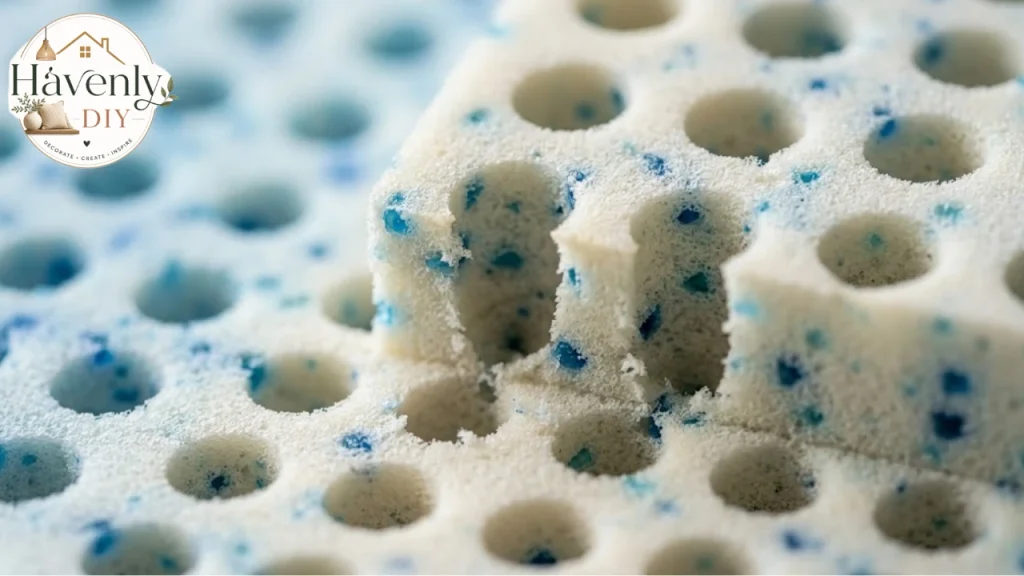
Traditional memory foam has a reputation for trapping heat. Because it softens with warmth and hugs closely, it can reduce airflow around your body.
Manufacturers use several approaches to keep things cooler:
- Open-cell foam has a more porous structure that lets air move through it.
- Gel-infused foam includes gel beads or swirls intended to absorb and move heat away.
- Ventilated or perforated foam has holes or channels that improve airflow.
- Copper or graphite infusions are marketed as improving heat transfer.
- Breathable cotton or cooling fabric covers sit between you and the foam.
Results vary between products, and marketing claims can be optimistic. Reading verified reviews from people who say they sleep hot is often the most useful test.
Your room matters as much as your bedding. A cool, well-ventilated bedroom makes any topper more comfortable; our tips on keeping a room with AC comfortable can help on warm nights.
Toppers in Hot and Humid Climates
Heat and humidity change how memory foam behaves. Warm foam softens faster, so a topper can feel noticeably softer in summer than in winter.
Humidity is the bigger risk. Foam that stays damp from sweat or a humid room can develop odors and, in the worst cases, mold.
In warm, humid places, choose an open-cell or ventilated topper, use a breathable cotton or bamboo-blend cover, and avoid plastic-backed protectors that trap moisture. Air the bed regularly by pulling back the covers for an hour in the morning, and keep the room ventilated or air-conditioned.
If your mattress sits on a solid platform, check underneath now and then. Slatted bases allow better airflow than solid boards.
Memory Foam vs Other Topper Materials
| Material | Feel | Pros | Cons |
|---|---|---|---|
| Memory foam | Slow, contouring hug | Excellent pressure relief, low motion transfer | Can sleep warm, slow to respond |
| Latex | Buoyant, springy | Responsive, durable, often cooler | Usually more expensive, heavier |
| Polyfoam | Bouncier, less hug | Affordable, light | Less durable, less contouring |
| Fiberfill / down alternative | Plush, pillowy | Soft, breathable, washable | Flattens quickly, needs fluffing |
| Feather/down | Very soft, airy | Luxurious feel | Needs regular shaking, may trigger allergies |
| Wool | Light cushioning | Temperature regulating, natural | Adds less pressure relief |
Choose a memory foam mattress topper if pressure relief and motion isolation matter most. If you want bounce or sleep very hot, latex is worth comparing.
Toppers for Specific Needs
General advice covers most sleepers, but a few situations call for a closer look.
Back pain. People with lower back pain often do best with a medium, supportive topper rather than a very soft one. Too much sink can leave the hips lower than the shoulders. If pain is persistent or severe, talk to a doctor or physiotherapist before relying on bedding changes.
Hip and shoulder pain. Side sleepers with sore pressure points usually benefit from a softer, thicker layer that lets the shoulder and hip settle in. A 3-inch topper is a common starting point.
Couples. Memory foam’s low motion transfer helps when one partner tosses and turns. If you have very different preferences, some brands sell split toppers with a different feel on each side.
Guest rooms and sofa beds. A 2- or 3-inch topper can transform an old guest mattress or a thin sofa bed for visitors. Roll it up and store it in a breathable bag between visits.
Adjustable bases. Most memory foam toppers bend well with adjustable beds. Choose one without stiff zoning or thick quilting, and secure it with a deep-pocket fitted sheet so it doesn’t slide when the head of the bed rises.
Kids and teens. A thinner topper can make a firm kids’ mattress more comfortable. Choose certified foam and a washable cover, since spills and accidents happen.
Matching the topper to the situation is how you get the most from a memory foam mattress topper, rather than buying the most popular option on a list.
Safety, Smell and Certifications
New foam often has a noticeable smell when unpacked, known as off-gassing. It usually fades within a few days as the foam airs out.
To limit it, unpack the topper in a well-ventilated room, open a window, and let it breathe for 24 to 72 hours before putting sheets on it.
Look for third-party certifications. CertiPUR-US is a widely used US program that certifies polyurethane foam for content, emissions, and durability. OEKO-TEX Standard 100 applies to textiles such as covers and tests for harmful substances.
Certification labels apply to specific products and components, so check that the claim covers the foam itself, not just the cover.
Choosing the Right Size
Toppers come in standard mattress sizes: twin, twin XL, full, queen, king,g and California king.
Measure your mattress before ordering, especially if it’s an older or European size. A topper that’s too small slides around and leaves edges exposed; one that’s too large bunches up.
Dorm beds are usually twin XL, which is longer than a standard twin. If you’re kitting out a student room, our dorm room ideas for guys include more ways to make a small space comfortable.
Deep-pocket fitted sheets help too. Adding 2 to 4 inches of topper raises the bed height, so standard sheets may no longer fit.
Reading Reviews the Smart Way
Online reviews are useful, but they need a little interpretation.
Start with reviews from people who share your sleep position and body type. A lightweight side sleeper’s five-star rating tells a heavy stomach sleeper very little.
Look for comments after several weeks or months of use, not just the first night. Early reviews often praise softness; later ones reveal whether the foam held its shape.
Pay attention to repeated complaints rather than one-off bad experiences. If many people mention sleeping hot, flattening within months, or a smell that wouldn’t fade, take it seriously.
Finally, check whether the seller responds to problems and honors returns. Good customer service is part of what you’re buying, especially with something as personal as a sleep surface.
A Quick Checklist Before You Buy
Run through these points before you click “buy”:
- Thickness matches your sleep position (usually 2–3 inches)
- Density is listed clearly, ideally around 3 lb/ft³ or higher for durability
- Cooling features suit you if you sleep hot
- Certifications apply to the foam, not just the cover
- Size matches your mattress, measured, not guessed
- Cover is removable and washable, or you have a protector ready
- Return policy and trial period let you test it at home
- Warranty length is stated in writing
Price is worth comparing, but it’s not the whole story. A slightly more expensive memory foam mattress topper with denser foam and a fair return policy often costs less over time than a cheap one you replace twice.
How to Set Up a New Topper
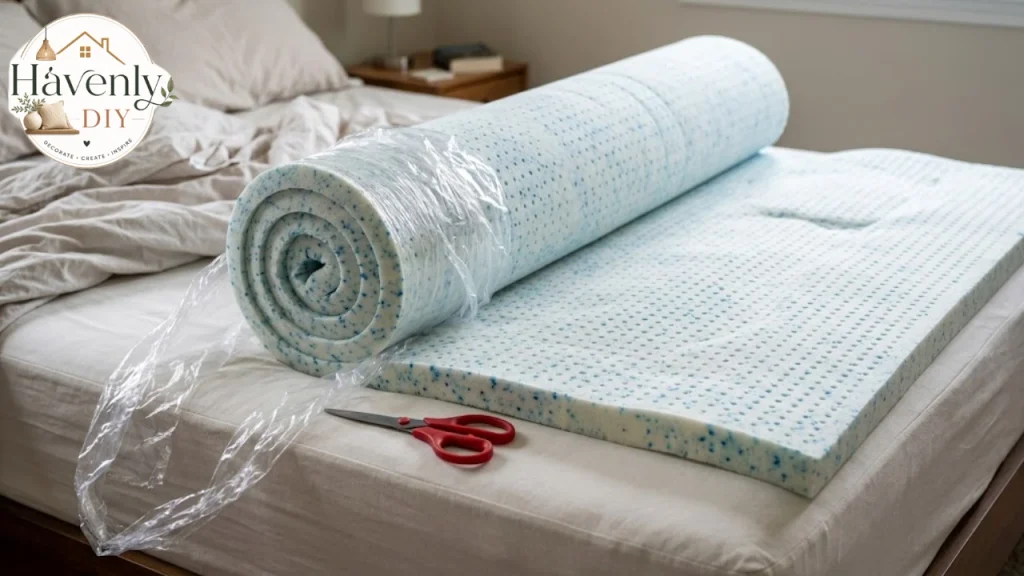
Unpack carefully. Most toppers arrive vacuum-rolled. Cut the plastic gently with scissors, not a knife, to avoid slicing the foam.
Let it expand. Lay it flat and give it time to recover its full shape, often 24 to 72 hours. Cooler rooms can slow this down.
Air it out. Keep the room ventilated during this time to reduce any new-foam smell.
Position it. Check whether the topper has a top and bottom side. Some have a non-slip base or a specific comfort side.
Secure it. Use a fitted sheet with deep pockets, or a mattress protector or topper cover with elastic sides, to stop it from sliding.
Give your body time. It can take a week or two to adjust to a new sleep surface. Don’t judge it on the first night.
How to Care for a Memory Foam Topper
Memory foam itself shouldn’t go in the washing machine. Water and agitation can damage the foam structure.
Use a cover. A removable, washable cover or a mattress protector keeps sweat, skin oils, and spills away from the foam.
Spot clean only. Dab small spills with a mild detergent solution and a damp cloth, then let the area air-dry completely before covering it again.
Freshen with baking soda. Sprinkle a light layer, leave it for a few hours, then vacuum it off with an upholstery attachment.
Rotate it. Turning it head-to-foot every few months helps it wear more evenly. Many toppers shouldn’t be flipped upside down, so follow the label.
Keep it dry. Avoid direct, harsh sunlight for long periods and never put foam in a dryer.
For more bedroom and laundry routines, browse our home cleaning guides.
How Long Does a Memory Foam Topper Last?
With good care, many memory foam toppers last roughly three to five years, depending on foam quality, density, body weight,t and how it’s used.
Replace yours when you notice:
Permanent body impressions that don’t recover
Lumps, cracks, ks or crumbling foam
New aches that weren’t there before
A smell that won’t fade after airing
Higher-density foams generally last longer than lightweight budget foams.
Common Mistakes When Buying a Topper
Using a topper to fix a sagging mattress. Soft foam follows the dip; it can’t fill it.
Choosing the thickest option automatically. Too much softness can strain your back, especially for stomach and back sleepers.
Ignoring density. A cheap, light foam may feel great at first and flatten within months.
Forgetting about heat. If you already sleep warm, standard dense memory foam may make it worse.
Skipping the return policy. Comfort is personal. Check trial periods and return conditions before buying, since some retailers won’t accept opened bedding.
Buying the wrong size. Measure first, especially for twin XL, short queen, queen, or European beds.
Making Your Bed Feel Like a Retreat
A topper is often the first step toward a better bed. A few other changes can make an even bigger difference.
Choose breathable sheets in cotton, linen, or bamboo-derived fabrics that suit memory foam’s warmth. Pick a pillow that matches your sleep position, since a great topper can’t fix poor neck support.
Keep the room cool, dark, and quiet. Calm colors and natural textures help a bedroom feel restful; our earthy bedroom ideas and Japanese bedroom guides are full of ideas for a low-stress sleep space.
If you’re upgrading other furniture at the same time, our roundup of the best home furnishings covers pieces that make a bedroom more comfortable.

Is a Topper Worth It, or Should You Buy a New Mattress?
Ask yourself one question: is the problem comfort or support?
If your mattress is reasonably new, flat, and supportive but feels too firm, a topper is a smart, affordable fix. A memory foam mattress topper can make an uncomfortable bed feel very different for a fraction of a new mattress price.
If the mattress sags, creaks, has broken springs, or is many years old, a topper only delays the inevitable. Put that money toward a new mattress instead.
There’s also a middle ground. Some people use a topper to buy a year or two of comfort while saving for a new mattress, then move the topper to a guest or kids’ bed.
FAQs:
What thickness of memory foam topper is best?
For most people, 2 to 3 inches. Side sleepers and lighter people often prefer 3 inches, while back and stomach sleepers usually do better with 2 inches.
Do memory foam toppers sleep hot?
Traditional memory foam can trap heat. Open-cell, gel-infused, or ventilated toppers and a breathable cover can help, along with a cool bedroom.
Can a memory foam topper fix a sagging mattress?
No. A topper adds comfort, not support. If your mattress has a noticeable dip, the topper will sink into it too.
How long does it take for a memory foam topper to expand?
Usually 24 to 72 hours. A warmer room helps it recover its shape faster.
Is it safe to sleep on a new memory foam topper right away?
Many people do, but airing it out for a day or two in a ventilated room reduces the new-foam smell. Look for certified foam for extra peace of mind.
Can you put a memory foam topper on a sofa bed or futon?
Yes. Toppers are a popular way to make sofa beds, futons, and air mattresses more comfortable for guests.
Should a memory foam topper go under or over the mattress protector?
Usually,y the topper sits on the mattress with a protector or topper cover over it, so the foam stays clean.