

A chair can be well made and still be completely wrong for the person sitting in it. The same is true of sofas, loveseats, and sectionals. Furniture has to cope with body size, household habits, available space, and the amount of attention people are realistically willing to give it. This is why brand reputation alone is a poor way to choose seating.
Best Home Furnishings offers an unusually broad assortment of upholstered furniture, from compact swivel chairs to oversized recliners and multi-seat sectionals. That variety can help shoppers find a more personal fit, but it can also make the selection process confusing.
This guide approaches the brand through real household situations. Whether you live with children, pets, limited space, mobility concerns, or a mixture of different body types, the goal is to help you identify which features are useful and which ones may simply increase the price.
What Kind of Company Is Best Home Furnishings?
Best Home Furnishings is an American upholstered-furniture manufacturer based in Ferdinand, Indiana. The business began as Best Chairs in 1962 and later adopted its current name after expanding beyond chairs. The company concentrates on seating products, including:
- Stationary accent chairs
- Swivel and glider chairs
- Manual recliners
- Power recliners
- Lift chairs
- Sofas and loveseats
- Reclining sofas
- Modular sectionals
- Sleeper options in selected styles
Its furniture is sold through independent retailers rather than through a standard direct-to-consumer checkout system. Consequently, product displays, quoted prices, delivery services, and after-sales support can vary from one dealer to another.
The company states that its furniture is made in the USA using domestic and globally sourced components. It also offers a large library of fabric and leather choices, although the available covers and features depend on the model.
The Most Important Question: Who Will Use the Furniture?
Many shopping decisions begin with the room’s colors. A more useful starting point is the person who will occupy the seat most often. Think beyond height and weight. Consider how that person actually sits. Some people sit upright with both feet on the floor.
Others curl up in a corner, lean against one arm, sleep on the sofa, or spend several hours watching television. A person who reads may want supportive arms and a high back, while someone who likes afternoon naps may prefer a wide, uninterrupted cushion. Create a simple user profile before visiting a retailer:
- Primary user
- Approximate height
- Preferred sitting position
- Average daily use
- Need for head or lower-back support
- Difficulty operating handles or controls
- Sensitivity to firm or soft cushions
- Likelihood of eating or drinking in the seat
- Children or pets sharing the furniture
This profile helps prevent an attractive display model from taking control of the decision.
Best Options for Busy Families
Family furniture experiences a different level of use from formal seating. Children climb onto it, snacks disappear between cushions, and the most popular seat may be occupied for hours every evening. For this environment, practical design usually deserves priority over delicate styling.
Choose visual forgiveness
A perfectly smooth, single-color fabric can reveal every crumb, mark, and strand of hair. Subtle textures and mixed-color weaves tend to disguise ordinary daily mess more effectively. Mid-tone colors are often easier to live with than either extreme.
White and cream reveal stains, while very dark navy, brown, or charcoal can make dust and pale lint surprisingly visible. Request a reasonably large upholstery sample. A tiny square may not reveal how the color will look across an entire sectional.
Think carefully about loose cushions
Loose back cushions create a casual, comfortable appearance, but they may need regular reshaping. Attached cushions usually remain in place more reliably, although they cannot be removed for cleaning or rearranged. Neither construction is automatically superior.
The better choice depends on how much maintenance the household will actually perform. If nobody will fluff and rotate cushions, do not choose a design that depends on regular attention to maintain its appearance.
Avoid unnecessary complexity
A family may enjoy powered headrests, adjustable lumbar support, illuminated controls, and charging ports. Still, every additional component is something children can operate repeatedly and something that may eventually require service. Pay for features the household will use rather than treating the longest feature list as the highest-quality choice.
Best Choices for Homes With Dogs or Cats
No upholstered furniture is completely protected from pets. The aim is to choose a combination that makes hair removal, cleaning, and minor wear less noticeable.
Examine the weave closely
Run your fingers across the material. A tight, flat weave generally presents fewer opportunities for claws to catch than a loose weave with raised loops. Heavily textured fabric can conceal marks, but deep texture may also trap hair. Bring a sample home and test it under real conditions when possible.
Match the color to the pet
The best upholstery color may have more to do with your dog or cat than with the wall paint. A pale dog’s hair will be obvious on a black sofa, while dark fur may stand out sharply against beige. A multitone fabric containing shades close to the pet’s coat can reduce the amount of visible hair between cleanings.
Consider where the pet rests
If a pet always sleeps against one arm, inspect that area’s construction. Narrow arms, decorative wood edges, and exposed seams may show wear faster than a broad, padded surface. A washable throw can protect the favorite resting place without covering the entire sofa.
Understand the limits of performance covers
Performance upholstery may offer useful resistance to certain liquids and stains, but the term is not a universal promise. Ask what the selected cover is designed to resist and which cleaning products are permitted. Damage from scratching, chewing, or repeated abrasion may not qualify as a manufacturing defect.
Seating for Tall and Larger Users
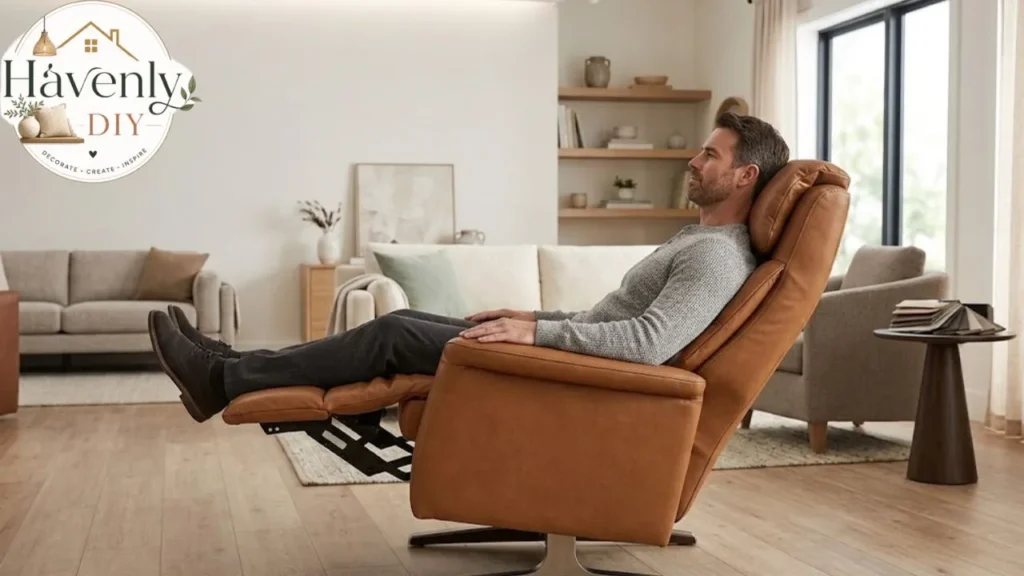
A large recliner should not be selected by appearance or product name alone. Terms such as oversized, beast, big, or tall describe a category, not an individual fit. For a tall user, inspect four contact points.
Head position
The back should support the head without forcing the neck forward. When reclined, the head should not extend awkwardly above the cushion. If the model includes an adjustable headrest, test it in both the upright and reclined positions.
Knee position
The front of the seat should support the thighs without pressing aggressively behind the knees. Excessive pressure can become uncomfortable during prolonged sitting.
Footrest length
A tall person’s lower legs may extend beyond a short footrest. Check where the edge meets the legs. It should not concentrate pressure at an uncomfortable point.
Shoulder room
The user should be able to settle naturally without the inner arms pushing the shoulders inward. Weight capacity should be confirmed through current product specifications or the retailer. Do not estimate it from the size of the chair.
Seating for Shorter Adults
Furniture marketed for comfort often becomes deeper and more padded. That design can create problems for shorter users. If the seat is too deep, the user must choose between placing their feet on the floor and receiving proper back support.
Sliding forward may feel acceptable during a quick test but becomes tiring over time. A shorter user should look for:
- Moderate seat depth
- Reachable controls
- A lower but supportive seat
- Footrest support in the correct position
- Arms that do not lift the shoulders
- A headrest that does not push the head forward
The user should wear normal footwear during the test. Thick-soled shoes can change how the seat height feels.
Furniture for Couples With Different Comfort Preferences
Couples frequently disagree about furniture because comfort is personal. One partner may prefer a soft, deep seat, while the other needs firmer support and an upright position. A compromise sofa sometimes leaves both people dissatisfied. There are several better approaches:
Use individually controlled reclining seats
A reclining loveseat or sofa can allow each person to choose a different position. Confirm whether the back, leg rest, lumbar section, and headrest operate independently or as a linked system.
Combine a sofa with a personal recliner
Choose a broadly comfortable sofa for shared use and a more precisely fitted chair for the person with specific needs.
Focus on cushion behavior
Two seats may feel equally comfortable in the showroom but soften differently with regular use. Ask the retailer what kind of cushioning is used and whether the selected model offers different comfort options.
Test together
Both people should sit on the furniture at the same time. Movement in one seat can sometimes be felt in the neighboring position.
A Practical Approach for Older Adults
Furniture for an older adult should support independence without making the room feel clinical. The safest selection begins with the individual rather than with an age label. Important considerations include:
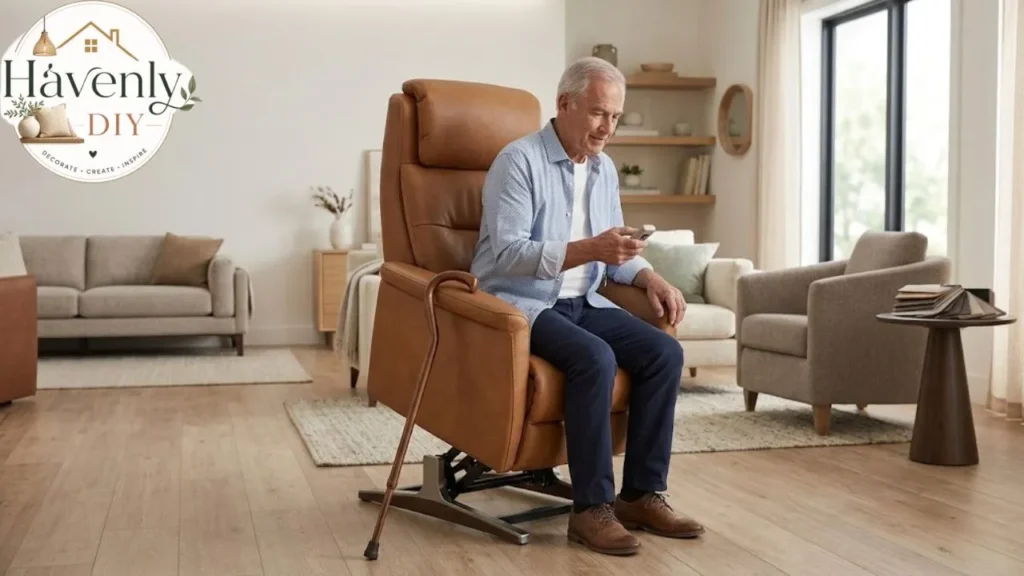
- Ease of lowering into the chair
- Stability of the arms
- Control-button size
- Hand-control placement
- Seat firmness
- Leg-rest operation
- Foot placement when upright
- Ease of standing
- Backup operation during an outage
- Space for a walking aid beside the chair
A lift recliner can help some users move toward a standing position, but it must be correctly sized. A seat that is too wide may provide poor side support, while one that is too deep may prevent the user from sitting fully against the back.
The person who will use the chair should operate the complete lift cycle. Family members should not choose based only on what feels comfortable to them.
When a medical condition, recent surgery, or serious mobility limitation is involved, ask an occupational therapist or qualified healthcare professional for guidance. Furniture sales staff can explain product functions but should not determine medical suitability.
Furnishing an Apartment or Condominium
Small-space shoppers face two separate challenges: fitting the furniture inside the room and getting it into the building. Measure the entire delivery journey:
- Building entrance
- Elevator door
- Elevator interior
- Stair width
- Stairwell turns
- Hallway corners
- Apartment doorway
- Ceiling height at tight turns
Record the dimensions and take photographs. An experienced delivery team may be able to evaluate difficult access before the order is placed. Inside the apartment, visual scale matters. Thick arms and oversized backs consume space even when the number of seats appears reasonable.
A compact sofa with a swivel chair can provide more flexible seating than a large sectional. Swivel chairs are particularly useful in an open-plan apartment because they can turn toward the television, conversation area, or dining space.
For renters and people likely to move, separate pieces are normally easier to adapt than a highly specific sectional configuration.
Creating a Comfortable Media Room
A television room needs different furniture from a formal reception area. People sit longer, change positions, and need a clear view of the screen. Before ordering reclining furniture, determine the preferred viewing distance and screen height. The tallest backs should not block another row of seats. Useful media-room features may include:
- Independently controlled reclining positions
- Adjustable head support
- Center consoles
- Cup holders
- USB or charging connections
- Storage compartments
- Wall-hugging mechanisms
However, integrated consoles reduce the number of flexible seating positions. They can also make a sofa feel more like separate chairs, which may not suit someone who likes lying across the cushions. Plan cable routes before delivery. Extension cords crossing a walkway create a trip hazard and make the room look unfinished.
Choosing an Accent Chair That Will Actually Be Used
Accent chairs are often purchased as decorative objects. Many end up holding bags or folded laundry because they are uncomfortable or poorly positioned. A useful accent chair should contribute either:
- A comfortable additional seat
- A reading location
- Flexible conversation seating
- A design focal point
- Gentle motion through swiveling or gliding
Pattern is an effective way to give a room character, but scale matters. A large pattern may appear dramatic on a small sample and completely different across a full chair.
Use the manufacturer’s visualization tools as a starting point, not as an exact color guarantee. Screens display colors differently, so the final choice should be based on a physical sample.
Position the chair where it has access to a table and suitable light. Even a comfortable chair will remain unused if it feels disconnected from the room.
How to Mix Traditional Comfort With a Modern Interior
Many shoppers want generous cushioning without making a room feel visually heavy. The solution is not necessarily to select the most minimal chair. Instead, balance comfort with cleaner surrounding elements. For example:
- Pair a substantial recliner with a simple floor lamp.
- Use a streamlined side table instead of a bulky cabinet.
- Select a quiet solid fabric for heavily padded furniture.
- Keep window treatments visually light.
- Leave space around the chair.
- Repeat one upholstery color elsewhere in smaller accents.
A room can include traditional and contemporary elements when they share color, proportion or material. Avoid buying every item from one display simply because it is presented as a set.
When Customization Is Worth Paying For
Customization has genuine value when it solves a practical or visual problem. It may be worthwhile when:
- Standard upholstery will not survive the household
- A specific color is needed to work with existing finishes
- The user requires power operation
- Adjustable lumbar or head support improves comfort
- A particular sectional configuration fits an unusual room
- Coordinating chairs need different covers
- A compact or oversized seat provides a substantially better fit
It may not be worth the added cost when the change is barely visible, the feature will rarely be used or the household expects to move soon. Customized products may also have restricted cancellation and return rights. Confirm those conditions before paying a deposit.
How to Compare Dealer Quotations
Because independent retailers set their own prices and policies, two quotations for similar furniture may include different services. A useful comparison considers:
| Cost or service | Dealer A | Dealer B |
|---|---|---|
| Furniture price | ||
| Upholstery upgrade | ||
| Power features | ||
| Delivery and setup | ||
| Removal of packaging | ||
| Removal of old furniture | ||
| Protection plan | ||
| Service-call charge | ||
| Estimated delivery period | ||
| Cancellation terms |
The lowest price is not automatically the best value. A dealer with trained delivery staff and an established repair process may justify a modest price difference.
Ask who will be responsible if the item arrives with damage or develops a covered problem. The manufacturer’s official FAQ directs warranty matters through the original selling dealer, making retailer support an important part of the purchase.
Reading the Warranty With the Right Expectations
Many customers focus on the longest number printed in a warranty and overlook what that period covers. Furniture warranties often separate:
- Frame
- Springs
- Reclining mechanism
- Electrical equipment
- Motors
- Cushion materials
- Seams
- Fabric or leather
- Labor
- Transportation
A long warranty on a frame does not necessarily provide equally long coverage for upholstery, electronics or labor. Ask for the warranty version that applies to the exact model and purchase date. Then ask the retailer to explain:
- Which problems are considered manufacturing defects?
- Which changes are classified as normal wear?
- Who inspects the furniture?
- Is labor covered as well as parts?
- Can a home service visit involve a fee?
- Who pays transportation or shipping?
- What documentation must the owner keep?
The answers are more meaningful than a general promise that the furniture is “fully covered.”
What to Save After Your Purchase
Create a digital folder for the transaction. Photograph or scan:
- Sales receipt
- Final order sheet
- Upholstery information
- Warranty document
- Protection-plan contract
- Delivery paperwork
- Product labels
- Furniture condition after delivery
- Any written promises from the retailer
The identification label is especially important. Best Home Furnishings advises that it may contain the ID number, model number, fabric number, and manufacturing date needed for warranty assistance. Do not remove the label unless necessary. If it must be removed, photograph both sides first.
A Better Way to Judge Customer Reviews
Furniture reviews are most useful when the reviewer identifies the model, ownership period, and type of use. A review saying “the sofa is terrible” provides little usable information. A review explaining that a power control failed after a particular period or that a cushion softened under daily use provides a more specific concern to investigate.
Sort reviews into separate subjects:
- Initial comfort
- Long-term comfort
- Upholstery wear
- Cushion appearance
- Motion mechanism
- Electrical operation
- Delivery condition
- Dealer communication
- Repair experience
- Parts availability
Do not combine every complaint into one judgment about manufacturing. Delivery damage, dealer delays, wear expectations, and genuine product defects are different issues. Positive reviews also require context. A customer who has owned a chair for two weeks cannot provide evidence of long-term durability.
Who Is Most Likely to Appreciate the Brand?
Best Home Furnishings is likely to appeal to shoppers who value choice and are willing to spend time finding the correct combination. It may be a strong candidate for:
- Families seeking practical upholstered seating
- Couples wanting independent reclining positions
- Tall or shorter users needing a better-proportioned chair
- Older adults exploring correctly fitted lift seating
- Pet owners who want a broader cover selection
- Apartment residents considering compact chairs and sofas
- Homeowners who prefer testing furniture before ordering
- Buyers who have access to a responsive authorized dealer
It may be less suitable for shoppers who want a simple one-click online purchase, immediate delivery, or a broad in-home return window.
Final Decision Framework
Before buying Best Home Furnishings, rate the product from one to five in these areas:
| Category | Score |
| Comfort after an extended test | /5 |
| Fit for the primary user | /5 |
| Suitability for the room | /5 |
| Upholstery practicality | /5 |
| Ease of operation | /5 |
| Quality of dealer support | /5 |
| Clarity of warranty terms | /5 |
| Total value for the price | /5 |
Do not allow an excellent score in one category to hide a serious weakness in another. A chair that feels wonderful but cannot pass through the doorway is not a suitable purchase. Neither is a beautifully proportioned sofa covered in material that cannot cope with the household.
Final Verdict
The strongest reason to consider Best Home Furnishings is not a single construction claim or fashionable feature. It is the opportunity to match seating more closely to the people and circumstances of the home. That advantage only becomes valuable when the buyer makes deliberate choices.
The product should be assessed according to the primary user, daily routine, available space, cover requirements, and retailer support. Do not shop for an imaginary household in which nobody spills a drink, pets never shed, and every person finds the same chair comfortable.
Shop for the home you actually have. When the furniture reflects those realities, it has a much better chance of remaining comfortable, useful, and visually appropriate long after the showroom excitement has passed.
Frequently Asked Questions
Is Best Home Furnishings a store or a manufacturer?
It is an upholstered-furniture manufacturer. Its products are generally sold through independently operated furniture retailers.
What products does the company offer?
The range includes chairs, recliners, lift chairs, sofas, loveseats, and sectionals. Available functions and customization choices vary by model.
Is the furniture suitable for homes with pets?
Certain tightly woven or performance covers may be practical for pet-owning households, but no upholstery is completely resistant to claws, chewing, hair, or accidents.
Does Best Home Furnishings offer furniture for tall users?
The company offers recliners in various sizes, including oversized designs. Tall users should still test head, knee, shoulder and footrest support because size labels do not guarantee a correct fit.
Are lift recliners only for older adults?
No. Lift chairs may be considered by adults with different mobility needs. The main user should test the chair, and medical guidance may be appropriate when a health condition is involved.
Can different fabrics be selected?
Many products are customizable with different fabric or leather covers. Selection, price and availability depend on the model and authorized dealer.
Why might two stores quote different prices?
Independent dealers may set different retail prices, promotions, delivery fees and service policies. Make sure both quotations describe the same model, cover and features.