

Most of us don’t think about laundry baskets until one cracks on the stairs. Or until the pile of clothes on the bedroom chair quietly becomes a second wardrobe.
The right basket fixes more than you’d expect. It keeps floors clear, makes wash day faster, and can even look good enough to leave out in the open.
This guide walks you through choosing a laundry basket that fits your household, your space, and your style, and how to place it, style it, and keep it fresh. Choosing the ideal laundry basket comes down to balancing capacity, structural durability, and your room’s decor.
For small households or tight spaces, a compact 40-to-50-liter plastic or fabric hamper prevents clutter, while larger families often benefit from multi-compartment sorters that allow for instant separation of darks, lights, and delicates.
Beyond capacity, consider portability and material: ventilated plastic or lightweight mesh baskets with sturdy handles are perfect for carrying heavy loads to the washing machine, whereas woven wicker, bamboo, or canvas hampers with fitted lids offer a polished, seamless look that blends elevated style with functional storage in bedrooms or bathrooms.
The Short Answer
Choose a laundry basket by four things: how much laundry your household makes, where the basket will live, how far you carry it, and how visible it is.
For most homes, that means one roomy, easy-to-carry basket for wash day, plus a lidded hamper or sorter where dirty clothes collect. Pick a breathable material, a size that holds at least one full load, and a style that suits the room.
Get those right, and your laundry basket stops being clutter and starts being a system.
Laundry Basket vs Hamper: What’s the Difference?
People use the words interchangeably, but they do different jobs.
A laundry basket is usually open, lighter, and built to be carried. You use it to move clothes to the washer, the dryer, the washing line, or the laundromat, and to carry clean clothes back.
A hamper is usually taller, often lidded, and stays put. It’s where dirty clothes collect in the bedroom or bathroom between wash days.
Many homes need both. Some products blur the line, like hampers with removable liners you can lift out and carry.
Four Questions to Ask Before You Buy
How much laundry do you make? A single person and a family of five need very different capacities. More on sizes below.
Where will it live? A closet floor, a narrow gap beside the washer, a bathroom corner, and a bedroom in full view each call for different shapes and materials.
How far do you carry it? If you climb stairs or walk to a shared laundry room, comfort and handles matter more than looks. If the washer is next to the hamper, they barely matter.
Does it need to look good? If it sits in plain sight, choose a material and color that suit the room, not just whatever was cheapest.
What Size Laundry Basket Do You Need?
Capacity is usually listed in litres or gallons. These ranges are a practical starting point, not a rule.
| Household | Suggested capacity | What works well |
|---|---|---|
| 1 person | About 35–45 L (9–12 gal) | One medium basket or slim hamper |
| Couple | About 50–65 L (13–17 gal) | One large basket, or a two-section hamper |
| Family of 3–4 | About 60–90 L (16–24 gal) | Large basket plus a sorter |
| Family of 5+ | 90 L+ (24 gal+) | Multi-section sorter, or one hamper per bedroom |
A quick test: your wash-day laundry basket should hold at least one full washer load. Brands like Joseph Joseph point to around 35 litres for individuals and smaller households, while larger hip-style plastic baskets are often described as holding about two loads.
The balance between capacity and material features for your daily routine is the key to selecting the ideal laundry basket.
Size and capacity determine how much laundry you can effectively manage; compact hampers ranging from 40 to 50 liters are ideal for single users, whereas multi-compartment sorters assist busy households in quickly separating lights and darks.
Durability and style are determined by the material and portability; ventilated plastic or mesh baskets with sturdy handles make it easy to transport heavy loads, and woven wicker or lined canvas hampers with lids blend in seamlessly with the decor of a bedroom or bathroom.
If you’re between sizes, size up. A half-full big basket is easier to carry than an overflowing small one.
Types of Laundry Baskets
Classic Plastic Basket
The workhorse. It’s light, cheap, easy to clean, and doesn’t mind damp towels for a short time. Look for ventilation holes and sturdy, molded handles rather than thin ones that crack.
Hip-Hugger Basket
A curved side rests against your hip so you can carry it with one arm. It’s the most comfortable style for heavy loads and stairs.
Laundry Sorter
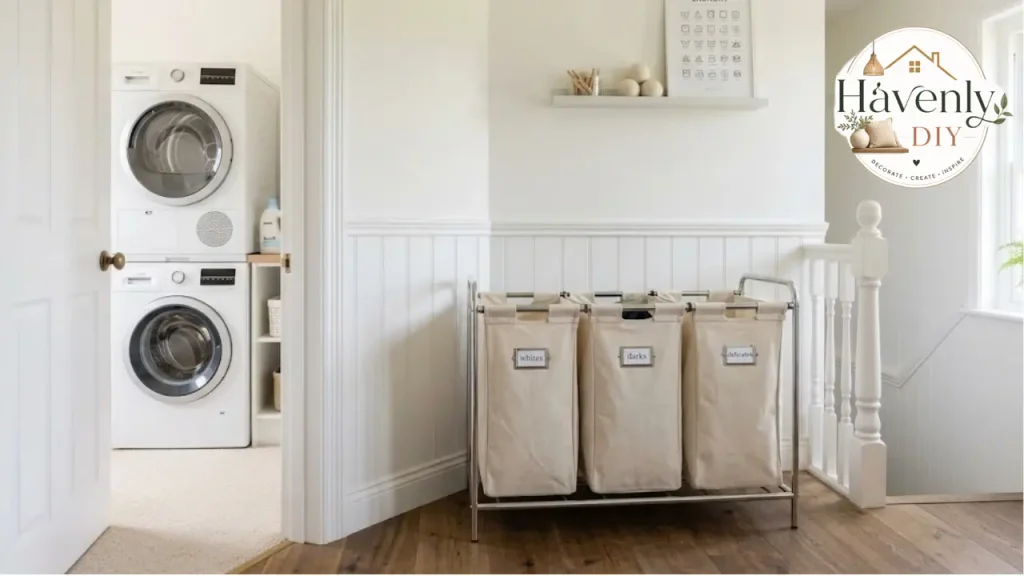
Two, three, or four sections let you sort whites, darks, and delicates as you go. Sorters save time on wash day and suit families who do several loads a week.
Rolling Basket or Cart
Wheels take the weight off your back on long, flat routes, such as an apartment hallway to a shared laundry room. They’re less useful if you have stairs.
Collapsible or Pop-Up Basket
Folds flat when empty. Ideal for dorms, small apartments, and laundromat trips, though usually less sturdy than rigid baskets.
Lidded Hamper
Keeps clothes out of sight and pets out of the pile. Choose one with a breathable lid or a removable liner, so dirty clothes don’t trap moisture.
Hanging Hamper
Hooks over a door or hangs from a closet rod. A good choice when you have zero floor space.
Laundry Basket Materials Compared
Material affects how the basket looks, how it handles damp clothes, and how easy it is to clean.
| Material | Best for | Watch out for |
|---|---|---|
| Plastic | Wash day, damp items, easy cleaning | Can crack with age; looks utilitarian |
| Wicker, seagrass, water hyacinth | Bedrooms, bathrooms in view | Can snag delicates; needs a liner; dislikes moisture |
| Cotton rope | Soft, casual style, kids’ rooms | Absorbs moisture; can lose shape |
| Canvas or fabric | Collapsible, removable liners | Must be washed regularly |
| Mesh | Airflow, dorms, pop-up hampers | Less sturdy; shows contents |
| Bamboo | Natural look with a rigid frame | Keep dry to avoid mold |
| Metal (wire) | Industrial, modern rooms | Can rust; may snag without a liner |
Editors at Apartment Therapy note that wicker is attractive but not ideal for finer fabrics. A removable cotton liner solves both the snagging and the cleaning problem.
Airflow matters more than most people think. Dirty laundry needs to breathe, so a fully sealed container is a fast route to musty smells.
Where to Keep a Laundry Basket, Room by Room
Putting your laundry basket where clothes actually come off is the single easiest way to keep floors clear.
This is where most clothes come off, so it’s the best spot for the main hamper. Choose something that suits the room’s style, like a seagrass or linen-lined hamper in a calm, natural room such as those in our earthy bedroom ideas.
For minimal bedrooms, a simple bamboo or white fabric hamper tucked beside a low dresser keeps things clean-lined, as in our Japanese bedroom guide.
Towels and gym clothes collect here. Choose a moisture-tolerant material like plastic, bamboo, or a hamper with a washable liner.
In a small bathroom, a slim hamper that slides beside the sink saves floor space; our small bathroom vanity ideas include layouts that leave room for one. Woven baskets suit warm, natural rooms like our rustic bathroom ideas, as long as the room is well ventilated.
A closet floor hides a hamper well. Measure the space first, and choose a tall, narrow shape so it doesn’t block shoes or doors.
This is the place for sorters and stackable baskets. Built-in pull-out hampers in base cabinets are a neat upgrade; our laundry room cabinet guides cover layouts that make room for them.
Kids are more likely to use a hamper they can reach and open easily. An open, lightweight basket at child height works better than a lidded hamper with a stiff top.
Styling a Basket So It Looks Intentional
A basket that’s chosen for the room looks like decor. One that’s chosen only for price looks like clutter.
Match the room’s materials. If the room has wood, rattan, or linen, a woven or linen-lined hamper will blend in. If it’s sleek and modern, try matte metal or a solid-color fabric.
Repeat a color. Pick up a shade from the bedding, rug, or towels. Our guide to home color combinations helps if you’re unsure which tones work together.
Give it a spot. Place it in a corner, beside a dresser, or under a console rather than in the middle of a walkway.
Hide it when it can’t be pretty. A pull-out cabinet drawer or a closet hamper keeps utility baskets out of sight.
Not sure what style your home leans toward? Our interior design style quiz can help you choose a basket that fits.
Small Spaces, Dorms, and Laundromats
In small apartments, choose a slim, tall hamper or a hanging one. A collapsible basket that folds flat between wash days frees up valuable floor space.
For dorms, a pop-up mesh hamper with handles or a shoulder strap is light, cheap, and easy to carry down the hall.
For laundromat trips, a sturdy bag with shoulder straps or a rolling cart is easier than carrying a rigid basket a long distance. Bring a second, folded bag for clean clothes so they don’t go back into a dirty one.
How to Clean a Laundry Basket and Stop the Smell
Even a good laundry basket picks up odors over time, especially if damp towels sit in it.
Cleaning by Material
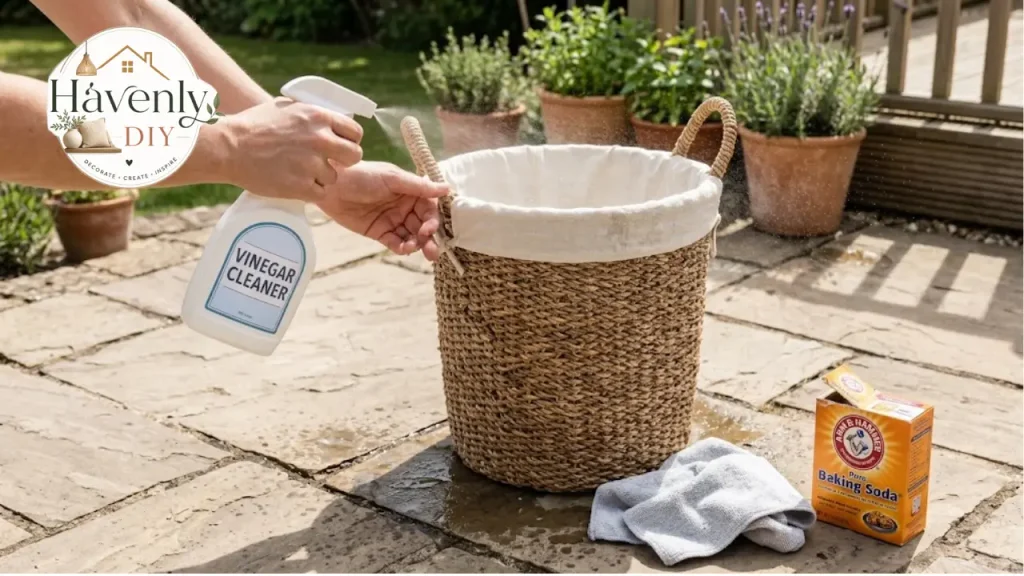
Plastic. Wash with warm water and dish soap, or wipe with a mix of equal parts white vinegar and water. Rinse and let it dry in the sun if possible.
Fabric liners and canvas. Remove the liner and machine wash it according to its care label. Dry it completely before putting it back.
Wicker, seagrass, and rattan. Vacuum with a brush attachment, then wipe with a barely damp cloth. Never soak natural fibers, and dry them fully in a well-ventilated spot.
Bamboo and wood. Wipe with a damp cloth and a little mild soap, then dry right away.
Stopping Odors Before They Start
Dry damp items, like towels and gym clothes, before they go into the basket. This one habit prevents most smells.
Sprinkle a little baking soda in the bottom of the hamper or under the liner to absorb odors, and empty it before it overflows. Clean the basket itself every few weeks, or right away if you spot mildew.
For more routines like this, browse our home cleaning guides.
Mistakes to Avoid
Putting wet towels in a closed hamper. Damp plus no airflow equals mildew.
Using wicker for delicates without a liner. Woven fibers can snag knits and lace.
Buying too small. An overflowing basket ends up back on the floor.
Ignoring the handles. Thin, sharp, or flimsy handles crack or hurt your hands on heavy loads.
Keeping one basket for dirty and clean clothes. Using separate baskets keeps clean clothes fresh and avoids re-washing.
FAQs:
What is the difference between a laundry basket and a hamper?
A laundry basket is usually open and built for carrying clothes to and from the washer. A hamper is usually taller, often lidded, and stays in one place to collect dirty clothes.
What size laundry basket do I need?
As a starting point, about 35–45 litres suits one person, 50–65 litres a couple, and 60–90 litres or a sorter suits a family. Make sure it holds at least one full washer load.
How do I stop my laundry basket from smelling?
Dry damp items before adding them, choose a breathable basket, empty it regularly, and sprinkle baking soda in the bottom. Clean the basket and liner every few weeks.
Are wicker laundry baskets good?
They look great and suit bedrooms, but they can snag delicate fabrics and don’t like moisture. Use one with a removable liner and keep it in a well-ventilated room.
Where should I keep my laundry basket?
Keep the hamper where clothes come off, usually the bedroom or bathroom, and the wash-day basket near the washer. That simple setup keeps floors clear.
How often should I replace a laundry basket?
Replace it when it cracks, the handles weaken, or the smell won’t wash out. A good plastic or bamboo basket often lasts for many years.