

In early spring, before almost anything else has leafed out, a bare grey branch suddenly turns magenta-pink. Look closer, and you’ll see the flowers aren’t just on the twigs. They’re bursting straight out of the trunk. That’s the eastern redbud in bloom, and once you’ve seen one in full flower, it’s hard not to want one.
The good news is that redbuds are easy to grow. The less-advertised news is that they’re also easy to grow badly: planted in the wrong spot, pruned at the wrong time, or left with weak branches that split. This guide covers both sides, so your tree looks great for as long as possible.
The Short Answer
Plant an eastern redbud in full sun to partial shade, in well-drained soil, with room for a 25–35 foot spread. Keep it away from low, soggy spots, redbud foundations, and overhead lines.
Water it regularly through its first growing season, mulch the root zone, and prune lightly while it’s young to build strong, wide-angled branches. Prune right after flowering or in winter dormancy. Do that, and an eastern redbud will need very little from you besides admiration each spring.
Eastern Redbud at a Glance
The eastern redbud (Cercis canadensis) is a small, deciduous flowering tree native to eastern North America. It belongs to the pea family, Fabaceae, which is why its flowers and seed pods look like those of garden peas.
| Feature | Detail |
|---|---|
| Botanical name | Cercis canadensis |
| Native range | Eastern and central North America |
| Hardiness | USDA zones 4–9 |
| Mature size | About 20–30 ft tall, 25–35 ft wide |
| Growth rate | Medium |
| Light | Full sun to partial shade |
| Soil | Moist, well-drained |
| Bloom time | Early spring, before leaves appear |
| Flower color | Pink to magenta (white and other shades in some cultivars) |
| Leaves | Heart-shaped |
| Wildlife value | Early nectar for pollinators; seeds for birds |
It’s also the state tree of Oklahoma, a sign of how widely it’s loved across the central US.
What Makes the Redbud So Special
Flowers on bare wood. Redbuds bloom on old branches and even on the trunk, a habit called cauliflory. The effect is a tree that looks wrapped in color before a single leaf appears. A long bloom. HGTV notes that in the right conditions, the flowers can last up to three weeks.
Heart-shaped leaves. After the flowers fade, the tree fills out with broad, heart-shaped leaves that give soft summer shade. In most trees, they turn yellow in autumn.
Wildlife value. The Old Farmer’s Almanac points out that redbuds are an important nectar source for early-season insects, and their seeds feed birds such as northern bobwhites and chickadees in autumn. Year-round structure. Flat seed pods hang on through winter, and the zigzag branches look striking against snow.
Will an Eastern Redbud Grow Where You Live?
Eastern redbuds are hardy across USDA zones 4 through 9, which covers most of the eastern and central United States and similar climates elsewhere. They need a cold winter to rest, but they also handle summer heat well.
In hot, dry regions, two botanical varieties do better. Texas redbud (C. canadensis var. texensis) and Mexican redbud (var. mexicana) have thicker, glossier leaves and tolerate drought and alkaline soil.
Gardeners outside North America have close relatives to consider. The western redbud (C. occidentalis) suits dry western climates, while the Judas tree (C. siliquastrum), native to southern Europe and western Asia, and the Chinese redbud (C. chinensis) offer a similar spring show. Spanish-style homes. If you’re unsure, a local nursery is your best guide to which redbud thrives in your conditions.
Choosing an Eastern Redbud Variety
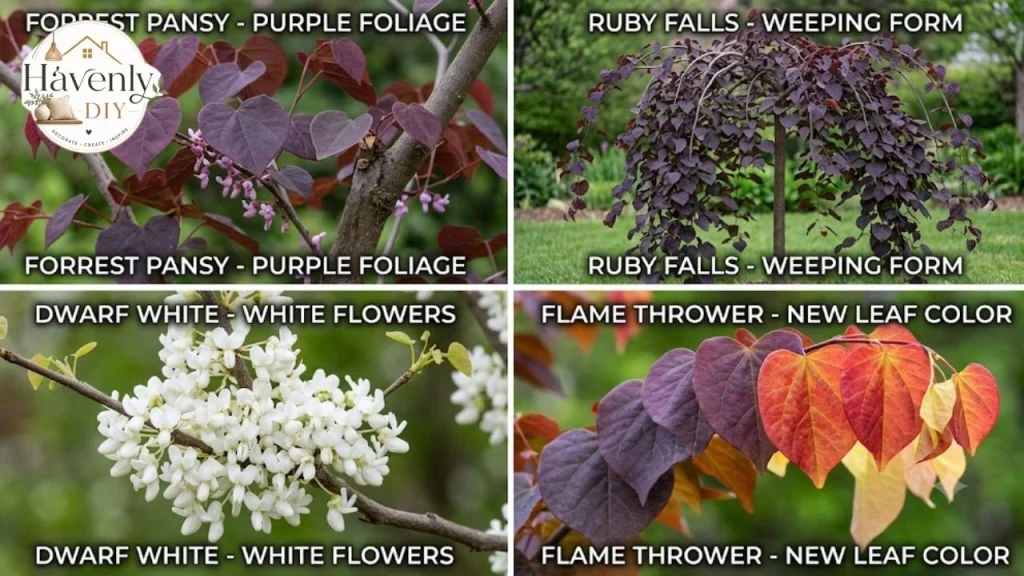
The straight species is beautiful, but cultivars let you choose leaf color, flower color, and size to suit your yard.
| Cultivar | What stands out | Best for |
|---|---|---|
| ‘Forest Pansy’ | Deep purple-burgundy leaves; red, burgundy or orange fall color | Color all season |
| ‘Ruby Falls’ | Weeping habit with purple leaves | Small yards, focal points |
| ‘Lavender Twist’ | Weeping, umbrella-shaped form with green leaves | Small spaces, near patios |
| ‘Ace of Hearts’ | Dwarf, compact, violet-pink flowers | Small gardens, large containers |
| ‘Dwarf White’ | Smaller, slower-growing; white flowers | Small yards, white gardens |
| ‘Flame Thrower’ | New leaves emerge in red, orange and gold | Bold foliage interest |
| ‘Rising Sun’ | Golden to apricot foliage | Brightening green borders |
For small yards, weeping and dwarf cultivars are the safest choice. For a classic woodland look, choose the straight species or ‘Forest Pansy’ if you want deeper color.
Where to Plant an Eastern Redbud
Site selection decides how well an eastern redbud ages. Get this right, and most other problems shrink. Light. Full sun produces the heaviest bloom in cooler climates. In hot regions, some afternoon shade protects the leaves. Redbuds are naturally understory trees, so they handle partial shade better than many flowering trees.
Soil and drainage. Redbuds want moist but well-drained soil. Plant Me Green warns against low-lying areas where water collects, since soggy roots are a common cause of decline.
Space. Plan for a mature spread of 25–35 feet. As a rule of thumb, plant at least 15 feet from your house and away from overhead utility lines, as Plant Addicts advises. Permanence. Choose the spot carefully, because redbuds dislike being moved once established. MasterClass warns that transplanting a mature tree can kill it.
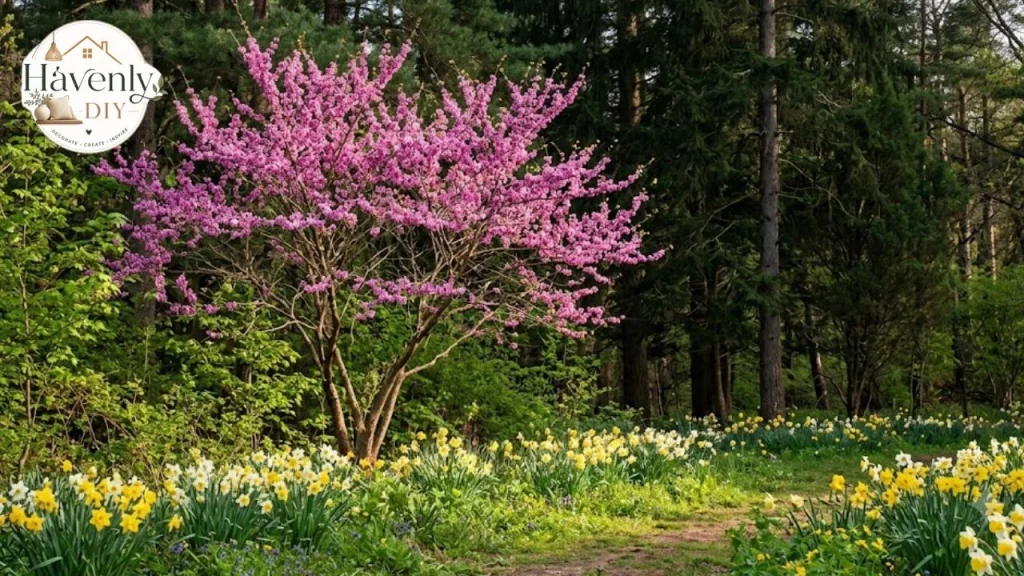
Companions. Redbuds look best against a dark background, such as evergreens or a woodland edge, which makes the spring color glow.
How to Plant an Eastern Redbud
Plant in early spring or autumn, when temperatures are mild, and the tree has time to root before summer heat.
Dig a Wide, Shallow Hole
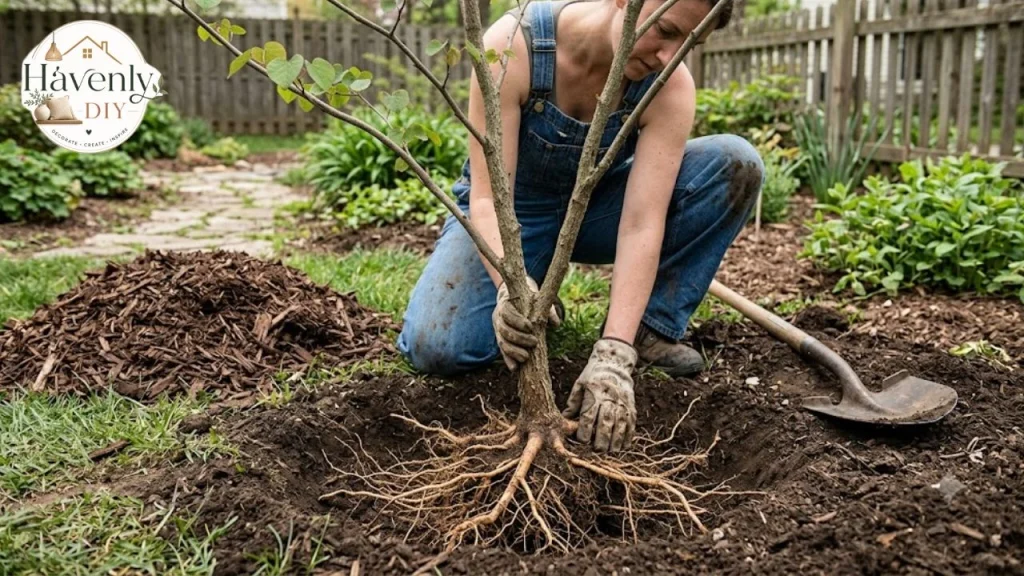
Dig a hole about twice as wide as the root ball and no deeper. Roots spread sideways into loose soil, so width matters more than depth.
Check and Loosen the Roots
Slide the tree from its container. The Old Farmer’s Almanac recommends pruning any circling or girdling roots, which can strangle the tree years later. Gently tease the remaining roots outward.
Set the Height
Place the tree so the root flare, where the trunk widens at the base, sits at or just above ground level. Planting too deep is one of the most common causes of slow decline.
Backfill and Water
Refill the hole with the soil you removed, keeping the trunk upright. Water slowly and deeply to settle the soil and remove air pockets.
Mulch
Spread 3–4 inches of mulch over the root zone, keeping it a few inches away from the trunk. Mulch holds moisture, keeps roots cool, and stops mowers and trimmers from damaging the bark.
Staking is rarely needed for small redbuds. If your site is very windy, use a loose, flexible tie and remove it after one growing season.
Watering and Feeding
Watering and feeding are two of the most important aspects of keeping plants healthy, strong, and beautiful. Proper watering helps plants absorb essential nutrients from the soil, maintain healthy roots, and support new growth.
However, the amount of water a plant needs depends on its type, size, growing conditions, soil quality, and the season. Most plants grow best when the soil is kept slightly moist but not waterlogged. Overwatering can cause root rot, yellow leaves, and fungal problems, while underwatering may lead to wilting, dry leaves, and slow growth.
Before watering, check the top inch or two of soil with your finger. If the soil feels dry, it may be time to water. Water the plant slowly and evenly around the base until excess water drains through the bottom of the pot. Always use pots with drainage holes to prevent water from collecting around the roots.
During hot weather, plants may require more frequent watering, while in winter, their water needs often decrease because growth slows down. Feeding plants is equally important because they need nutrients such as nitrogen, phosphorus, and potassium to grow properly.
Nitrogen encourages healthy leaf growth, phosphorus supports root development and flowering, and potassium helps plants remain strong and resist stress. A balanced fertilizer can be used for many common houseplants and garden plants, but it is important to choose a product suitable for the specific plant.
Follow the instructions on the fertilizer package carefully, as applying too much fertilizer can damage roots and cause leaf burn. Most actively growing plants benefit from regular feeding during spring and summer, while many plants need less fertilizer during autumn and winter.
Organic options, such as compost, worm castings, and well-rotted manure, can also improve soil quality and provide nutrients gradually. Avoid feeding plants when the soil is completely dry, as this may increase the risk of root damage.
Regularly observe your plants for changes in leaf color, growth, and soil moisture. By maintaining a consistent watering routine and providing the right nutrients at the right time, you can encourage healthy roots, vibrant foliage, and beautiful flowers throughout the growing season.
The first season matters most. HGTV recommends watering every two or three days during the first growing season unless your garden gets at least an inch of rain. Water deeply at the base rather than lightly sprinkling the surface.
After the first year, ease off. Know-How trees. Established redbuds are fairly drought tolerant but still appreciate a deep soak during long, hot dry spells. Feeding is where advice conflicts. Some nurseries say redbuds need no ongoing fertilizer, while other guides suggest regular light feeding.
Here’s a sensible middle path. Unlike many plants in the pea family, redbuds aren’t known to fix their own nitrogen, but in decent garden soil with an annual mulch layer, most don’t need extra feeding. If growth is weak or leaves look pale, test your soil and use a light, balanced fertilizer in spring.
Avoid heavy nitrogen feeding. It pushes leafy growth at the expense of flowers and can leave soft wood that’s more prone to problems.
Pruning for Strong Branches
This is the part most guides skim, and it’s often what decides whether an eastern redbud lives a long life or splits apart in a storm.
Redbuds naturally form multiple competing trunks and branches with narrow, V-shaped angles. These tight crotches trap bark between the stems as they grow, creating a weak joint that can crack under the weight of ice, snow, or wind.
Shape it young. In the first few years, decide whether you want a single trunk or a multi-stemmed tree. Plant Addicts notes either form works well. If you choose multiple stems, keep two or three that are well spaced and have wide angles. Remove extra stems that rub or crowd.
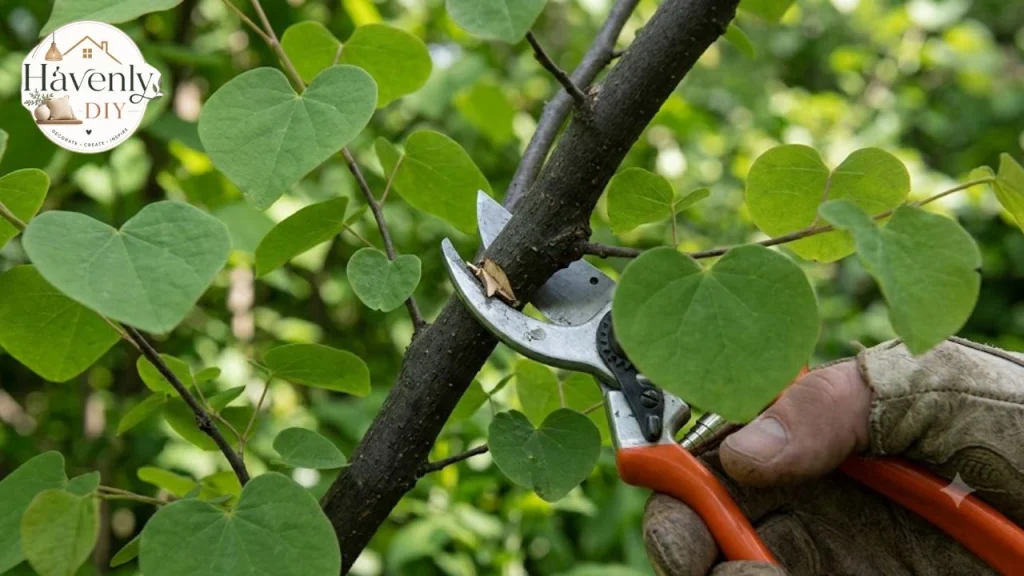
Favor wide angles. Keep side branches that leave the trunk at a wide, U-shaped angle, and remove tight, upright ones while they’re still small. A good rule is to keep side branches smaller than about half the trunk’s diameter.
Make clean cuts. HGTV advises cutting just outside the branch collar, the slightly swollen ring where the branch meets the trunk, so the wound can seal properly. Timing. The Old Farmer’s Almanac suggests pruning either in winter dormancy or right after flowering in spring.
Because redbuds bloom on old HGTV wood, winter cuts remove some of next spring’s flowers, so pruning just after bloom is the better choice if flowers matter most to you. Always remove dead, diseased, damaged, or crossing branches whenever you spot them.
Pests and Diseases
Redbuds are generally low-maintenance, but a few problems are worth knowing. Canker. The most serious disease. Look for sunken, dark, cracked patches on branches, often with dieback above them. Prune infected branches back into healthy wood, disinfecting tools between cuts.
HGTV recommends keeping an eye out for cankers on redbud branches. Verticillium wilt. A soil-borne fungus that causes sudden wilting and dieback of individual branches. There’s no cure, but keeping the tree well watered and removing dead wood can help it cope.
Leaf spot. HGTV notes that leaf spots are fairly common late in the season and aren’t a serious problem. Rake up fallen leaves to reduce next year’s infection. Insects. The Gardening Channel lists mealybugs, leafhoppers, and tree borers among common pests. Healthy, unstressed trees resist borers best.
Deer and rabbits. Both browse young redbuds. Protect new trees with a trunk guard or fencing for the first few years. Herbicide damage. Redbuds are sensitive to lawn weedkillers. The Almanac advises care if you or a neighbor use lawn chemicals. Distorted, cupped, or curled new leaves can be a sign of drift.
Why Isn’t My Eastern Redbud Blooming?
If your eastern redbud leafs out but doesn’t flower, one of these is usually responsible. It’s too young. Young trees, especially those grown from seed, may take a few years to bloom well. Too much shade. Redbuds tolerate shade but flower far less without decent sun. Winter pruning. Cutting branches in winter removes flower buds.
Late frost. A hard freeze on swelling buds can kill the flowers before they open. Too much nitrogen. Heavy feeding, including lawn fertilizer that spreads under the canopy, favors leaves over blooms. Stress. Drought, poor drainage, or root damage can make a tree skip flowering.
How Long Do Redbud Trees Live?
Sources disagree here. Gardening Know How says few redbuds live beyond 30 years, while MasterClass says they typically survive 50 to 70 years with proper care.
Both can be true. In tough landscape conditions, such as compacted soil, lawn competition, mower wounds, poor drainage, and canker, many redbuds start declining after 20–30 years. In good conditions with careful structural pruning, an eastern redbud can last much longer.
The practical lesson: plant it well, protect the trunk, prune early for strong branches, and watch for canker. Those habits add years.
Growing a Redbud From Seed
Redbuds are easy to grow from seed but hard from cuttings, the Almanac notes. Seeds have a tough outer coat and need cold to break dormancy. Collect dry, brown pods in autumn and remove the seeds. Nick the seed coat gently or soak the seeds in hot water to soften it.
Chill the seeds in a damp medium in the fridge for a couple of months. Sow in pots or directly outdoors in spring. Gardening Know How points out that seeds from a local tree produce seedlings well adjusted to local conditions. Seedlings won’t reliably match a named cultivar, though, so buy grafted plants if you want a specific variety like ‘Forest Pansy’.
Landscape Ideas for Eastern Redbuds
As a specimen tree. Plant one where you’ll see it from a window, so you catch the spring bloom every morning. At a woodland edge. The Almanac suggests small groupings along woodland edges, where they look as they do in the wild.
Against evergreens. A dark green backdrop of pines, ranch-style homes. Fast-growing trees, hollies, or other evergreens make the pink flowers glow. Near a patio. Weeping cultivars like ‘Ruby Falls’ or ‘Lavender Twist’ front porch work well as a living sculpture near seating areas.
With spring bulbs. Underplant with daffodils, grape hyacinths, or native woodland flowers for a layered spring display.
FAQs:
How big does an eastern redbud get?
Most reach about 20–30 feet tall and 25–35 feet wide at maturity. Dwarf and weeping cultivars stay much smaller.
How fast does an eastern redbud grow?
It grows at a medium rate. Young trees in good conditions grow steadily for the first decade, then slow as they mature.
Can you eat redbud flowers?
Redbud flowers are commonly eaten raw in salads or as a garnish, with a mildly tart, pea-like flavor. Only eat flowers from trees you know haven’t been sprayed with chemicals.
Do redbud trees have invasive roots?
Redbud roots aren’t considered aggressive. Still, plant the tree at least 15 feet from foundations so roots and branches have room.
Can I grow an eastern redbud in a pot?
Yes, for a few years. Homes & Gardens notes that potted redbuds need regular watering through the growing season. Choose a dwarf cultivar and a large container, and expect to plant it in the ground eventually.
Are redbuds deer resistant?
Not reliably. Deer and rabbits browse young trees, so protect them until they’re established.