

Buying an older house often ends with one sentence from the inspector: “The wiring should be looked at.” Then comes a quote with five figures and a lot of questions.
This guide covers whole-home rewiring in plain terms. You will see what it means, the signs that point to it, what it costs, how the work runs, and how to protect your walls and your sanity.
I am not an electrician, and none of this replaces one. Wiring work needs a licensed electrician, a permit,t and an inspection under your local code. Use this as a briefing so you can ask better questions.
What Whole Home Rewiring Means
Whole home rewiring means replacing the branch circuits that feed outlets, switches, and lights across the entire house, usually along with a review of the service panel. It is the full job, not a single room.
It differs from a repair. A repair fixes a bad outlet or one failing circuit. A rewire pulls out the old cable and runs new copper cable to every point of use.
Most houses never need it. Plenty of older systems work well after targeted fixes, and some of the cheapest improvements are small ones, like swapping a worn receptacle.
Signs You May Need Whole Home Rewiring
No single sign proves you need a full rewire. A pattern of signs, plus an electrician’s inspection, is what settles it.
Watch for these:
- Breakers that trip often, or fuses that blow
- Outlets or switch plates that feel warm or look discolored
- A faint burning or fishy smell near an outlet
- Lights that flicker or dim when an appliance starts
- Two-prong outlets throughout the house
- Wires stapled loosely in a basement or attic
The Wisconsin Historical Society gives one clear example. It says haphazardly installed wiring, such as wires stapled to joists or hanging loose, is a sign a building needs rewiring. It also notes that a professional can test wires running through wall and ceiling cavities you cannot see.
Age matters too. The Electrical Safety Foundation International (ESFI) recommends that all homes over 40 years old get an electrical inspection by a licensed electrician. That recommendation appears in a July 7, 2015 report in the IAEI Magazine.
This Old House, in a page by Josh Garskof updated May 25, 2026, adds a stricter note for buyers. It advises hiring a licensed electrician for a thorough review if you are buying a house over 50 years old or have never had the wiring inspected.
Keep a short log before the electrician arrives: which circuits trip, when, and what was running.
Your insurer may care
Sweeten, a renovation marketplace, notes that many insurers refuse coverage or raise premiums for homes with active knob-and-tube wiring. Policies vary by company and state, so call your agent before you buy or sign a rewire contract.
Wiring Types You Might Find
Knowing the type in your walls explains most of the cost and risk. Here are the common ones, with the era dates Sweeten gives where it gives them.
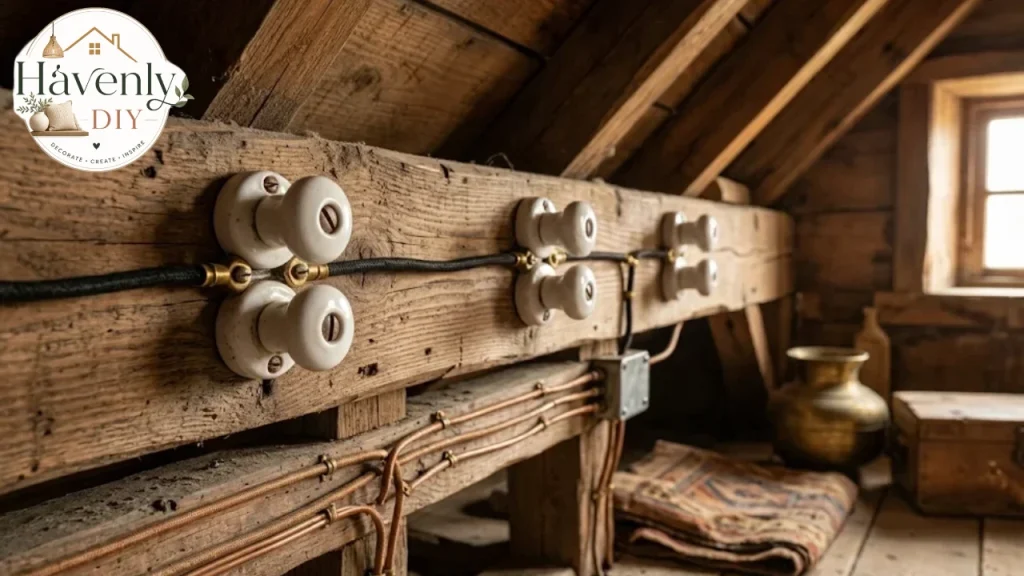
Knob-and-tube
Sweeten places knob-and-tube wiring from the 1880s to the 1940s. It uses single-insulated copper wires held on ceramic knobs and tubes.
This Old House lists two caveats. Knob-and-tube cannot be grounded or spliced into a grounded circuit, and its soldered connections may melt if too much current flows through them.
The same site says knob-and-tube circuits buried under insulation should be rewired or disconnected, because the insulation makes them overheat. That point matters if you plan to add attic insulation later.
MNCEE, a Minnesota energy-efficiency group (February 5, 2025), adds that insulation contractors will not insulate spaces with active knob-and-tube wiring. Most will want an electrician to confirm it is not active first.
Aluminum branch wiring
ESFI’s 2015 report says an estimated 2 million homes were built or remodeled with aluminum wiring between the late 1960s and mid-1970s.
A survey commissioned by the CPSC found homes built before 1972 with aluminum wiring were 55 times more likely than copper-wired homes to have outlet connections in “Fire Hazard Conditions.”
There are fixes short of a full rewire. Angi says an electrician can make the connections safe by adding a short section of copper wire to the end of each aluminum wire when a full rewire is not in the budget.
This Old House suggests approved dielectric wire nuts on copper-to-aluminum connections at fixtures. Both are jobs for a licensed electrician who knows aluminum, not general handyman work.
Grandfathered does not mean safe
Old wiring is “grandfathered,” in This Old House’s words, assuming it was installed correctly. It also says vintage copper wiring works as well as new wiring as long as it is in good condition.
Har.com’s real estate writer Pat Curry puts the catch simply: old wiring is not inherently dangerous, but unless you were around when the house was built, you cannot be sure the system is up to code.
Repair, Partial Rewire or Full Rewire
Rewiring is a spectrum. Picking the right point on it can save thousands of USD.
| Situation | Usual path |
|---|---|
| One bad circuit, rest tests fine | Repair that circuit |
| A few ungrounded rooms, good panel | Partial rewire of those rooms |
| Active knob-and-tube or failing cloth cable | Full rewire, per Angi’s advice |
| Aluminum wiring, tight budget | Copper pigtail repair, or full rewire |
| Gutting rooms for a remodel | Rewire those rooms, per code |
On the knob-and-tube row, Angi says a complete rewire is the recommended choice if possible. It adds that partial rewiring may reuse part of the old system, which is not ideal because hazards remain where new wire joins old.
This Old House says the code requires updating wiring only in rooms being gut-renovated. That is a useful line if a remodel is already planned, since the walls will be open anyway.
If you are adding space, a rewire often pairs naturally with the work in our home additions guide. New rooms need new circuits, and the panel decision comes up for both.
What Actually Gets Replaced
A complete whole-home rewiring job usually covers the cable inside the walls, the boxes, the receptacles and switches, and often the service panel. Light fixtures are normally reused unless you want new ones.
AJ Long Electric, a Northern Virginia contractor, says a complete rewire includes new circuits, outlets, switches, and usually a panel upgrade. It also calls the project the ideal time to add circuits you have wanted, such as a home office line, EV charger pre-wiring,g or outdoor outlets.
I would add one planning step. Walk each room and mark where you want outlets, then decide on the big loads: range, dryer, heat pump, workshop. Adding a circuit now costs far less than opening a finished wall later.
This is where a kitchen or laundry plan helps. If you are choosing new cabinets, our guides to modern kitchen cabinets and laundry room cabinets show how much counter and wall space your outlets must serve.
Safety devices
ESFI’s 2015 report says GFCIs were first mandated in the 1971 NEC. They were later required in kitchens, bathrooms, garages, basements, crawlspaces,es and outdoors.
AFCIs entered the NEC in 1999 for bedrooms only, and the code has since extended them to every room, according to the same report. The CPSC estimated that AFCIs could prevent roughly half of electrical fires each year (2015 estimate).
Those code rules apply to new homes and renovations, ESFI says, but the devices can also be retrofitted into existing systems by a qualified electrician. A full rewire is the cleanest moment to bring everything up to current protection.
Permits, Inspection and Code
A rewire is not a weekend project, and it is not a no-permit project. This Old House says plainly: “Don’t skip the permit and inspection process when upgrading wiring.”
Its “Homeowner Insights” note adds that skipping them can hide unsafe work behind finished walls. That is the real risk. Nobody sees behind drywall once you paint.
Rules differ by city, county, and state, and many places require a licensed electrician to pull the permit. Call your local building department before you sign anything and ask three questions:
- Which code edition do you enforce?
- Who may pull the permit?
- When are inspections required: rough-in, final,l or both?
Good contractors handle this for you. If a bidder offers to skip the permit to save money, treat that as a reason to walk away.
What Whole Home Rewiring Costs
Cost is where published advice on whole home rewiring splits widest, so I will show the numbers and where they disagree rather than pick one.
| Source | Scope | Figure |
|---|---|---|
| AJ Long Electric (Northern Virginia contractor) | Whole house | 8,000 to 30,000 USD, about 6 to 10 USD per sq ft |
| AJ Long Electric | 3,500+ sq ft homes | 25,000 to 40,000 USD |
| Angi (aluminum wiring page) | Rewiring a house | 4,000 to 8,000 USD |
The gap is huge. The Angi figure sits well below the contractor’s lower bound, and its page does not say what size house it assumes, so I would treat it as a floor for a small, easy job.
My own arithmetic using the contractor’s per-square-foot range: a 1,500 sq ft house comes to about 9,000 to 15,000 USD, and a 2,000 sq ft house comes to about 12,000 to 20,000 USD. These are rough planning numbers, not quotes.
What pushes the price up
AJ Long says size is the primary driver, because larger homes need more wire, circuits, outlets, and labor hours. It also says a two-story home costs more per square foot than a ranch, since vertical runs between floors take more material and labor.
TNT Electric, a Sacramento contractor, adds that plaster walls add several days to a rewire. Cutting plaster without causing cracking takes specialized tools and patience.
Other cost drivers are a panel upgrade, hard-to-reach attics and crawlspaces, and the number of outlets and fixtures per room.
My inference: single-story layouts like those in our ranch-style home guide should be simpler to wire, since attic access is easy.
The cheaper moves worth knowing
ESFI’s 2015 report lists retrofit prices you can compare to a full job: GFCI outlets about 15 USD, GFCI breakers about 50 USD installed in the panel, and tamper-resistant receptacles from about 2 USD per outlet. These are 2015 prices, so expect higher today.
If you can fix the risk with a handful of devices, a rewire may not be the answer. That is exactly why the inspection comes first.
How Long Whole Home Rewiring Takes
I could not find a timeline from a code body or trade association, and contractor pages disagree, so treat any number as an estimate. Small, open houses finish faster. Plaster and tight access slow everything down, per TNT Electric.
Ask your electrician for a day-by-day schedule in writing. Include rough-in, inspection, patching,g and final inspection, since inspectors set part of the pace.
How the Work Runs, Step by Step
Order matters in whole-home rewiring, and knowing it keeps surprises small.
Inspection and quote. A licensed electrician tests circuits, opens the panel, and checks attic and basement runs. Get at least two written bids that list the same scope.
Permit. The contractor files it, and you confirm it is posted.
Rough-in. Old cable comes out or is abandoned, and new cable is fished or pulled to each box. This is the noisy, dusty stage.
Rough inspection. The inspector checks the cable and boxes before walls close.
Patching. Drywall or plaster is repaired where openings were cut.
Trim-out and final inspection. Receptacles, switches,s and plates go on, the panel is labeled,ed and the inspector signs off.
MNCEE notes that electricians will often leave old deactivated wiring behind in the walls. Ask that it be clearly disconnected and documented so the next owner is not surprised.

Living in the house during the work
Most families can stay, but power goes off in sections. Plan for days without some rooms, and keep the fridge and any medical devices on a temporary circuit.
Move furniture and decor away from walls before work starts. Cover floors and vents, and expect fine dust to travel.
Ask the crew to work room by room, so the kitchen is not done the same week as the bathrooms. A good contractor will agree to a sequence.
Walls, ceilings and repairs
Open walls are the part nobody budgets for. A bid that says “wiring only” usually leaves patching, texturing and painting to you.
Ask three questions up front: who patches, who paints, and how are plaster repairs priced? TNT Electric says lath and plaster is slower to cut and repair than drywall, so the answer can change your total.
After patching, you can repaint and refresh. If the house needs new colors anyway, our home color combinations guide can help you decide before the painters arrive.
Fireplace surrounds and built-ins are also worth planning ahead of time. Check our fireplace hearth ideas if you want new outlets or lighting there before the walls close.
Bathrooms deserve extra care, since GFCI protection and vanity lighting both depend on the new layout. The small bathroom vanity guide shows how fixture choices change where boxes must sit.
Hiring the Right Electrician
Pick a licensed, insured electrician who pulls permits and carries workers’ compensation. Ask for their license number and check it with your state board.
This Old House adds that a follow-up inspection is worth scheduling. Its Gallant quote recommends one every five years, while its own “Frequency of Inspections” section gives 3 to 5 years for homes under 40 years old and 1 to 2 years for older homes. Those two lines disagree, so use the stricter one if your house is old.
Compare bids on scope, not just price. A low bid that omits the panel, patching, or permit fees is not actually low.
Look for these red flags:
- No license number, or a vague answer
- A request for full payment up front
- An offer to skip the permit
- No written scope or schedule
Common Mistakes to Avoid
Treating a quote as final. Hidden conditions behind walls can change it. Ask how change orders are priced before work begins.
Overlamping old fixtures. This Old House says that a bulb with higher wattage than the fixture allows can scorch the socket and wire insulation. For unmarked older fixtures, it suggests 60-watt bulbs or smaller, or LEDs when unsure.
Forgetting future needs. An EV charger, heat pump, or workshop is far easier to wire for during the rewire than after it.
DIY on knob-and-tube. Angi says you should never handle it on your own, because replacing it can quickly lead to serious injury and fire.
Skipping the insurer call. Tell your insurance agent about the project. Some policies ask about wiring type, and an update can resolve coverage issues, as one electrician’s guide notes.
Older homes also carry period details worth protecting. Our Victorian kitchen ideas show how to keep character while modernizing what sits behind the walls.

FAQs
How much does whole home rewiring cost?
One Northern Virginia contractor quotes 8,000 to 30,000 USD, about 6 to 10 USD per sq ft. Prices vary widely, so get written bids.
Can I live at home during a rewire?
Usually yes, with some rooms off power at a time. Ask for a room-by-room sequence.
Do I need a permit?
Almost always. This Old House says not to skip the permit and inspection.
Is knob-and-tube wiring illegal?
I found no source saying it is illegal. It is grandfathered if installed correctly, but cannot be grounded.
Is aluminum wiring a must-replace?
Not always. Angi describes copper pigtailing as an option when a full rewire is not in the budget.
How old is too old?
ESFI recommends inspecting homes over 40 years old. Age alone does not decide it.
Will rewiring ruin my walls?
It opens them in places. Plaster is harder to patch, per TNT Electric.
Can I do it myself?
For knob-and-tube, Angi says never. Hire a licensed electrician for whole-home rewiring everywhere.