
Olive green has a funny reputation. In one photo it looks rich and calm, like a Mediterranean hillside at dusk. In the next, it looks like an army surplus store.
The difference is rarely the color itself. It’s the shade, the light, and what you put next to it.
This guide to olive green decor walks through all three, room by room, so you can use this grounded, earthy color with confidence, whether that’s a single cushion or a fully painted kitchen.
The Short Answer
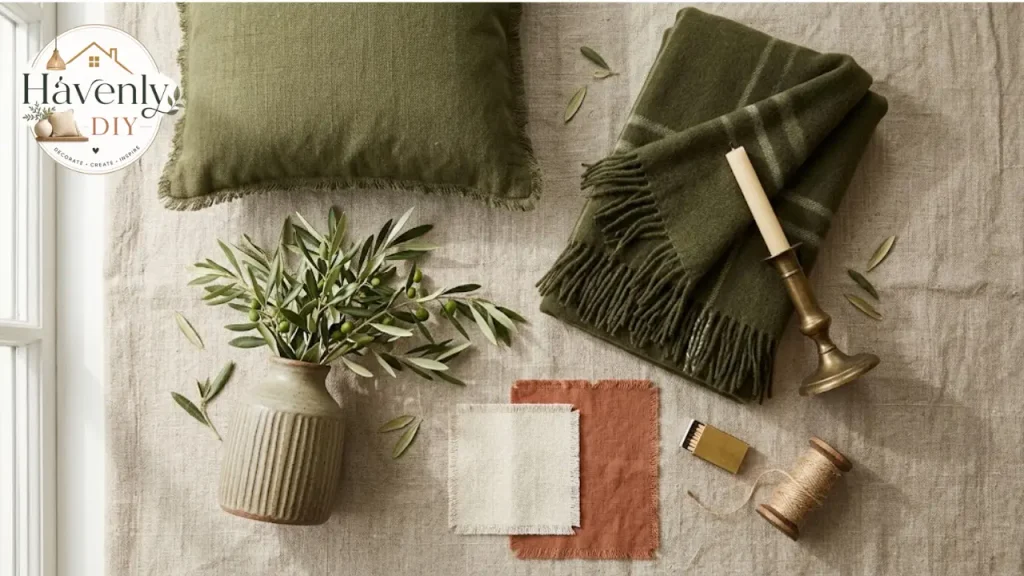
Olive green works best when you treat it as a warm neutral. Pair it with cream, natural wood, brass, and linen, and start with smaller pieces before committing to walls.
Choose a warmer, yellow-based olive for rooms with cool or limited light, and save deeper, moodier olives for bright rooms. Always test paint samples on more than one wall before buying.
That’s the core of good olive green decor. The rest is detail, and the details are where it gets interesting.
What Olive Green Actually Is
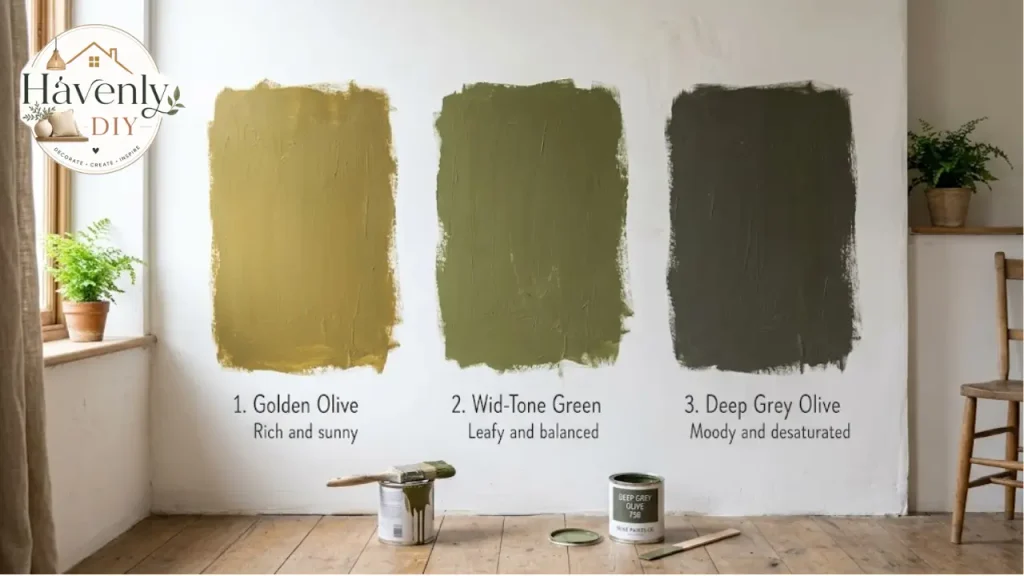
Olive is a green with a lot of yellow and a little grey or brown in it. That’s what makes it feel earthy rather than bright like grass or cool like mint.
It sits in a family of muted greens that are easy to confuse:
Sage is softer and greyer, with a slightly blue cast.Khaki leans more brown and sandy.Moss is deeper and more saturated.Army green is darker and more brown, and it’s the version that can tip into drab.
Within olive itself, undertone matters most. Warm olives lean golden and feel sunny. Cool olives lean grey and feel calm, but they can turn flat in the wrong light.
Pick Your Shade by Your Light
This is the step most guides skip, and it’s why so many olive walls get repainted.
In the Northern Hemisphere, north-facing rooms get cool, indirect light all day. That light pulls out grey and blue, so a cool olive can look murky. Pick a warmer, more yellow-based olive here.
South-facing rooms get warm light that intensifies yellow. Deeper and cooler olives look rich here, and very yellow olives can start to feel overly bright.
East and west rooms change through the day. Check your samples at the time you use the room most, since a living room you use at night matters more under lamplight than at noon.
Some well-known olive paint colors worth sampling include Farrow & Ball’s Bancha and Olive, and Sherwin-Williams’ Ripe Olive. Paint ranges change, so check each brand’s current swatches before you buy.
Paint large samples, at least the size of a sheet of paper, on two different walls. Look at them in the morning, afternoon and evening before deciding.
Colors That Go With Olive Green
Olive is surprisingly easy to pair because it already behaves like a neutral. These are the combinations that work most reliably.
| Pair olive with | Feel | Best for |
|---|---|---|
| Cream and warm white | Soft, calm, timeless | Bedrooms, living rooms |
| Terracotta and rust | Earthy, Mediterranean | Living rooms, porches |
| Mustard and ochre | Retro, cheerful | Reading nooks, eclectic rooms |
| Navy | Classic, tailored | Studies, traditional rooms |
| Blush and dusty pink | Gentle, unexpected | Bedrooms, dining rooms |
| Charcoal and black | Moody, modern | Kitchens, accent walls |
| White plus natural wood | Fresh, Scandinavian | Kitchens, small spaces |
One tip that makes a big difference: avoid stark, blue-white paint with olive. A white with a touch of warmth, such as cream or ivory, keeps olive looking intentional instead of tired.
For more pairing ideas across a whole house, our guide to home color combinations shows how to carry a palette from room to room.
The Olive Ladder: How Much to Use
You don’t need to paint a room to bring olive in. Think of it as a ladder and climb only as far as you’re comfortable.
Plants and accents. Olive cushions, a vase, a print, and real greenery. Low cost, easy to change.
Textiles. A rug, curtains, a throw, or bedding. These bring olive in at a larger scale without paint.
One furniture piece. An olive velvet armchair, sofa, or headboard becomes the room’s anchor.
An accent wall or cabinetry. Paint one wall, a kitchen island, or a set of cabinets.
Color drenching. Walls, trim, and sometimes the ceiling in the same olive for a wrapped, cocooning look.
The classic 60-30-10 rule helps here: about 60% of the room in your main neutral, 30% in a secondary color, and 10% in accents. Olive can play any of those three roles, which is part of what makes olive green decor so flexible.
Olive Green Room by Room
Living Room
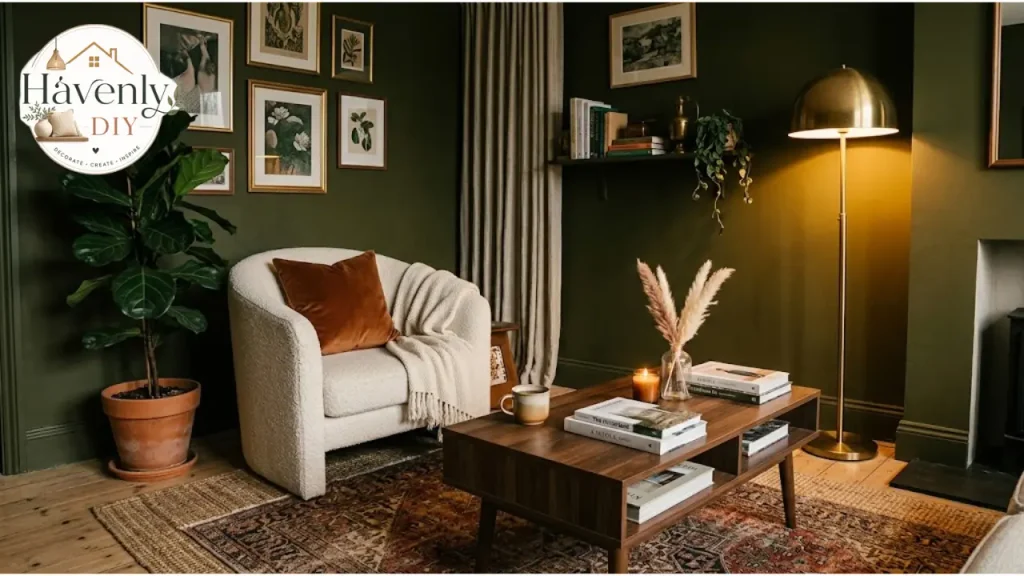
The living room is where olive feels most natural. An olive sofa with cream walls, a jute rug and a few terracotta cushions is a combination that rarely misses.
If you’d rather keep the sofa neutral, put olive into the curtains or a large rug instead. For a moodier look, paint the walls a deep olive and keep furniture lighter so the room doesn’t feel closed in.
The most comfortable olive green decor in a living room balances one large olive element with lots of warm texture around it.
Bedroom
Olive is restful, which makes it a natural bedroom color. An olive linen duvet or a painted headboard wall paired with oat and clay tones creates the kind of grounded room described in our earthy bedroom ideas.
For a calmer, more minimal take, pair olive with pale wood and low furniture, much like the layouts in our Japanese bedroom guide.
Kitchen
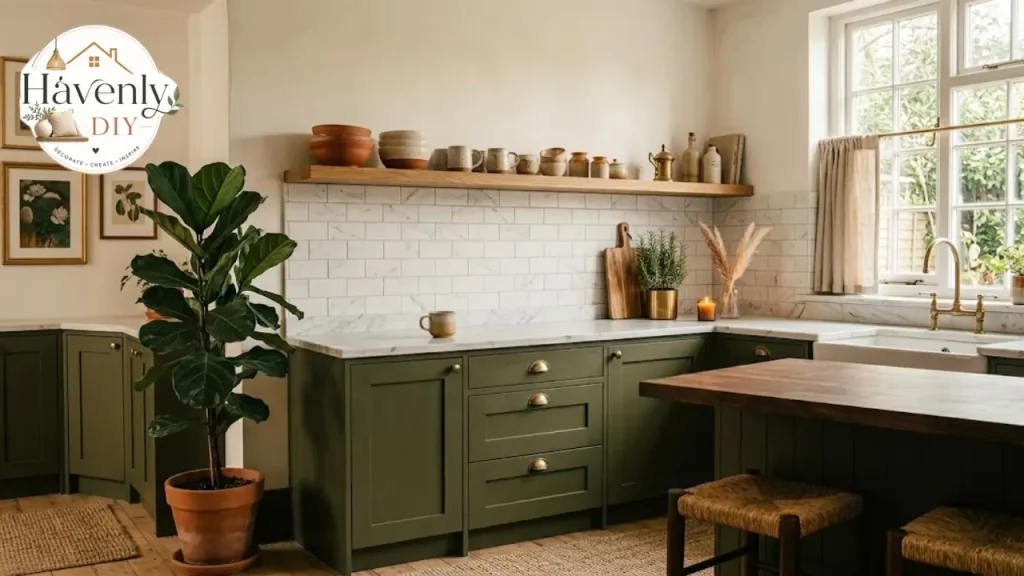
Olive cabinets are one of the most popular ways to use the color, and for good reason. They pair beautifully with brass hardware, marble or butcher-block counters, and warm white walls.
In a sleek kitchen, flat-front olive doors with matte black or brushed brass pulls look crisp; see our modern kitchen cabinets guide for hardware and finish ideas. In a more classic room, olive shaker cabinets fit the details covered in our Victorian-style kitchen ideas.
Not ready for full cabinets? Paint just the island, or bring olive in through a tiled backsplash or open shelving styled with olive ceramics.
Bathroom
Olive works well in bathrooms with warm light or a window. Try an olive vanity, olive tiles, or a botanical wallpaper with olive tones; our bathroom wallpaper ideas are a good starting point.
Pair it with wood, stone, and brass for the natural warmth shown in our rustic bathroom ideas. In a very small, windowless bathroom, keep olive to the vanity or towels so the room stays bright.
Laundry Room and Mudroom
Small utility rooms are the perfect low-risk place to try a bold olive. A painted set of cabinets makes an everyday space feel finished; our laundry room cabinets guide covers layouts that suit it.
Front Porch and Entry
An olive front door, olive planters, or striped olive cushions on porch chairs all feel welcoming and natural against brick, stone, or white siding. Browse our front porch ideas for ways to pull it together.
Materials That Make Olive Glow
Good olive green decor needs texture. On its own, a flat olive surface can look heavy; surrounded by natural materials, it suddenly feels warm and alive.
- Wood: Walnut adds richness; light oak keeps things fresh. Both work.
- Metals: Brass and aged gold make olive look expensive. Black metal gives a more modern edge.
- Fabrics: Linen, velvet, wool, and boucle each catch light differently on olive.
- Natural fibers: Rattan, cane, jute, and wicker reinforce olive’s outdoor feel.
- Stone: Marble, travertine, and terracotta tile all sit beautifully beside it.
Plants matter more than people expect. Real greenery next to olive creates depth because the two greens play off each other.
Olive Across Decor Styles
Olive adapts to almost any style. Here’s how it shifts.
Earthy and organic. Olive plus clay, sand, and wood creates a calm, natural room. This is the easiest style to get right.
Japandi and minimal. Use olive sparingly, in a single chair or ceramic, with pale wood and plenty of empty space.
Traditional. Deep olive walls with wood trim, brass lamps, and patterned rugs feel rich and collected.
Modern eclectic. Pair olive with mustard, blush, or cobalt and mix vintage and new pieces. Our guide to modern eclectic interior design shows how to keep that mix cohesive.
Spanish and Mediterranean. Olive with whitewashed walls, terracotta floors, and iron details is a natural fit, especially in Spanish-style homes.
Not sure which style you lean toward? Our interior design style quiz can help you narrow it down before you buy.
Renter-Friendly Olive
You don’t need permission to paint to enjoy olive. Some of the best olive green decor ideas never touch a wall.
Try olive curtains, a large olive rug, olive bedding, or a few framed prints with olive tones. Peel-and-stick wallpaper and removable backsplash tiles in olive are other options, though test a hidden patch first to check they come off cleanly.
A big potted olive tree, real or faux, is a fun nod to the color’s namesake and adds height to a bare corner.
Mistakes That Make Olive Look Muddy
Skipping the samples. Olive changes more with light than most colors. A swatch card in a shop tells you almost nothing.
Using it everywhere with no contrast. Olive walls, an olive sofa, and an olive rug with nothing lighter nearby can feel flat. Even color-drenched rooms need texture and contrast.
Pairing it with cold greys. Cool grey and olive can make each other look dull. Warm neutrals work far better.
Poor lighting. Cool white bulbs make olive look greenish-grey. Warm white bulbs, around 2700K, bring out its golden side.
Forgetting the trim. Bright white trim can feel harsh next to olive. A soft cream, or the same olive in a different sheen, often looks more polished.
FAQs:
Is olive green a neutral?
It behaves like one. Its muted, earthy tone pairs with almost everything, which is why many designers treat it as a warm neutral rather than a bold color.
What colors go with olive green?
Cream, warm white, terracotta, mustard, navy, blush and charcoal all pair well with olive. Natural wood and brass are also reliable companions.
What’s the difference between olive and sage green?
Olive has more yellow and feels warmer and earthier. Sage has more grey and a slight blue cast, so it feels softer and cooler.
Does olive green make a room look dark?
Deep olive can, especially in rooms with little natural light. Choose a lighter, warmer olive for darker rooms, or use it on furniture and textiles instead of walls.
What wood goes with olive green?
Most woods work. Walnut adds warmth and depth, while light oak and ash keep olive feeling fresh and modern.
Is olive green going out of style?
Olive has stayed popular for years because it’s rooted in nature rather than a passing trend. Using it as a neutral, rather than as a statement, helps it age well.